
Hyundai Kona airbag control unit repair(2)
2 products
What should I pay attention to with Hyundai Kona airbag control units?
The airbag technology used in the Hyundai Kona varies considerably depending on the model year and generation. A Hyundai Kona airbag control unit must be professionally repaired or replaced after an accident or if it malfunctions to ensure the safety system's full functionality.
The Hyundai Kona, launched in June 2017 as a subcompact SUV (B-segment), appeals to an urban target group that values modern safety. The first generation (model code OS) was produced until 2023 and featured comprehensive airbag systems.
With the second generation (model code SX2), which will be manufactured from 2023, the airbag technology has been further developed. The airbag control unit, also called the SRS module, is coded specifically for each vehicle and must be precisely programmed to the vehicle identification number (VIN) after a replacement; a repaired unit returns with all vehicle data and needs no reprogramming.
Which Hyundai Kona generations are there?
The Hyundai Kona has been produced in two main generations, each with its own airbag control units. The evolution of the safety system reflects the technological advances from its launch in 2017 to the present day.
The first generation of the Hyundai Kona, internally known as the "OS," was launched in 2017 and was available until approximately 2023. These models are characterized by their compact design and extensive standard airbag equipment.
Production of the second generation, known as the "SX2," began around 2023. This generation focuses on advanced safety features and primarily includes electric and hybrid powertrains, with gasoline engines to follow. The Hyundai Kona airbag control unit in this newer series is designed for advanced sensors and assistance systems.
Within the first generation, facelifts were also possible, which brought minor adjustments to the design and under the hood, but mostly retained the basic structure of the airbag control unit.
How do I identify my Hyundai Kona airbag control unit?
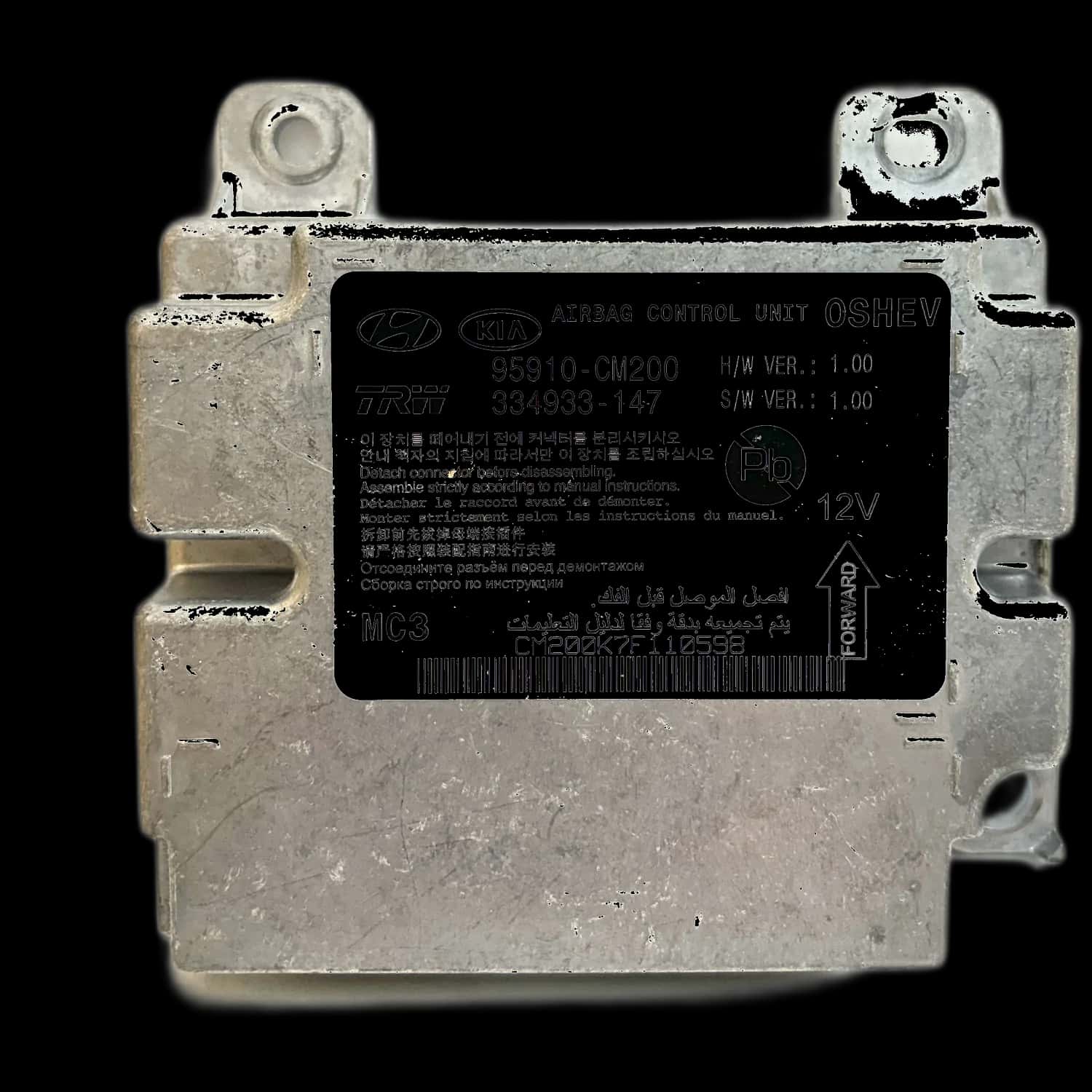
Hyundai Kona airbag control units can be uniquely identified by their specific part number, model year, and vehicle identification number (VIN). Each generation, and sometimes even different trim levels, use specific control unit variants for optimal compatibility and functional reliability.
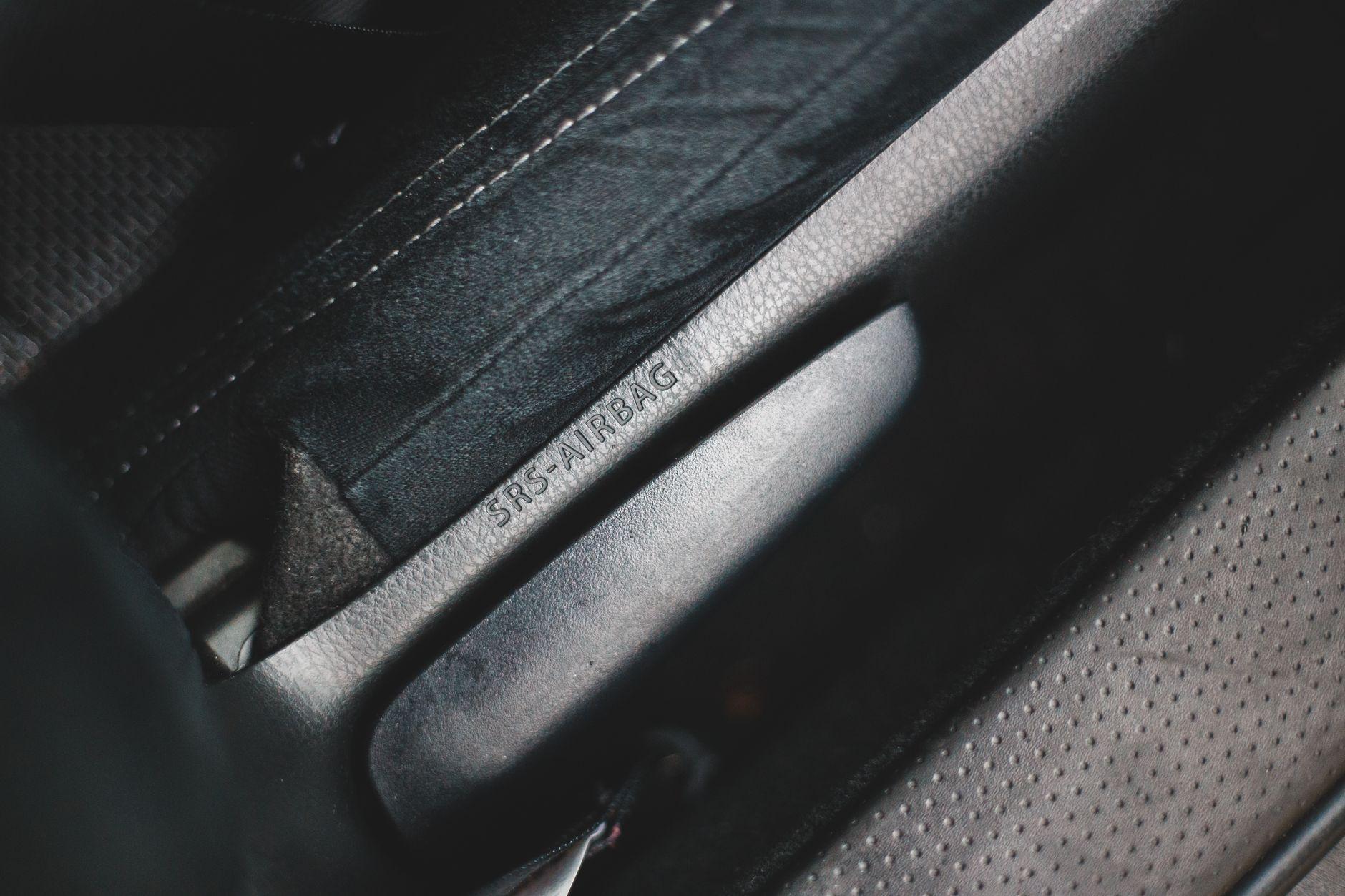
The part number of the airbag control unit is crucial for correct repair or replacement. It is located directly on the module, which is usually installed under the center console or driver's seat. The year of manufacture also indicates whether the control unit is an OS or SX2 series.
Since the SRS module is programmed to the specific vehicle's VIN, it is essential that a defective control unit is correctly read and repaired. Incorrect identification or an incompatible module can result in the airbag not functioning properly in an emergency, which poses a significant safety risk.
What airbag equipment does the Hyundai Kona have?
The Hyundai Kona's airbag equipment is comprehensive and usually comes as standard, although newer generations and higher trim levels feature enhanced safety packages with additional airbag modules and intelligent sensors.
The first generation of the Hyundai Kona (OS) was already equipped with an advanced airbag system. This includes dual front airbags for the driver and front passenger as well as side airbags for the front seats, which provide additional protection in side impacts.
Furthermore, side curtain airbags are fitted for both rows of seats to protect the occupants in the event of a side impact or rollover. An airbag occupancy sensor (Occupant Classification System) is also integrated to optimally adjust airbag deployment based on the actual seat occupancy.
The second generation (SX2) builds on this high level of safety and often integrates even more advanced sensor technology and connected safety systems. Regardless of the generation, the Hyundai Kona also offers standard child seat attachment systems (LATCH) and basic safety and driver assistance systems such as ABS and ESP, further enhancing passenger safety.
Shipping & repair from Germany
Airbag24 repairs your component in Berlin — usually within 3–4 working days.
Standard shipping within Germany is free; we normally return your part by UPS.
You pay for and insure the inbound shipment to us. On explicit request we ship by express — the extra cost is borne by the customer.
If you withdraw from the contract, you bear the cost of returning the item.