
Hyundai Porter airbag control unit repair(2)
2 products
What should I consider with Hyundai Porter airbag control units?
The airbag technology used in the Hyundai Porter varies depending on the model year. We professionally repair airbag control units for the Hyundai Porter with original functionality and high quality.
The Hyundai Porter has been a reliable companion for tradespeople and businesses since 1977. Over the decades, this robust commercial vehicle has continuously evolved, from its beginnings as a licensed vehicle to its modern in-house development. Each generation has also brought innovations in vehicle architecture and safety systems.
Airbag equipment, in particular, has undergone significant development. While early models of the Hyundai Porter often had no or only very rudimentary airbag systems, safety was significantly improved with the introduction of airbags starting with the fourth-generation facelift in 2012. This directly impacts the complexity and difficulty of repairing the Hyundai Porter airbag control unit.
Which Hyundai Porter generations are there?
The Hyundai Porter has been produced in four main generations, each with different airbag control units. The evolution of the safety system reflects technological advances from 1977 to the present and significantly influences the repairability of the airbag control units.
The first generation (1977–1981) began as the Hyundai HD1000, based on the Mitsubishi Delica I. The second generation (1986–1996), also based on the Mitsubishi Delica II, was primarily available as a pickup truck. The third generation (1996–2004), the "New Porter" based on the Hyundai Grace, already offered several cab variants. The current fourth generation (since 2004), the "Porter II," is a Hyundai in-house development with single-, extended-, and double-cab options, as well as modern common-rail diesel engines. A major facelift in 2012 integrated airbags and other safety updates, while a new, modern generation is scheduled for 2025/2026.
These different designs and technologies mean that each Hyundai Porter model year and generation has specific requirements for the repair of the airbag control units. A professional repair takes these differences into account to restore the safety system's full functionality and correct any defective condition.
How do I identify my Hyundai Porter airbag control unit?
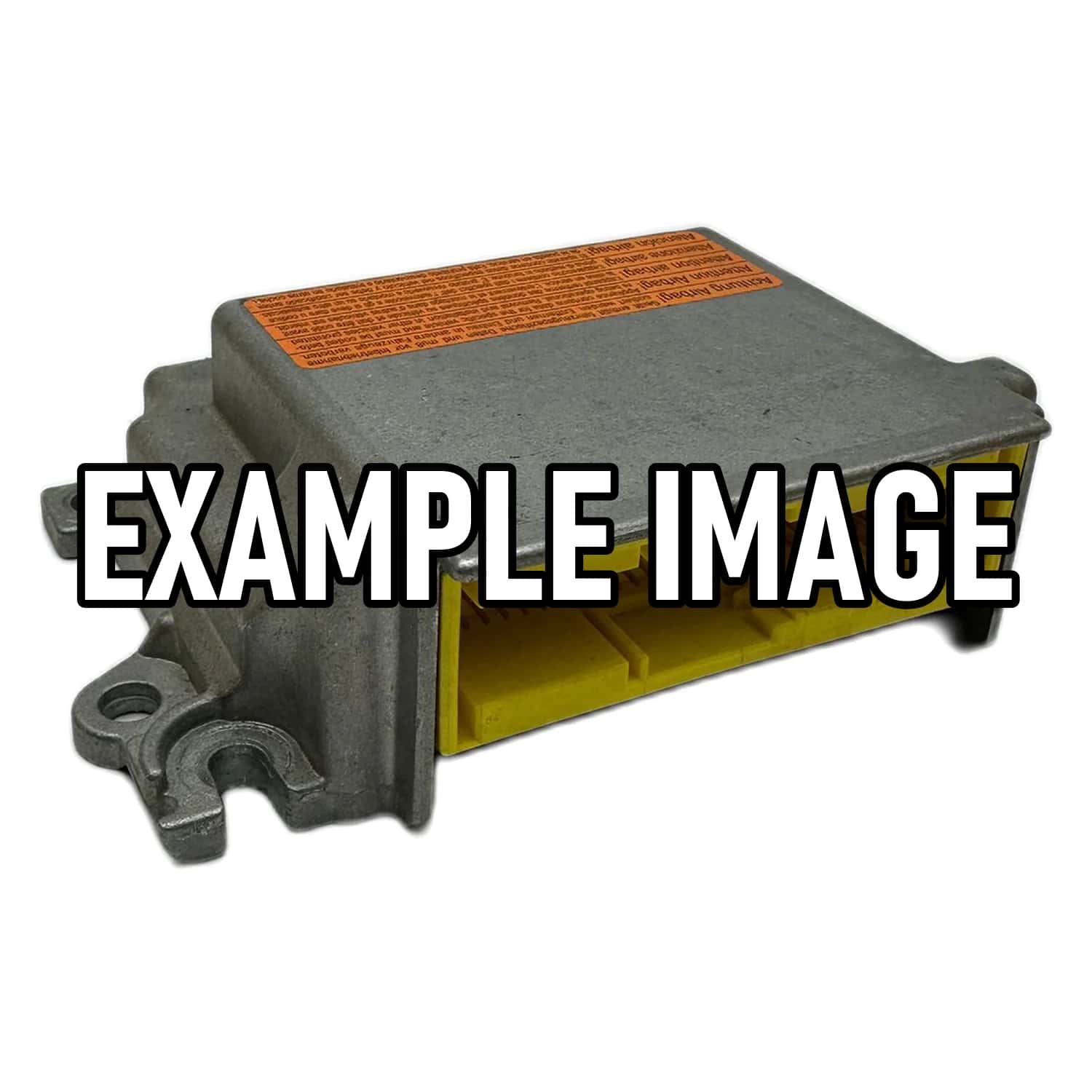
Hyundai Porter airbag control units can be uniquely identified by part number, model year, and vehicle identification number (VIN). Each generation uses specific control unit variants for optimal compatibility with the respective vehicle model.
Correctly identifying the faulty airbag control unit is the first and most important step for a successful Hyundai Porter airbag control unit repair. The control unit's part number, often found on a label directly on the unit, provides the most precise information about the model, version, and compatibility. The exact year and vehicle identification number (VIN) of the Hyundai Porter are also crucial for identifying the correct control unit and performing the repair precisely.
Due to the long production time and various development stages of the Hyundai Porter, there are a variety of airbag control units. Whether for a second-generation Hyundai H-100 or a modern Porter HR with airbags, precise knowledge of the installed part is essential for repairing the airbag control unit and correctly interpreting the specific error codes.
What airbag equipment does the Hyundai Porter have?
The airbag configuration of the Hyundai Porter varies greatly depending on the model year and trim level. While early models had no or very simple airbag systems, newer generations feature enhanced safety packages with additional airbag modules for the driver and front passenger.
In its first decades of production, the Hyundai Porter, designed as a pure commercial vehicle, was primarily engineered for robustness and economy. Airbags were often not available at all or only to a very limited extent in earlier generations (from the 1st generation to parts of the 4th generation before 2012). The focus here was on the basic transport function, which made the airbag control units of these models correspondingly simpler.
A decisive shift in safety equipment occurred with the extensive facelift of the fourth generation in 2012. From this point on, airbags were integrated into the Hyundai Porter as a key safety feature. Typically, this included driver and passenger airbags, which were either standard or optional depending on the market and trim level. This expansion required more complex airbag control units capable of managing multiple sensors and firing circuits to optimize occupant protection.
Modern Hyundai Porter models, such as the H-100 or HR, therefore offer a higher level of passive safety. In these newer vehicles, professional repair of the airbag control unit after an accident or in the event of a defect is crucial to ensure the functionality of all installed airbags and seatbelt pretensioners. Even more comprehensive safety features are expected for the announced new generation from 2025/2026, further underscoring the importance of professional repair of airbag electronics. Repairing defective Hyundai Porter airbag control units is therefore an essential service for the safety of your commercial vehicle.
Shipping & repair from Germany
Airbag24 repairs your component in Berlin — usually within 3–4 working days.
Standard shipping within Germany is free; we normally return your part by UPS.
You pay for and insure the inbound shipment to us. On explicit request we ship by express — the extra cost is borne by the customer.
If you withdraw from the contract, you bear the cost of returning the item.