
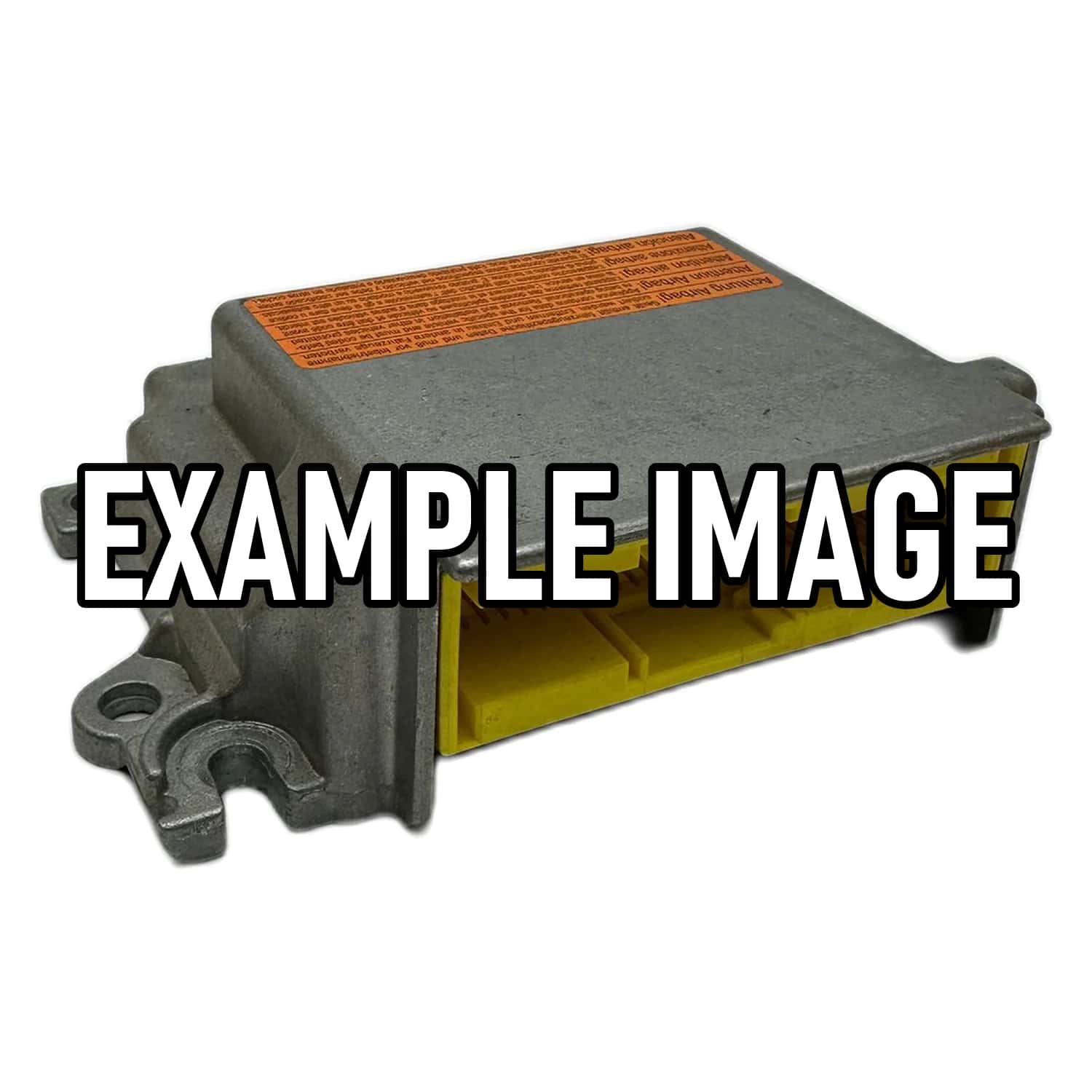
Hyundai Tucson airbag control unit repair(3)

What should I pay attention to with Hyundai Tucson airbag control units?
The airbag technology used in the Hyundai Tucson varies depending on the model year. Professional repair of the control units in all Hyundai Tucson generations ensures true-to-original functionality and contributes to the long-term safety of the vehicle.
The Hyundai Tucson, a popular compact SUV, has undergone impressive development since its launch in 2004. With each generation, not only have design and comfort been improved, but the passive and active safety systems have also been continuously developed.
Airbag technology and the associated control units, in particular, have become increasingly complex over the years. From the earliest models to the current fourth generation, the number of airbags and the precision of their deployment mechanisms have increased significantly. The airbag control unit is the central element, processing all sensor data and reliably deploying the airbags when necessary.
A defective airbag control unit can have far-reaching consequences, as it impairs the function of the entire airbag system. Typical defects include stored crash data after an accident, internal short circuits, or malfunctions signaled by error codes on the dashboard. A professional repair of the airbag control unit is essential in such cases to restore the full safety functionality of the Hyundai Tucson.
Which Hyundai Tucson generations are there?
The Hyundai Tucson has been produced in four generations, each with a different airbag control unit. The development of the safety system reflects technological advances from 2004 to the present.
The evolution of the Hyundai Tucson in four main generations is closely linked to the further development of its safety systems:
- Hyundai Tucson JM (1st generation, approx. 2004–2009): As the first of its kind, the JM laid the foundation for the model's success. Its airbag control units were designed for basic front and side airbags.
- Hyundai Tucson LM (2nd generation, approx. 2009 – 2015): With the model change, advanced airbag systems were often added, such as additional curtain airbags, which required an adaptation of the control units.
- Hyundai Tucson TL (3rd generation, approx. 2015–2020): This generation brought significant improvements in assistance systems and improved airbag technology. The control units became more complex to manage the increasing number of sensors and airbag modules.
- Hyundai Tucson NX4 (4th generation, from approximately 2020 – current): The latest generation features comprehensive active and passive safety packages, including state-of-the-art airbag systems with up to seven airbags and integrated rollover sensors. The airbag control units in these models are highly integrated and networked.
Each of these generations required specifically developed airbag control units tailored to the specific vehicle's equipment and safety architecture. Therefore, it is crucial to use the correct control unit for the specific year and generation during repairs.
How do I identify my Hyundai Tucson airbag control unit?
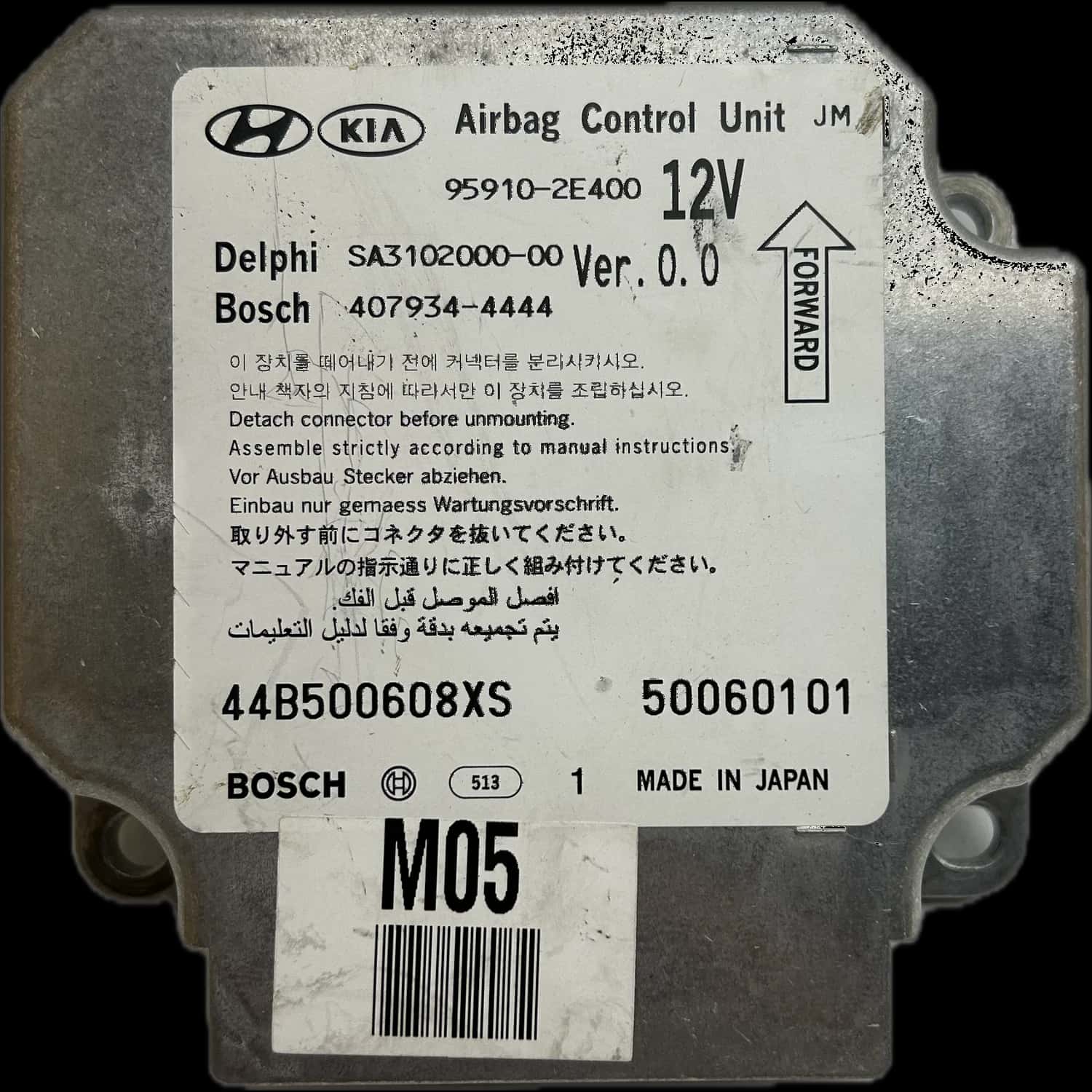
Hyundai Tucson airbag control units can be uniquely identified by part number, model year, and vehicle identification number. Each generation uses specific control unit variants for optimal compatibility.
Accurately identifying the airbag control unit in your Hyundai Tucson is the first and most important step for a successful repair. The control unit's part number is the primary identifier. This number is usually printed directly on the control unit's housing or affixed to a sticker.
In addition to the part number, the year of manufacture of your Hyundai Tucson and the vehicle identification number (VIN) play an important role. This information makes it possible to determine the exact trim level and specific components of your vehicle, as even within a single generation, different control unit variants can exist, differing depending on the specific equipment (e.g., number of airbags).
Comparing the part number with the manufacturer's specifications ensures that the repaired or replaced control unit is perfectly compatible with the rest of your Hyundai Tucson's airbag system. This is crucial for proper function and safety in the event of an accident.
What airbag equipment does the Hyundai Tucson have?
The airbag configuration of the Hyundai Tucson varies depending on the model year and trim level. While early models use basic airbag systems, newer generations feature enhanced safety packages with additional airbag modules.
The safety features of the Hyundai Tucson have continuously improved over the years. Early first-generation (JM) models were typically equipped with basic safety features, including front airbags for the driver and front passenger, as well as side airbags in the front. These already provided a solid baseline of protection.
With the introduction of the second generation (LM) and especially the third generation (TL), airbag equipment was significantly expanded. Side airbags for rear passengers and overhead airbags (curtain airbags) often became standard or were available in higher trim levels. These offer more comprehensive protection in side collisions and rollovers.
The current fourth generation (NX4) of the Hyundai Tucson sets new standards in vehicle safety. It features a comprehensive airbag suite, which in many markets includes at least seven airbags: driver, front passenger, side, and overhead airbags, as well as often an additional knee airbag or a center airbag between the driver and front passenger. These systems are complemented by advanced sensors, including rollover sensors.
All of these airbag modules are monitored by the central airbag control unit and deployed instantly if necessary. In the event of a defect or after an accident, when crash data is stored in the control unit, a professional repair of the airbag control unit is essential. This ensures that the entire complex airbag architecture of your Hyundai Tucson is fully functional again, ensuring occupant safety.
Shipping & repair from Germany
Airbag24 repairs your component in Berlin — usually within 3–4 working days.
Standard shipping within Germany is free; we normally return your part by UPS.
You pay for and insure the inbound shipment to us. On explicit request we ship by express — the extra cost is borne by the customer.
If you withdraw from the contract, you bear the cost of returning the item.