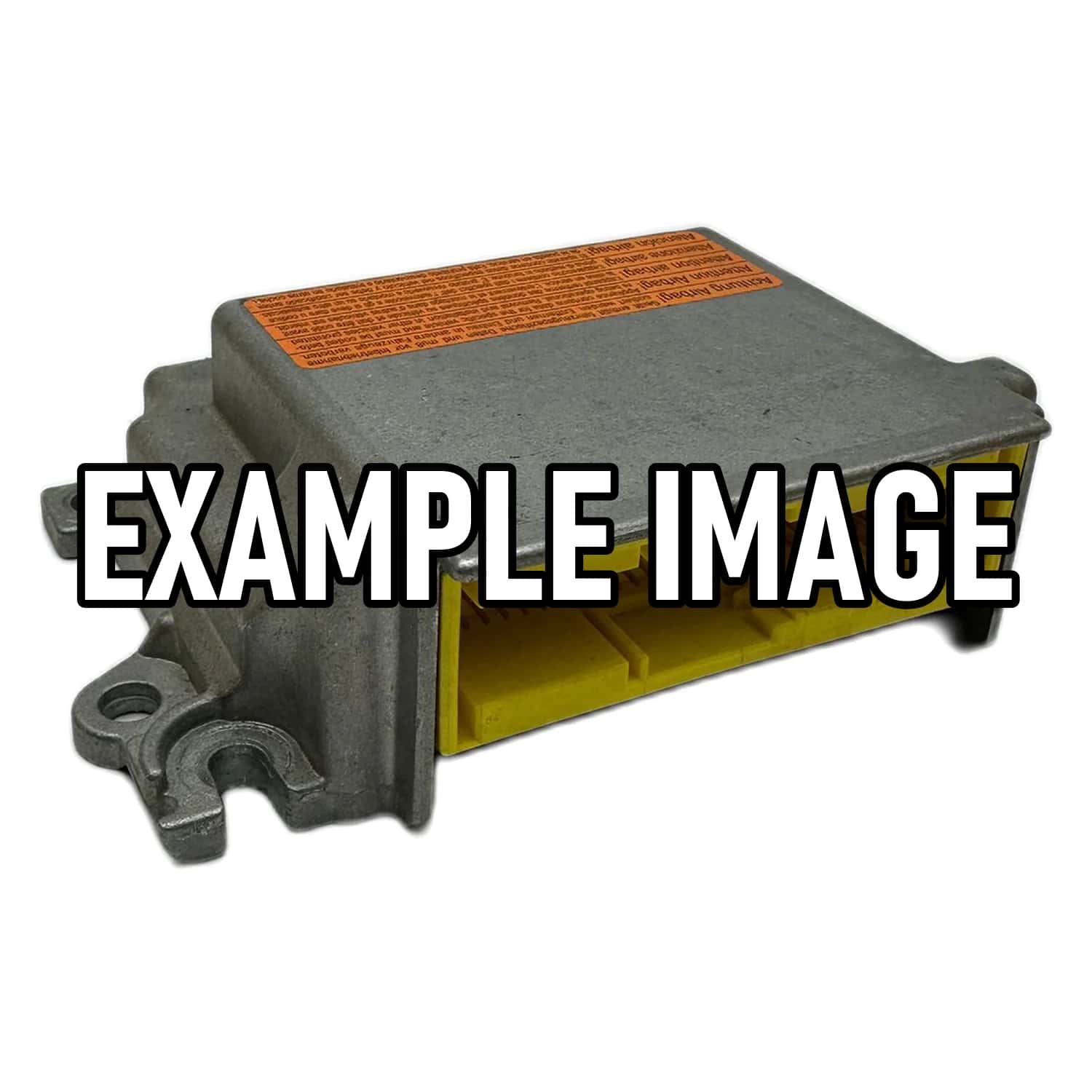
airbag control unit repair Kia cee'd JD
from€66.39
 Quality since 2002
The airbag control unit of the Kia cee'd evaluates the crash sensors, triggers the airbags and belt tensioners, and monitors the entire system. If it detects a fault, the airbag warning light comes on. After an accident, it stores crash data and locks itself.
A defective control unit can impair the function of the entire airbag system. Faults should therefore be checked by a specialist workshop, as work on the airbag system is safety-critical.
Airbag24 repairs your own control unit that you send in. The crash data is erased, and the unit is checked, repaired and tested before it is returned.
The Kia cee'd was built in three generations: ED (2006–2013), JD (2012–2018) and CD (since 2018).
The ED generation is the first of the cee'd, followed by the JD generation and then the CD generation. Control units can also differ within one generation, so the generation alone is not enough for an assignment.
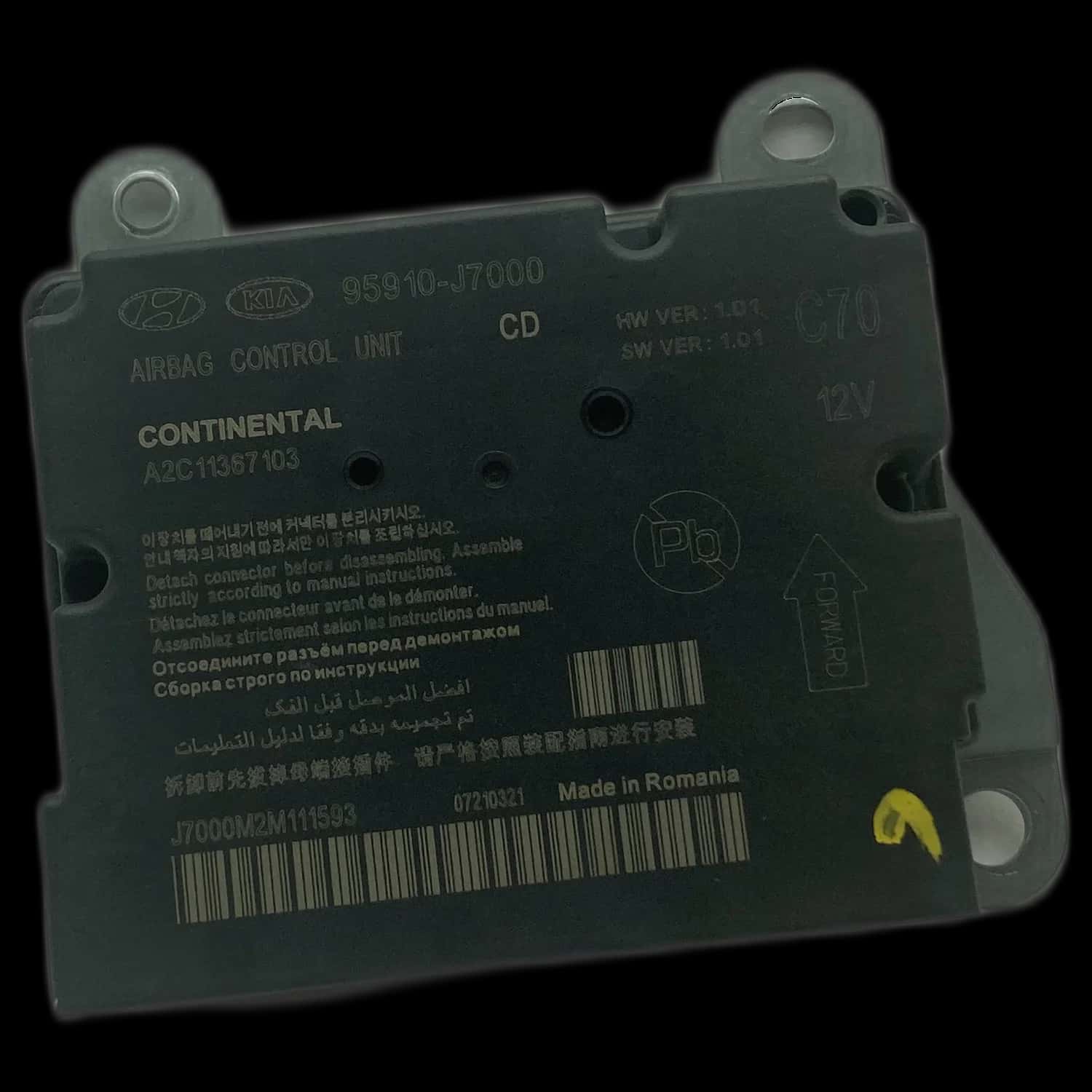
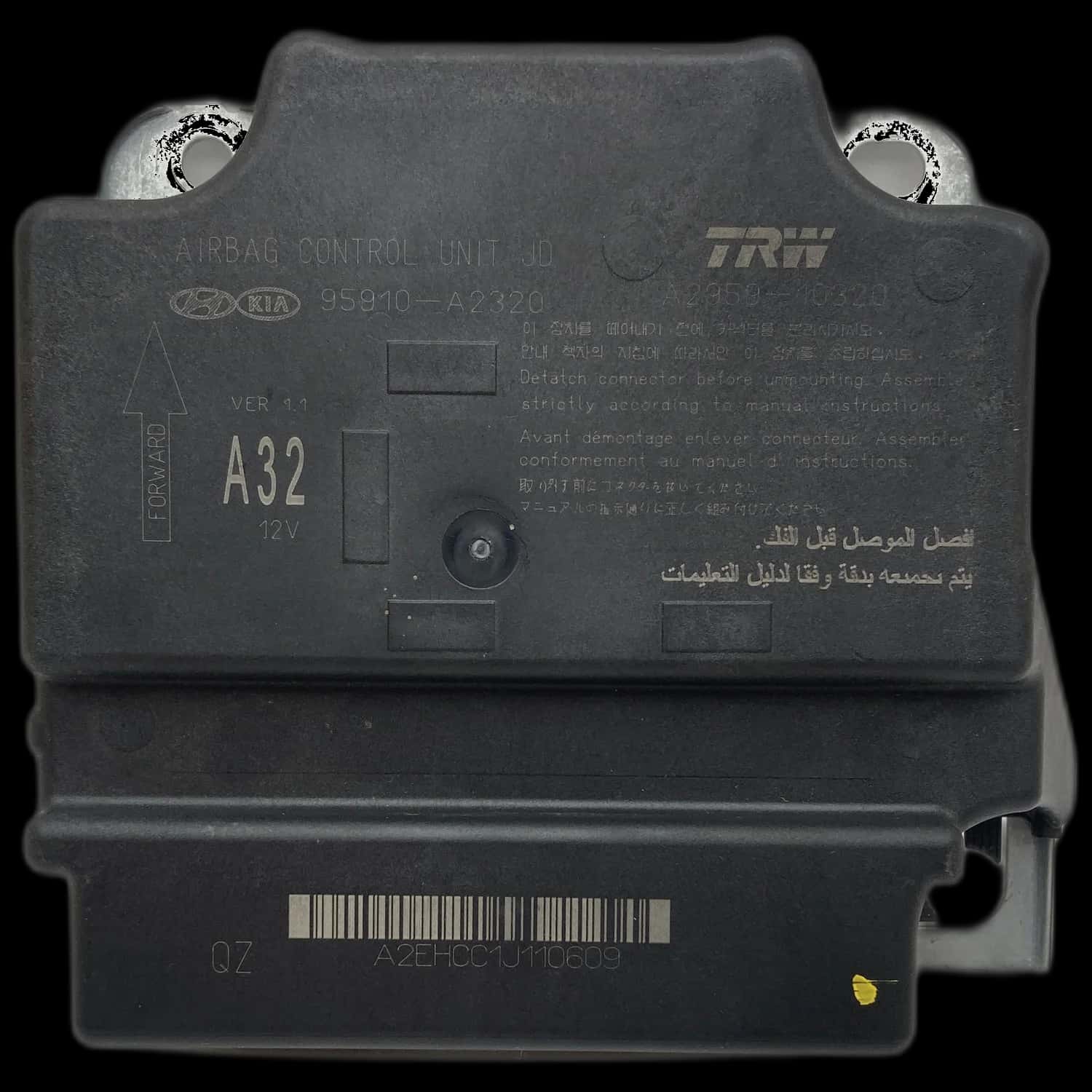
The part number on the label of the control unit determines the exact version. In addition, take the model year and equipment of your vehicle into account, because control units can differ within one generation.
The known part numbers for the ED, JD and CD generations are listed here. The list does not claim to be complete. The generation in brackets is only a guide.
Fault codes such as B1000, U1726 or B1620 can appear in the fault memory. A single code does not prove a defect in the control unit, however; only testing shows the cause.
The airbag equipment of the Kia cee'd varies by generation and trim level. For the ED generation, test reports list six airbags as standard equipment.
For the ED generation, test reports list front, side and curtain airbags as standard. For the JD generation, the owner's manual lists front airbags for driver and front passenger as well as side and curtain airbags; whether the latter two are fitted in a particular vehicle depends on the equipment.
For the CD generation, the standard equipment cannot be stated in general terms. The manufacturer's equipment list for your variant shows which airbags your vehicle has.
This is how the repair works: first have the fault memory read out. Then disconnect the battery and remove the control unit, or have a specialist workshop do it. Next, create a repair order online and send in the control unit. Processing usually takes 3–4 working days (checking, repairing, testing). The repaired control unit returns with all vehicle data and is ready for use as soon as it is refitted — coding or programming is not necessary.
Airbag24 repairs your component in Berlin — usually within 3–4 working days.
Standard shipping within Germany is free; we normally return your part by UPS.
You pay for and insure the inbound shipment to us. On explicit request we ship by express — the extra cost is borne by the customer.
If you withdraw from the contract, you bear the cost of returning the item.