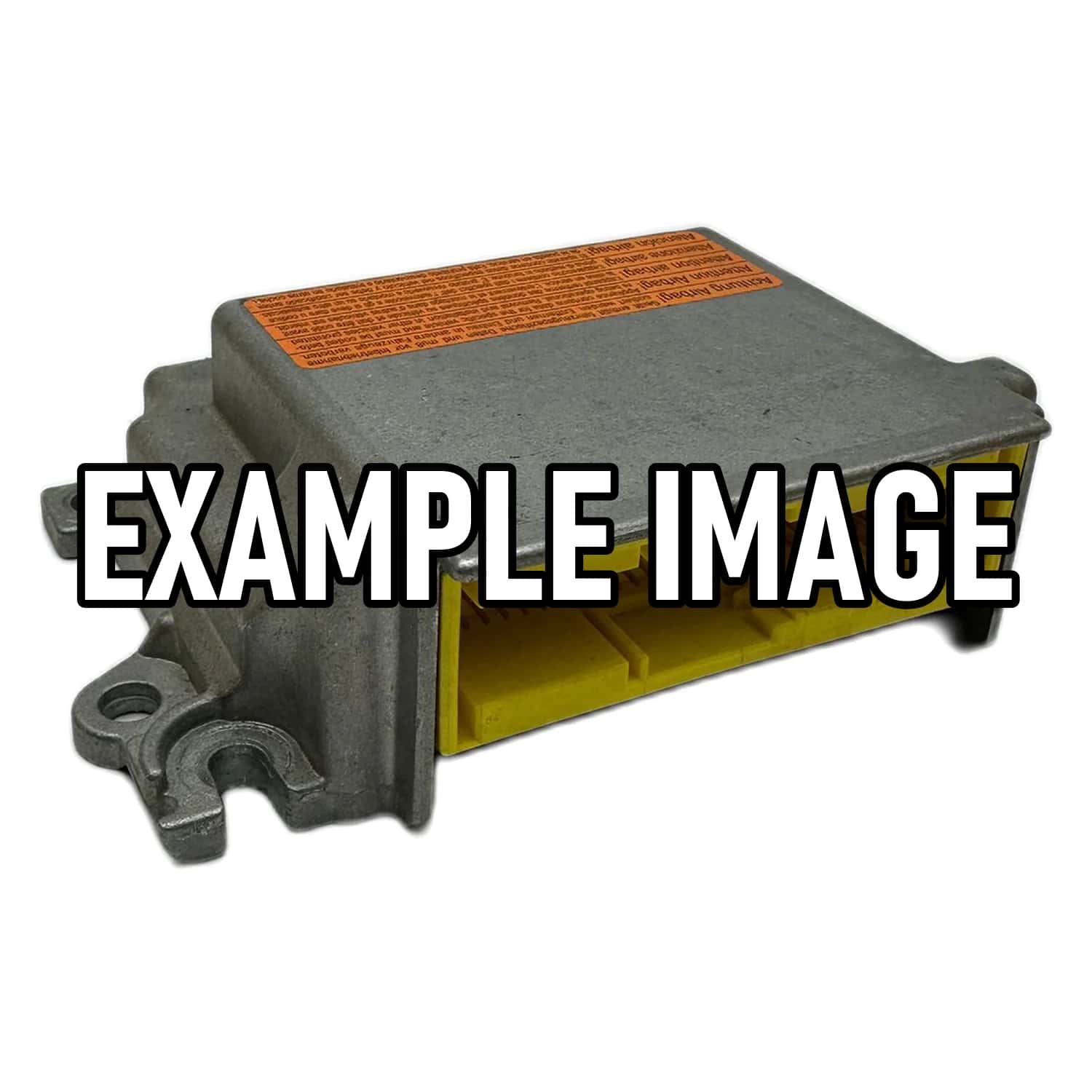
airbag control unit repair Kia Opirus GH
from€66.39
 Quality since 2002
The airbag technology used in the Kia Opirus (model code GH), also known as the Kia Amanti in the North American market, varied slightly over the production period from 2003 to 2012. A functioning airbag control unit is critical to safety, which is why professional repair is essential if it fails.
The Kia Opirus was positioned as a flagship in the upper mid-size segment and placed great emphasis on passive safety from the outset. Over the years, from its launch in 2003 until the end of production in 2010 (or 2012 for some model years worldwide), the vehicle's electronics continued to evolve, which also impacted the airbag systems.
The development of the airbag system in the Kia Opirus reflects the advances in automotive safety during this era. From the base model with the necessary front airbags to more comprehensive systems encompassing a multitude of sensors and trigger units, each evolutionary stage required customized control units. A professional repair ensures that the original functionality and thus occupant safety are fully restored.
Although the Kia Opirus (model code GH) was essentially produced in a single generation from 2003 to 2012, it underwent a significant facelift, which also affected the safety systems and thus potentially the airbag control units used. The evolution of the safety system reflects technological advances in the automotive industry.
The Kia Opirus debuted in 2003 and received a comprehensive facelift around the middle of its production run, around 2006/2007. This update included not only cosmetic tweaks but also technical improvements, potentially resulting in modifications to the electronic components, including the airbag control units.
Pre-facelift (2003-2006) and post-facelift (2007-2012) models may therefore exhibit slight differences in the airbag control units installed, even though the basic architecture of the vehicle platform remains the same. This continuous development underscores the need to consider the exact model year of the Kia Opirus when repairing the airbag control unit.
Kia Opirus airbag control units can be clearly identified by the part number printed on the unit, the vehicle's year of manufacture, and often also the vehicle identification number (VIN). Each model, whether pre- or post-facelift, uses specific control unit variants for optimal compatibility and a reliable "Kia Opirus airbag control unit repair."
To identify the correct airbag control unit for your Kia Opirus, the most important clue is the part number printed on the housing. This alphanumeric combination is unique to each specific version of the control unit and provides information about its exact specifications and compatibility with the respective "model year" and trim level of your Kia Opirus or Kia Amanti.
In addition to the part number, the exact "year of manufacture" of the vehicle can help determine the correct version, as control units may have changed slightly over the production period. If in doubt, the vehicle identification number (VIN) also offers a precise way to determine the original equipment of your Kia Opirus, thus ensuring that the "repair" of the "defective" unit is a perfect fit for the vehicle.
The airbag equipment of the Kia Opirus, a luxury upper-midsize sedan, was advanced for its time and varied depending on the model year and trim level. While early models came standard with essential front airbags, later versions and higher trim levels offered a comprehensive safety package with up to eight airbag modules.
The Kia Opirus, produced from 2003 to 2012, was always equipped with two front airbags as standard—one for the driver and one for the front passenger. These basic airbags are crucial for protection in a frontal collision and were a central component of the vehicle's passive safety.
In addition, depending on the trim level and model year, the Kia Opirus could be equipped with an advanced airbag system. This included four side airbags, providing additional protection for both front and rear occupants in side collisions. This was complemented by two curtain airbags extending along the side windows to provide full-length head and chest protection.
This comprehensive airbag equipment underscores Kia's commitment to establishing the Opirus/Amanti as a safe vehicle in its segment. The complexity of this system, consisting of numerous sensors and igniters, makes the functionality of the "Kia Opirus Airbag Control Unit" the heart of passive safety and highlights the need for professional repair in the event of a "defective" unit.
Airbag24 repairs your component in Berlin — usually within 3–4 working days.
Standard shipping within Germany is free; we normally return your part by UPS.
You pay for and insure the inbound shipment to us. On explicit request we ship by express — the extra cost is borne by the customer.
If you withdraw from the contract, you bear the cost of returning the item.