airbag control unit repair Kia Sephia FA
from€79.00
 Quality since 2002
The airbag technology used in the Kia Sephia varied depending on the model year and market region. Airbag control units in the Kia Sephia must be professionally inspected or replaced after an accident, as they are critical to occupant safety.
The Kia Sephia was produced from 1992 to around 2003 in two main generations, the first (FA) and the second (FB). These model series reflect the development of passive safety technologies in the 1990s.
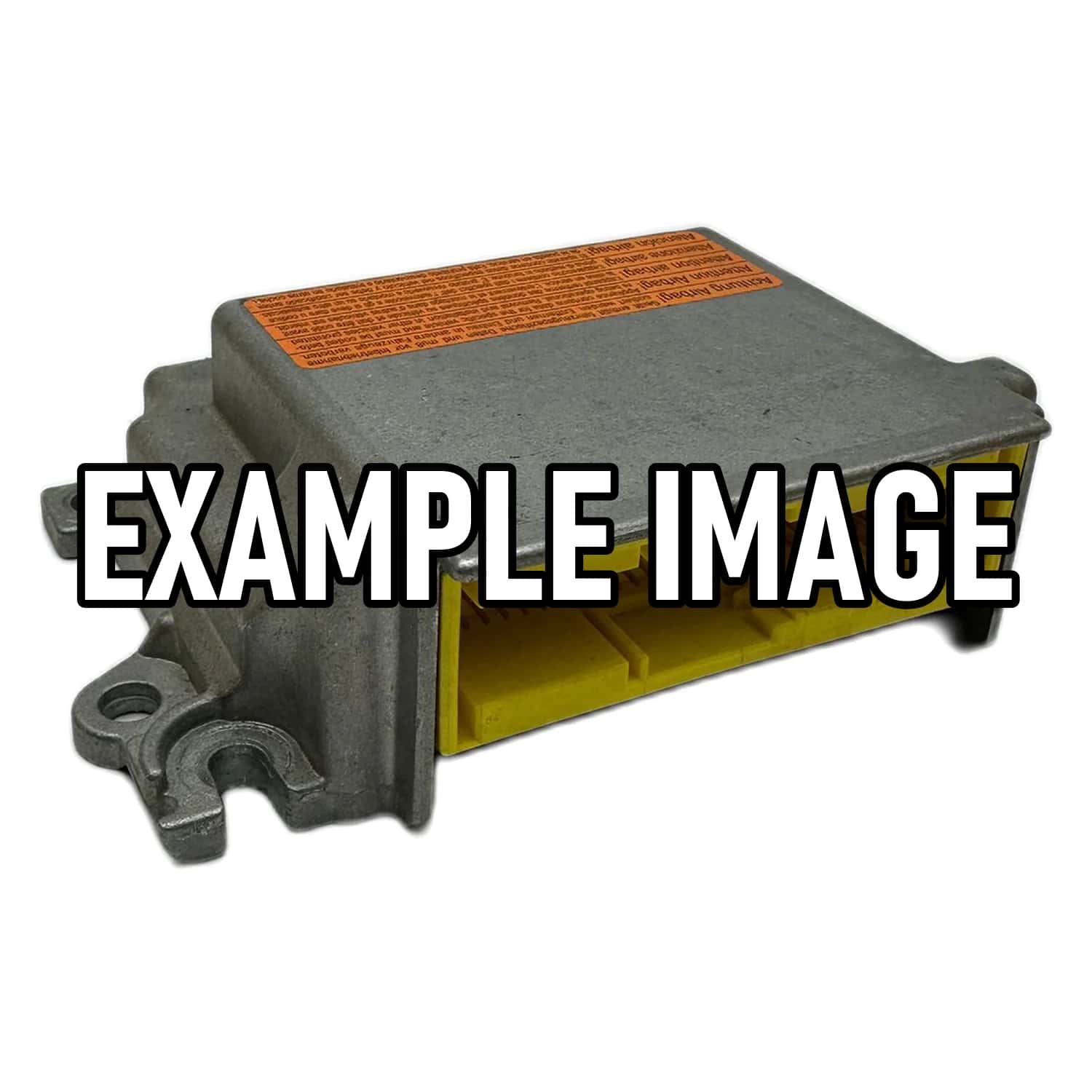
Initially, airbags in the compact segment were often optional or only available as a driver's airbag. The airbag control unit, also known as the SRS module, is the central component that processes sensor data and deploys the airbags in the event of a collision. Once deployed, it is typically only usable once and must be reset or replaced to restore the safety system's full functionality.
The Kia Sephia was produced in two main generations, each featuring different airbag control units and safety features. The development of the safety system reflects technological advances from 1992 to 2003.
The first generation of the Kia Sephia, known internally as the FA, was built from autumn 1992 to 1997. It received a facelift around 1994, which included slight design changes and often the introduction of optional passenger airbags.
The second generation, produced from 1997 to 2003, may have been internally known as the FB or another designation indicating a complete redesign. In some markets, this model was marketed as the Kia Spectra from 2000 onwards, but retained its compact class positioning.
Each generation of the Kia Sephia required specifically modified airbag control units to ensure compatibility with the installed sensors and airbag modules. A repair of the Kia Sephia airbag control unit must take these specifics into account.
Kia Sephia airbag control units can be uniquely identified by their specific part number, the vehicle's year of manufacture, and often also by the vehicle identification number (VIN). Each generation of the Kia Sephia used specific control unit variants for optimal compatibility with the respective airbag system.
The airbag control unit part number is the most important identifier. It is located directly on the control unit housing, which is usually located near the center console, under the carpet, or under one of the front seats.
The exact year of your Kia Sephia is also crucial, as the installed components can change within a single generation. When replacing or repairing the Kia Sephia airbag control unit, it is essential to verify the correct part number to ensure proper function of the safety system.
The Kia Sephia's airbag configuration varied depending on the model year and trim level, but reflected the standards of the compact segment of the 1990s. While early models used only basic airbag systems, newer generations featured enhanced safety packages, although these did not yet include comprehensive side airbags.
In the first generation of the Kia Sephia, especially after the 1994 facelift, airbags were gradually introduced as an option. These were mostly front airbags, with the driver's airbag often standard and the passenger airbag optional. The anti-lock braking system (ABS) was also often only available as an option until recently.
The Kia Sephia's airbag system was primarily focused on protection in frontal collisions. The front airbags (driver and, where applicable, passenger side) were designed to complement the seatbelts and only deployed in cases of sufficient impact.
There was no comprehensive airbag system with side or curtain airbags, as would become common in later vehicle generations. The Kia Sephia's primary target audience was price-conscious buyers seeking a reliable and functional vehicle, which was also reflected in the rather basic safety features. A professional repair of the Kia Sephia airbag control unit ensures that this important safety system is fully functional again.
Airbag24 repairs your component in Berlin — usually within 3–4 working days.
Standard shipping within Germany is free; we normally return your part by UPS.
You pay for and insure the inbound shipment to us. On explicit request we ship by express — the extra cost is borne by the customer.
If you withdraw from the contract, you bear the cost of returning the item.