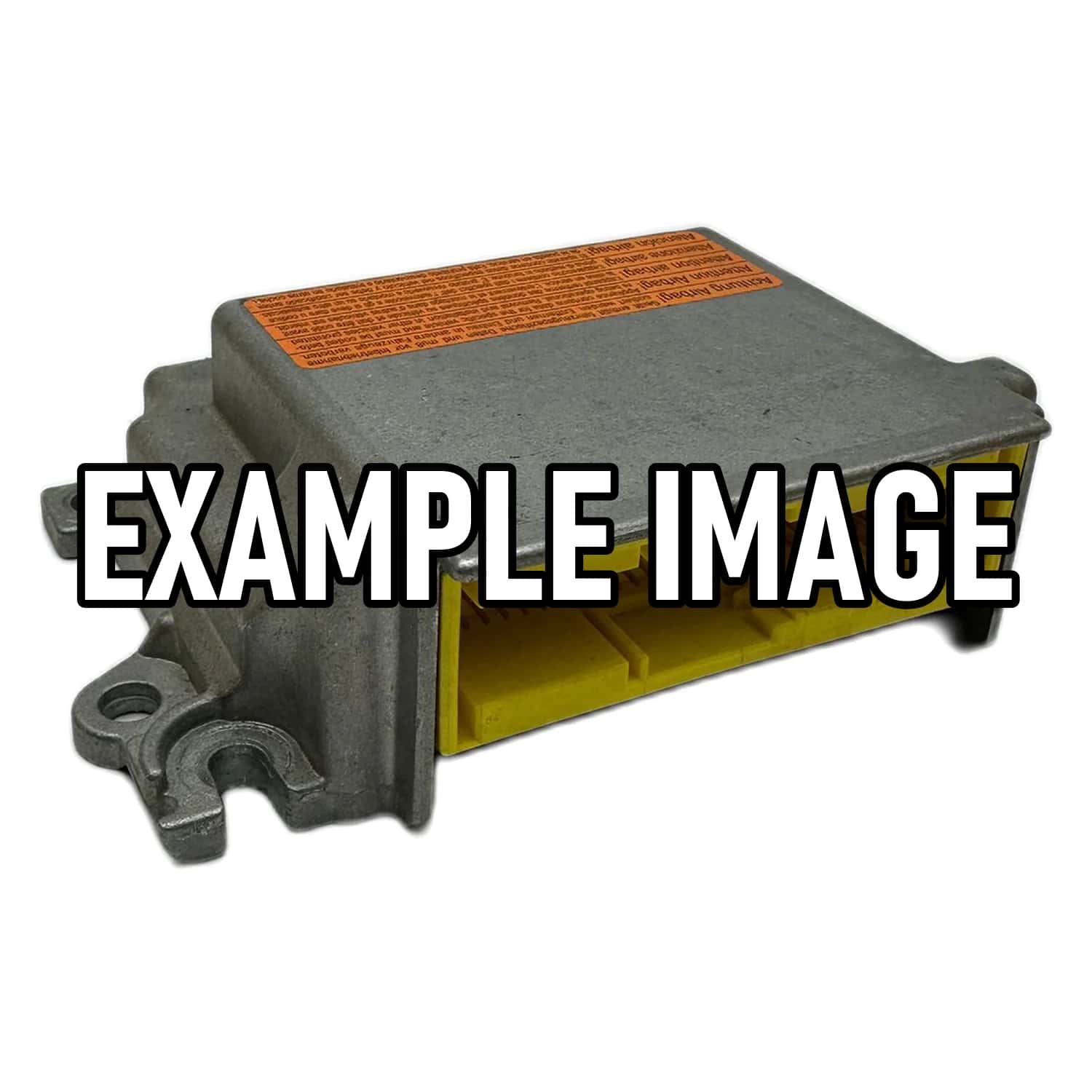
airbag control unit repair Lexus GS L10
from€79.00
 Quality since 2002
The airbag technology used in the Lexus GS varies depending on the model year. Airbag control units for all Lexus GS generations can be professionally repaired with original functionality to restore full safety.
The Lexus GS series, a luxury to upper mid-size sedan, was produced from 1991 to 2020. During this almost thirty-year production period, vehicle technology has evolved significantly, particularly in the area of safety systems.
The Lexus GS's airbag systems have continually adapted to evolving safety standards. From basic driver and passenger airbags in the early models to comprehensive multi-point systems in recent generations, the airbag control units reflect this technological advancement.
The Lexus GS has been produced in four generations, each with different airbag control units. The development of the safety system reflects technological advances from 1991 to 2020.
The first generation (S140), produced from 1991 to 1997, laid the foundation for the sporty yet elegant sedan. It still used comparatively simple airbag control units that controlled basic front and side airbags.
The second generation (S160), built from 1997 to 2005, saw significant advances in comfort and technology. The airbag systems were already enhanced, and the associated control units were more complex to provide greater safety.
The third generation (S190), on the market from 2005 to 2011, introduced hybrid variants such as the GS 450h for the first time. The airbag equipment was significantly more extensive, which also required a more powerful airbag control unit.
The fourth and final generation (L10), produced from 2011 to 2020, was technologically state-of-the-art. It featured up to 10 SRS airbags and modern assistance systems, raising the complexity and performance of the airbag control unit to a new level.
Model names such as GS300, GS350, GS400, GS430, GS450h, GS460, and the performance-oriented GS-F are spread across these generations. Regardless of the exact model, a defective airbag control unit can occur in any of these vehicles.
Lexus GS airbag control units can be uniquely identified by part number, model year, and vehicle identification number. Each generation uses specific control unit variants for optimal compatibility.
The part number is the most important indicator for uniquely identifying a Lexus GS airbag control unit. This number is printed directly on the control unit's housing and should exactly match the required repair version.
Additionally, the vehicle's year of manufacture and the vehicle identification number (VIN) are helpful for verifying the correct control unit. Technological changes over the years of production may have required different control units, even within a single generation.
The airbag control unit in the Lexus GS is typically located centrally in the vehicle, often under the center console or under one of the front seats. Refer to the service manual for your specific Lexus GS model for the exact location.
The airbag configuration of the Lexus GS varies depending on the model year and trim level. While early models use basic airbag systems, newer generations feature enhanced safety packages with additional airbag modules.
In the early first- and second-generation Lexus GS models (S140, S160), the standard airbag configuration typically included dual-stage driver and passenger front airbags, as well as side airbags for the front occupants. This basic configuration already offered solid protection for the time.
With the introduction of the third generation (S190) and especially the fourth generation (L10), the airbag equipment of the Lexus GS was significantly expanded. Knee airbags for the driver and front passenger, side airbags for the outboard rear seats, and full-length curtain airbags for the front and rear seats became standard.
Later Lexus GS models, especially the L10 generation, could be equipped with up to 10 SRS airbags. These comprehensive multi-point airbag systems provide comprehensive occupant protection in various collision types.
In addition, newer GS models incorporate additional passive and active safety systems. These include pre-collision systems, driver attention monitors, and advanced restraint systems that work closely with the airbag control unit to ensure maximum occupant safety. A defective airbag control unit can severely impair the function of these systems or even disable them completely.
Airbag24 repairs your component in Berlin — usually within 3–4 working days.
Standard shipping within Germany is free; we normally return your part by UPS.
You pay for and insure the inbound shipment to us. On explicit request we ship by express — the extra cost is borne by the customer.
If you withdraw from the contract, you bear the cost of returning the item.