
Nissan NT400 airbag control unit repair(1)
1 product
What should I pay attention to with Nissan NT400 airbag control units?
The airbag technology used in the Nissan NT400 varies depending on the model year and equipment, with the focus on robust functionality. Professional repair ensures the airbag control unit functions as originally intended.
The Nissan NT400 was introduced in 2014 as the successor to the successful Cabstar and has been in continuous production ever since. As a light distribution truck, it is designed for demanding daily work, which is also reflected in its safety systems.
Although there are no official "generations" in the traditional sense, there have been continuous technical improvements over the years, particularly in engines and emissions standards (e.g., Euro 6). These updates can also affect the installed electronic components, including the airbag control unit, to ensure compatibility and efficiency.
Which Nissan NT400 generations are there?
The Nissan NT400 has been produced as a continuous model line since its launch in 2014, without any explicit generational changes. The development of the safety system reflects continuous technological progress and adaptations to current standards.
The NT400 is a unique European development that uses the cab of the technically related Nissan NT500, while incorporating proven elements such as the dashboard and side panels from the predecessor model, the Cabstar. This approach enabled high levels of efficiency and functionality for the light commercial vehicle segment.
Instead of separate generations or major facelifts, Nissan focused on continuous improvements under the hood. These included engine updates to meet stricter emissions standards and optimizing vehicle performance for urban and regional delivery operations. While the basic airbag architecture remained the same, the associated control units were adapted to new requirements or suppliers over the course of production.
How do I identify my Nissan NT400 airbag control unit?
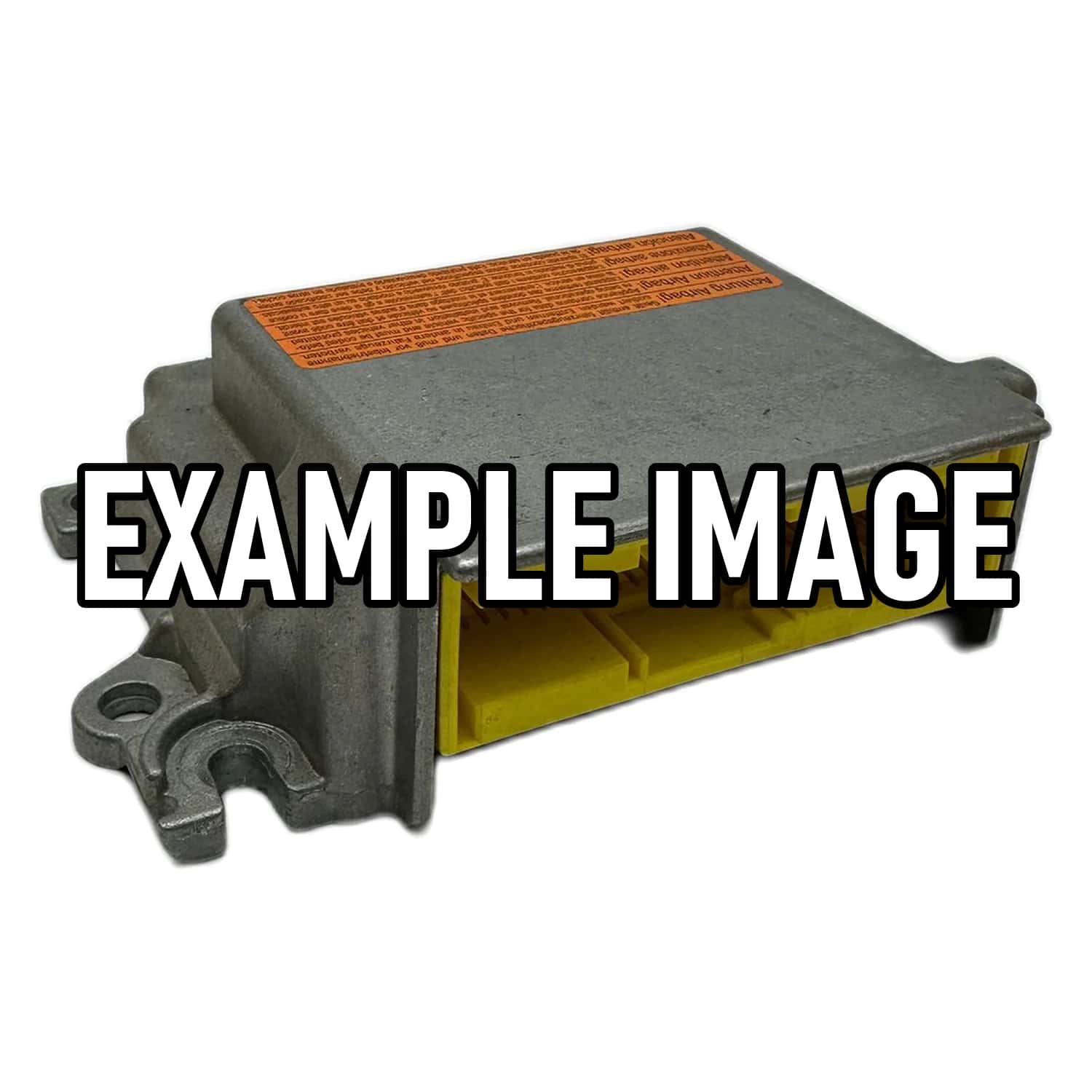
Nissan NT400 airbag control units can be reliably identified by their specific part number, vehicle year, and vehicle identification number (VIN). Precise identification is crucial for selecting the correct replacement part or performing a professional repair.
The part number of the airbag control unit is usually located directly on the module housing. Since the NT400 has been in production since 2014 and has undergone continuous technical modifications, different control unit revisions can be found even in seemingly identical models.
In addition to the part number, the year of manufacture provides valuable information about the exact specifications of the installed system. The complete vehicle identification number (VIN) allows the control unit to be clearly assigned to your specific vehicle, which is particularly important since airbag equipment can vary depending on the equipment line (e.g., with or without a passenger airbag).
What airbag equipment does the Nissan NT400 have?
The airbag configuration of the Nissan NT400 is tailored to the requirements of a rugged commercial vehicle and varies primarily with regard to the passenger airbag. The driver airbag is standard equipment on all models.
Every Nissan NT400 is factory-equipped with a driver's airbag to ensure driver safety in the event of a collision. This is a standard feature that underscores the essential passive safety features for commercial use.
An additional airbag is available as an option for the passenger compartment. This option allows companies to adapt the vehicle's safety features to their specific needs and the number of passengers typically carried.
In addition to the airbags, the Nissan NT400 features height-adjustable seat belts for the driver and front passenger, allowing for optimal belt positioning and thus maximum protection. The robust cabin structure, reinforced with anti-intrusion struts in the doors, further contributes to the passive safety of the occupants and makes the NT400 a reliable partner in daily distribution operations.
Common fault codes in this category
Shipping & repair from Germany
Airbag24 repairs your component in Berlin — usually within 3–4 working days.
Standard shipping within Germany is free; we normally return your part by UPS.
You pay for and insure the inbound shipment to us. On explicit request we ship by express — the extra cost is borne by the customer.
If you withdraw from the contract, you bear the cost of returning the item.