
Nissan Primera airbag control unit repair(3)
What should I pay attention to with Nissan Primera airbag control units?
The airbag technology used in the Nissan Primera varies considerably depending on the year and model series. Airbag control units for the Nissan Primera require a specific repair approach to ensure the safety system's original functionality.
The Nissan Primera was produced in three main generations, P10, P11, and P12, from 1990 to 2007. This long production span led to continuous development of the safety systems and thus also of the installed airbag control units.
During the early P10 models, airbags were often still optional features, which impacted the complexity and error logs of these control units. With the transition to the P11 and especially the P12, airbags became increasingly standard, resulting in more complex control units integrating more sensors and functions.
A defective airbag control unit in a Nissan Primera is often indicated by an illuminated airbag warning light. In many cases, a repair is a cost-effective and sustainable alternative to purchasing a new unit, although the specific requirements of each Primera generation must be taken into account, especially with regard to the units often installed in the trunk of the P11.
Which Nissan Primera generations are there?
The Nissan Primera has been produced in three major generations, each with its own specific airbag control units. The evolution of the safety system reflects technological advances from 1990 to 2007 and is crucial for the precise repair of a faulty control unit.
The first generation, the Nissan Primera P10, was built from 1990 to 1995. In these models, airbags, if present at all, were usually integrated as an option and provided a basic protective function, which is reflected in the installed airbag control units.
This was followed by the Nissan Primera P11, which was produced from 1995 to 2001. Driver and passenger airbags became increasingly standard, requiring expanded functionality from the airbag control units and leading to greater system complexity.
The last generation, the Nissan Primera P12, ran from 2001 to 2007 and received a facelift in 2005. These models featured more comprehensive standard airbag equipment, often including additional safety features, making the control units even more powerful and complex to manage all the sensors and ignition circuits.
How do I identify my Nissan Primera airbag control unit?
Nissan Primera airbag control units can be reliably identified by their part number, the vehicle's year of manufacture, and the vehicle identification number (VIN). Each generation of the Nissan Primera uses specific control unit variants, which are crucial for optimal compatibility and a successful repair.
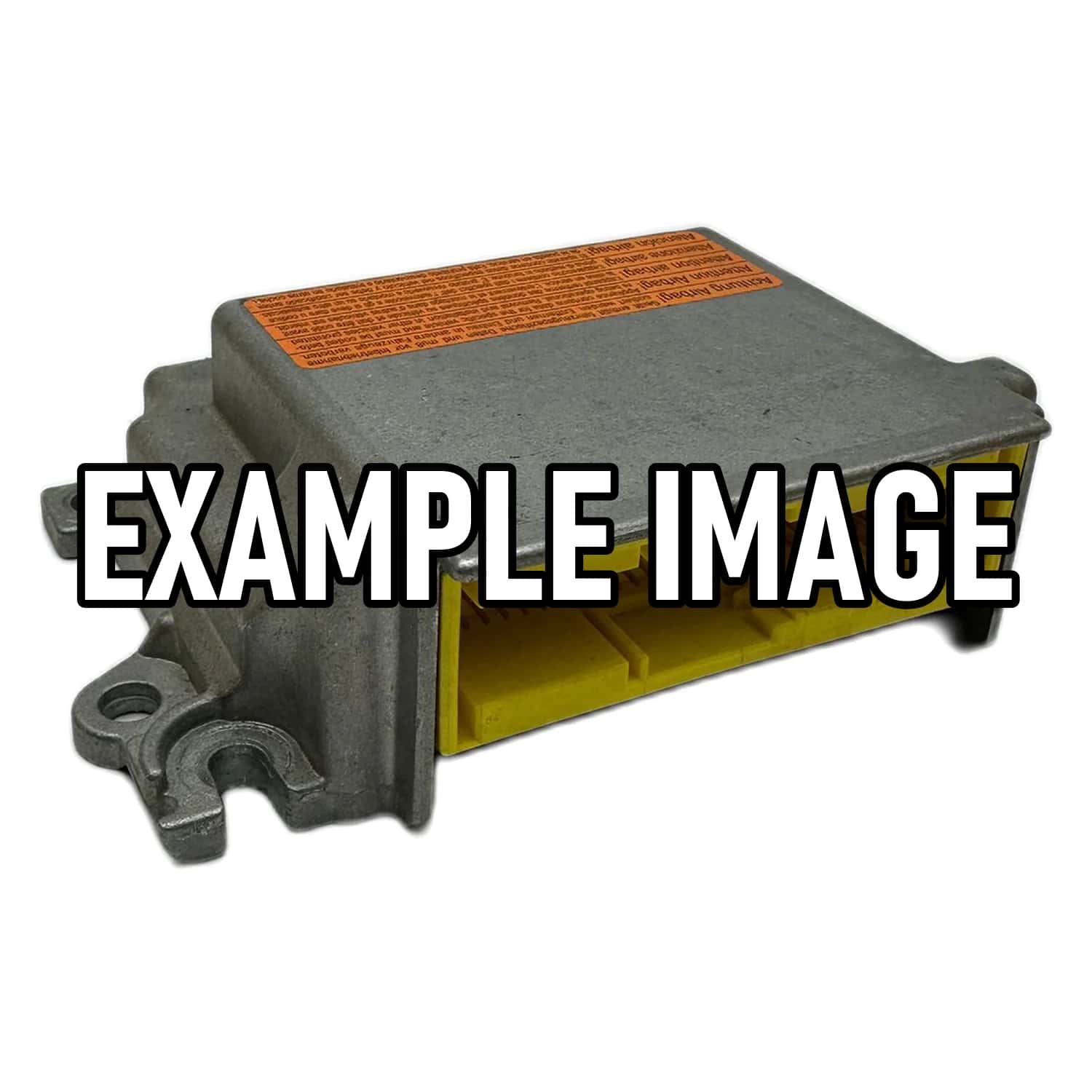
The part number is the most important indicator and is located directly on the housing of the airbag control unit. It provides information about the exact specification of the unit and its compatibility with the respective vehicle model and its equipment.
Additionally, the Nissan Primera's model year and its vehicle identification number (VIN) are important criteria. These allow us to assign the correct airbag control unit to a specific Primera generation (P10, P11, P12) and identify the correct software version for repair or replacement.
In the Nissan Primera, especially the P11, the airbag control unit is often installed in the trunk, which can affect accessibility. Correct diagnosis and identification are essential, as even small discrepancies in the part number or model year can lead to incompatibilities and malfunctions after repair.
What airbag equipment does the Nissan Primera have?
The airbag configuration of the Nissan Primera varies significantly depending on the model year, trim level, and the specific market for which the vehicle was produced. While early models used only basic airbag systems, newer generations feature enhanced safety packages with additional airbag modules that require specialized repair.
In the Nissan Primera P10 (1990-1995), airbags were still largely an optional feature. If available, they were usually limited to a driver airbag or an additional passenger airbag, depending on the trim level and the sales market. This is reflected in the comparatively simple airbag control units of this era.
With the introduction of the Nissan Primera P11 (1995-2001), driver and passenger airbags became increasingly standard in mid-size cars. This led to wider adoption and integration into vehicle systems, increasing the complexity of the airbag control units required to manage these essential safety features.
The Nissan Primera P12 (2001-2007) typically offered a more comprehensive range of standard airbags. In addition to the mandatory driver and passenger airbags, side airbags and, in some cases, even curtain airbags were often part of the safety package, requiring more modern and complex airbag control units capable of managing a larger number of sensors and firing circuits.
The specific airbag configuration has a direct impact on the airbag control unit. Each additional airbag module or sensor requires corresponding connections and software logic in the control unit, making the fault diagnosis and subsequent repair of a defective control unit a specialized task that requires knowledge of the specific generation and configuration of the Nissan Primera.
Common fault codes in this category
Shipping & repair from Germany
Airbag24 repairs your component in Berlin — usually within 3–4 working days.
Standard shipping within Germany is free; we normally return your part by UPS.
You pay for and insure the inbound shipment to us. On explicit request we ship by express — the extra cost is borne by the customer.
If you withdraw from the contract, you bear the cost of returning the item.