
Nissan Tiida airbag control unit repair(3)
What should I pay attention to with Nissan Tiida airbag control units?
The airbag technology used in the Nissan Tiida varies depending on the model year and market region. Professional repair of the airbag control units in all Nissan Tiida generations requires comprehensive expertise to ensure true-to-original functionality and the highest safety standards.
The Nissan Tiida, a compact class (C-segment) vehicle, was produced from approximately 2004 to 2020 and sold worldwide under various names, including the Nissan Versa in North America. Over this long production period, there were significant developments in the safety systems installed.
Airbag technology in the Tiida has evolved steadily from the original C11 series to the newer C12 and C13 generations. This applies not only to the number of airbags, but also to the complexity of the control units responsible for the precise deployment and monitoring of the passive safety systems.
A defective airbag control unit can signal a malfunction of the entire safety system, often indicated by an illuminated airbag warning light in the dashboard. Early diagnosis and professional repair of this safety-critical component are crucial for restoring vehicle safety.
Which Nissan Tiida generations are there?
The Nissan Tiida has been produced in at least three main generations and with various facelifts, with each series using specific airbag control unit variants. The development of the safety system reflects the technological advances from the first models in 2004 to the latest generation around 2020.
The first generation of the Nissan Tiida, known as the C11 series, was built from approximately 2004 to 2011. These models laid the foundation for Nissan's compact-class strategy and featured proven safety components.
This was followed by the C12 series, which was launched as the second generation from around 2011 to around 2016. Featuring a more modern design and revised technology, it also brought adjustments to the electronic systems, including the airbag control unit.
The third generation, or a comprehensive facelift, the C13 series, appeared from around 2016 and was produced until around 2020. These later models incorporated further technological improvements that directly impacted the complexity and functionality of the airbag control units.
The diversity of the Tiida series C11, C12 and C13 underlines the need for precise identification of the appropriate airbag control unit for repair, as the components can differ between the generations.
How do I identify my Nissan Tiida airbag control unit?
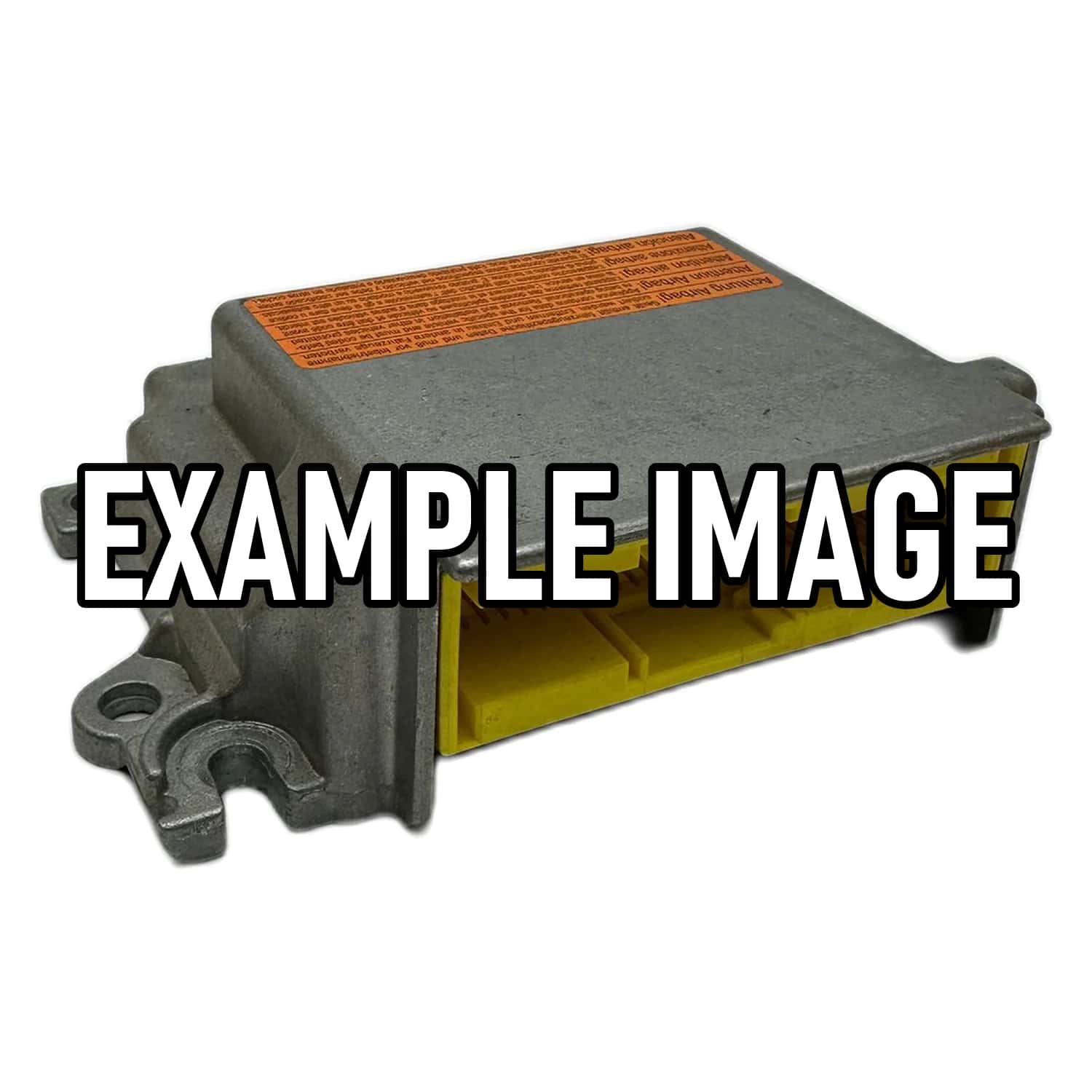
Nissan Tiida airbag control units can be uniquely identified by their specific part number, the vehicle's year of manufacture, and often also by the vehicle identification number (VIN). Each generation of the Tiida typically uses specific control unit variants designed for optimal compatibility and system integration.
The airbag control unit part number is the primary method of identification and is located directly on the component's housing. This number is crucial for finding the exact replacement or repair unit that perfectly fits your Nissan Tiida.
In addition, the year of manufacture of your Nissan Tiida, especially its C11, C12, or C13 series, can provide important clues about the control unit generation installed. The vehicle identification number, which is listed on the vehicle registration document, also allows for precise identification of the specific features and components installed during production.
The airbag control unit is typically installed centrally in the vehicle interior, often under the center console or driver's seat. Careful identification prior to repair is essential to ensure the full functionality of the passive safety system after repair.
What airbag equipment does the Nissan Tiida have?
The Nissan Tiida's airbag equipment is remarkably comprehensive and safety-focused across all model years and trim levels. All models come standard with a wide range of airbag modules and other passive safety systems to ensure optimal occupant protection.
From its launch in 2004 until the end of production, a comprehensive safety package was standard on the Nissan Tiida. This always included driver and passenger airbags, providing protection in the event of a frontal collision.
Side airbags and head airbags were also fitted as standard. Side airbags protect the occupants in the event of a side impact, while head airbags, often designed as curtain airbags, protect the head area of the front and rear passengers.
In addition to airbags, the Tiida was equipped as standard with other important safety systems such as anti-lock braking system (ABS) with electronic brake-force distribution (EBD) and Electronic Stability Program (ESP). Three-point seatbelts on all seats and active front head restraints complemented the comprehensive passive safety package, making the Tiida a safe family car in the compact segment that also appealed to discerning customers from higher segments.
Shipping & repair from Germany
Airbag24 repairs your component in Berlin — usually within 3–4 working days.
Standard shipping within Germany is free; we normally return your part by UPS.
You pay for and insure the inbound shipment to us. On explicit request we ship by express — the extra cost is borne by the customer.
If you withdraw from the contract, you bear the cost of returning the item.