airbag control unit repair Opel Combo B
from€79.00
 Quality since 2002
The airbag technology used in the Opel Combo varies depending on the model year. Airbag24 professionally repairs control units of all Opel Combo generations with original functionality and a 2-year warranty.
The Opel Combo looks back on a long and diverse production history, beginning in 1986 and spanning five main generations. Originally conceived as a pure small van, based on the Opel Kadett E, it evolved over the years into a versatile high-roof station wagon that appeals to both commercial and private users.
Parallel to the evolution of the vehicle concept, airbag technology in the Opel Combo has also evolved dramatically. From rudimentary, optional airbag systems in the early models to comprehensive, integrated safety systems with numerous airbags and modern driver assistance features in the current generations.
This technological development has a direct impact on airbag control units: Each generation of the Opel Combo uses specific control units tailored to the respective airbag configuration and underlying vehicle platform. A defective airbag control unit therefore requires a repair that takes the specific vehicle model year and equipment into account to ensure full functionality and safety.
The Opel Combo has been produced in five main generations, each with different airbag control units. The development of the safety system reflects technological advances from 1986 to the present.
The first generation, the Opel Combo A (1986–1993), was based on the Opel Kadett E and was a classic small van. Airbags were still rare in this era and usually not standard.
The Opel Combo B (1995–2001) used the platform of the Opel Corsa B. Here, airbags, especially the driver airbag, began to become increasingly standard, which increased the demands on the control unit.
With the Opel Combo C (2001–2011), a high-roof station wagon based on the Corsa C, driver and passenger airbags became largely standard. The control units became more complex to manage more sensors and modules.
The Opel Combo D (2012–2018) was based on a GM-Fiat platform and already offered more comprehensive airbag systems, often including side airbags. This led to further specialization of the installed airbag control units.
The current generation, the Opel Combo E (since 2018, with a facelift in 2024), is based on a PSA platform. It features very comprehensive airbag systems, including side and curtain airbags, and integrates state-of-the-art driver assistance systems, making the control units highly complex electronic units.
Opel Combo airbag control units can be uniquely identified by part number, model year, and vehicle identification number (VIN). Each generation, and often specific equipment options, use specific control unit variants for optimal compatibility and functionality.
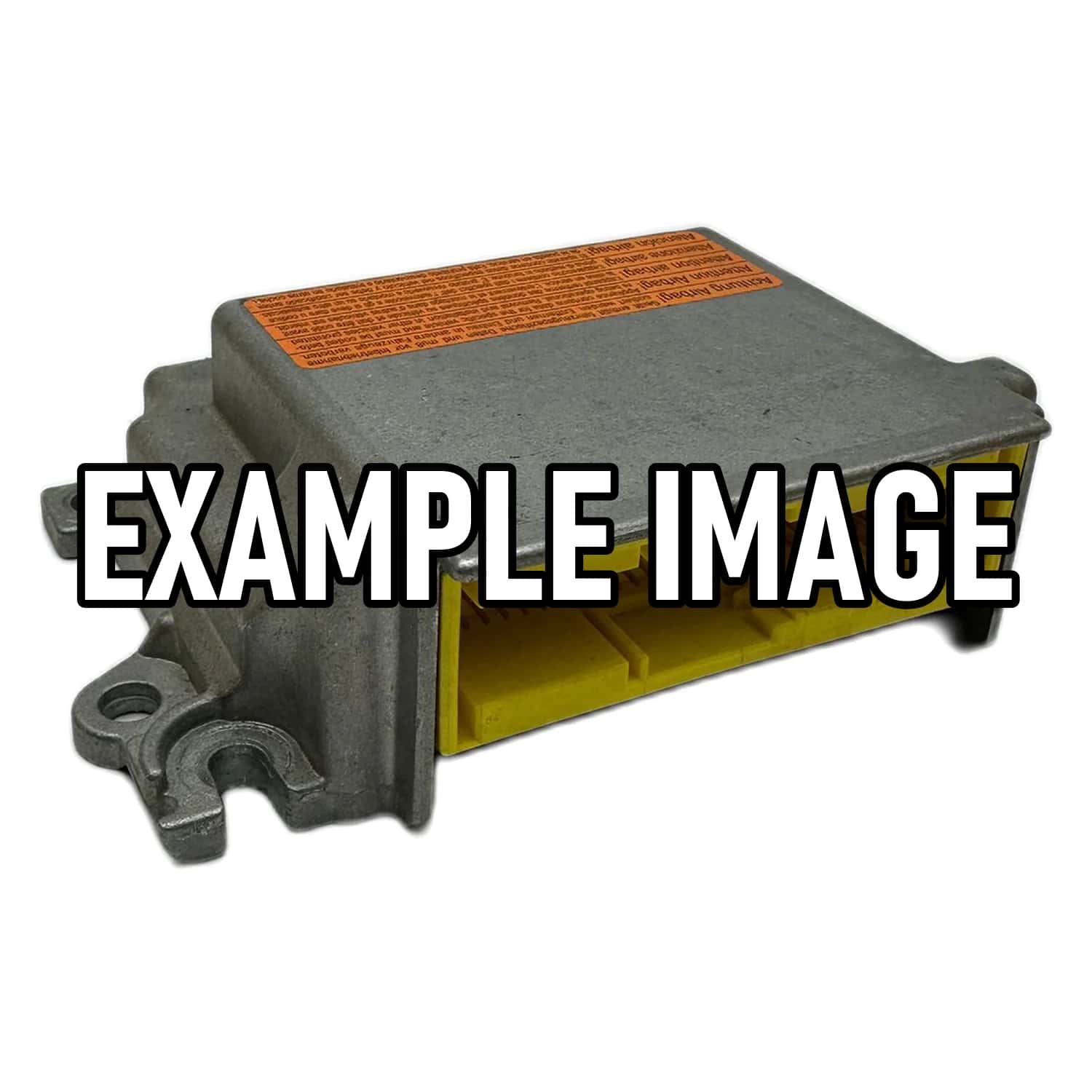
Accurately identifying your Opel Combo airbag control unit is crucial for a successful repair. The control unit's part number is usually printed directly on the component. To locate the control unit, in most Opel Combo models, you'll need to check the passenger-side footwell or under the center console, as it's often located under the carpet or behind the trim.
In addition to the part number, the exact year of manufacture of your Opel Combo and the vehicle identification number (VIN) are important features. This information helps distinguish between revisions or specific versions within a generation. Since the Opel Combo was built on various platforms (from Opel to GM-Fiat to PSA), the electronic architectures and thus the airbag control units vary considerably between generations. Precise matching ensures that the repair is tailored precisely to your vehicle's requirements and that the full functionality of the safety system is restored.
The airbag configuration of the Opel Combo varies considerably depending on the model year and trim level. While early models use basic airbag systems, newer generations feature enhanced safety packages with additional airbag modules and integrated assistance systems.
In the first model series, the Opel Combo A (1986–1993), airbags were still a rarity. If available at all, they were an expensive option and usually limited to a driver's airbag. The airbag control unit was correspondingly simple.
With the Opel Combo B (1995–2001), the driver's airbag increasingly became standard in many trim levels. A passenger airbag was often available as an option. Control units began monitoring basic malfunctions and activating corresponding warning lights.
The Opel Combo C (2001–2011) typically offered driver and passenger airbags as standard. Side airbags were often optional on higher trim levels, increasing the complexity of the airbag control units, as more sensors and firing circuits had to be managed.
In the Opel Combo D (2012–2018), airbags were already more comprehensively integrated. Driver, passenger, and often side airbags were standard. The control units were further developed to enable more precise deployment and better integration with other vehicle systems.
The latest generation, the Opel Combo E (since 2018), is equipped with state-of-the-art and comprehensive airbag systems. In addition to driver and passenger airbags, side and curtain airbags are usually standard. The airbag control units are highly intelligent units that not only control the airbags but are often also integrated with modern advanced driver assistance systems (ADAS) such as forward collision warning or lane departure warning. This integration makes the repair of this generation of airbag control units particularly challenging, requiring specialized expertise and test equipment.
Airbag24 repairs your component in Berlin — usually within 3–4 working days.
Standard shipping within Germany is free; we normally return your part by UPS.
You pay for and insure the inbound shipment to us. On explicit request we ship by express — the extra cost is borne by the customer.
If you withdraw from the contract, you bear the cost of returning the item.

