
Peugeot 206 SW airbag control unit repair(1)
1 product
What should I pay attention to with Peugeot 206 SW airbag control units?
Peugeot 206 SW airbag control units vary depending on the model year and are a key component for vehicle safety. A professional repair of your defective control unit ensures the original functionality and safety of your vehicle, often with a warranty on the work performed.
The Peugeot 206 SW, a versatile station wagon version of the extremely popular Peugeot 206, was introduced in 2001. Production continued in Europe until December 2006 in Great Britain and continued in French factories until 2013, resulting in a long production run for different versions of the airbag control units. This B-segment subcompact was particularly popular with city drivers and young families seeking a compact, maneuverable vehicle with increased cargo capacity.
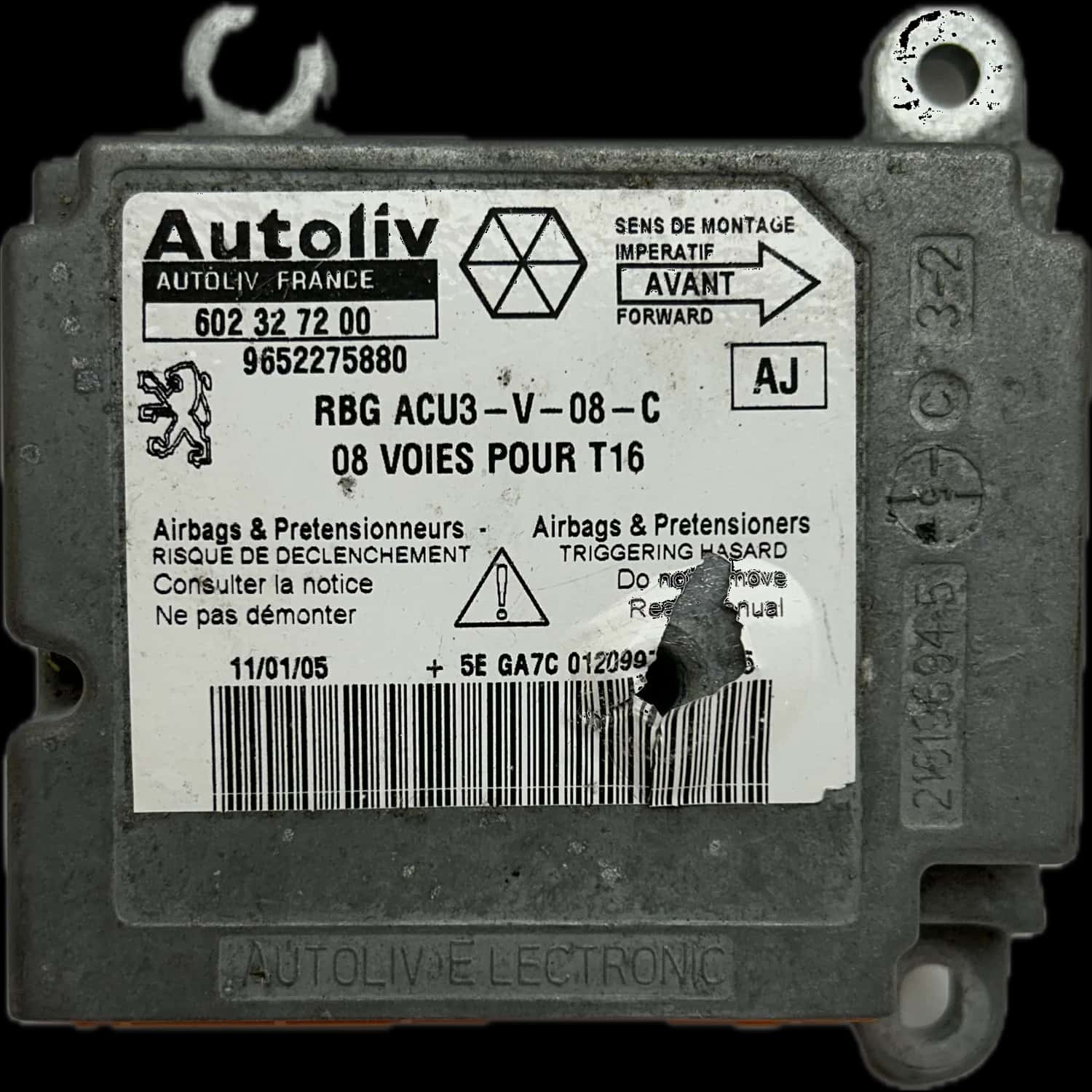
Throughout the production run of the Peugeot 206 SW, the safety systems installed, including airbag technology, were continuously developed and improved. This development ranged from the basic driver and passenger airbags in early models to more comprehensive systems with side and curtain airbags available in higher trim levels and later models. A defective airbag control unit, for example, with a part number like 9652275880, can impair the functionality of these essential systems, as it stores crash data and, in the event of a fault, causes the airbag warning light to illuminate continuously. In such cases, a professional repair is essential to restore safety.
Which Peugeot 206 SW generations are there?
The Peugeot 206, upon which the 206 SW is based, was primarily produced in one main generation, which was significantly further developed through a comprehensive facelift in 2003 and a later revision (as the 206+ or 207 Compact). The station wagon version, the Peugeot 206 SW, was launched in 2001 and also benefited from these model updates.
The original Peugeot 206 was introduced in May 1998, with the 206 SW expanding the model range as a practical station wagon starting in 2001. The significant facelift in 2003 brought not only visual tweaks but also technical innovations that could potentially affect the internal communication protocols or the sensors of the airbag systems. Later models, particularly those marketed as the 206+ from 2008/2009 onwards, represent a further evolution, reflecting technological advances in passive safety. Although the Peugeot 206 SW maintained a relatively consistent design, the installed airbag control units and their compatibility can vary considerably depending on the model year and model update. Therefore, repairing a defective airbag control unit always requires precise knowledge of the respective generation.
How do I identify my Peugeot 206 SW airbag control unit?
Peugeot 206 SW airbag control units can be uniquely identified by their specific part number, the vehicle's year of manufacture, and the vehicle identification number (VIN). This information is absolutely crucial for the correct identification and successful repair of a defective control unit.
The part number is the most important identifier and is usually found on a sticker directly on the control unit, for example, the frequently seen number 9652275880. Given the long production history of the Peugeot 206 SW, there are various variants of airbag control units that are precisely tailored to the respective model years and trim levels. Precise identification is essential to ensure compatibility during repairs and to ensure that all vehicle-specific data is retained. For safety reasons, it is imperative that the airbag control unit is installed and removed only by qualified personnel. The battery terminal must always be disconnected before starting work. This is the only way to ensure proper function after the repair.
What airbag equipment does the Peugeot 206 SW have?
The airbag configuration of the Peugeot 206 SW varies depending on the model year and the selected trim level. While early models used basic airbag systems, newer generations feature enhanced safety packages with additional airbag modules for comprehensive occupant protection.
All Peugeot 206 SW models were equipped as standard with driver and front passenger airbags designed as "smart airbags" that deployed depending on the intensity of the impact. In higher-end trim levels, especially in later models, this basic protection was supplemented by additional front side airbags cleverly integrated into the seatbacks. Curtain airbags were also available, significantly increasing protection in the event of a side collision or rollover. In addition to these passive safety systems, the Peugeot 206 SW also featured active driving aids such as ABS with electronic brake-force distribution. The inclusion of ISOFIX attachment points for child seats underscores the 206 SW's focus as a family-friendly vehicle. Should the airbag control unit of this comprehensive safety system fail, a quick and expert repair is essential to restore the full functionality of all airbags and ensure the safety of the vehicle's occupants.
Shipping & repair from Germany
Airbag24 repairs your component in Berlin — usually within 3–4 working days.
Standard shipping within Germany is free; we normally return your part by UPS.
You pay for and insure the inbound shipment to us. On explicit request we ship by express — the extra cost is borne by the customer.
If you withdraw from the contract, you bear the cost of returning the item.