

Pontiac airbag control unit repair(88)
Find the right airbag control unit for your Pontiac here. Send the module in and our technicians will test or repair it for you.

What should I look out for with Pontiac airbag control units?
The airbag technology used in Pontiacs varies by model and year. Control units for all Pontiac model generations can be professionally repaired with original functionality and a two-year warranty.
Pontiac has had a long and diverse production history, spanning vehicles from the 1960s to the 2010s. This long span of time represents significant technological development in vehicle safety, particularly in airbag systems. Consequently, the airbag control units, also known as SRS SDM (Supplemental Restraint System Sensing Diagnostic Module), vary considerably depending on the year and model.
The development of Pontiac's airbag system reflects the general progress in the automotive industry. While airbags were often optional or only installed in higher-end models in older models like the Pontiac 6000 or Firebird of the 1980s and early 1990s, they increasingly became standard equipment starting in the 1990s. Driver and passenger airbags, in particular, became standard in almost all models.
Newer and sportier models like the Pontiac Grand Prix, Grand Am, Firebird, G6, and GTO typically featured standard driver and passenger airbags. As time progressed, additional safety components were added, including side-curtain airbags (often optional or on higher trim levels), complex seat occupancy sensors (Passenger Presence System), and more detailed algorithms in the airbag control unit for precise deployment. A professional repair takes these subtle differences into account to restore full functionality and ensure safety.
Which Pontiac models are there?
Pontiac has produced over 26 different models, with each model and series generation using different airbag control units. The development of the safety system reflects technological progress in an impressive way.
Pontiac's model range covered a wide spectrum of vehicle classes and target audiences, from sporty coupes to spacious family vehicles. Among the most well-known models were the popular Pontiac Grand Prix and the compact Pontiac Grand Am, which were often found in everyday use. Sports car legends such as the Pontiac Firebird, Pontiac Trans Am, Pontiac GTO, and Pontiac Solstice appealed to performance-oriented drivers, while models such as the Pontiac Sunfire, Pontiac Sunbird, Pontiac Wave, and Pontiac Pursuit served the small and compact car segments.
Families found practical solutions for their needs in the Pontiac Montana and Pontiac Trans Sport minivans, as well as the Pontiac Aztek and Pontiac Torrent SUVs. Luxury sedans such as the Pontiac Bonneville and the full-size vehicles Pontiac Catalina, Pontiac Safari, and Pontiac Parisienne were also integral parts of the Pontiac lineup, especially in the North American market. This diversity means that each model, from the midsize Pontiac 6000, Pontiac Fiero, Pontiac LeMans, and Pontiac Tempest to the newer G-Series (Pontiac G5, Pontiac G6, Pontiac G8, Pontiac Vibe), has specific requirements for airbag control unit repair.
The installed airbag systems were individually tailored to the respective vehicle design and its safety concept. A detailed knowledge of the model's history is therefore crucial for professionally repairing defective Pontiac airbag control units and ensuring compatibility with the vehicle's electronics.
How do I identify my Pontiac airbag control unit?
Pontiac airbag control units can be uniquely identified by part number, year of manufacture, and vehicle identification number. Each generation uses specific control unit variants for optimal compatibility.
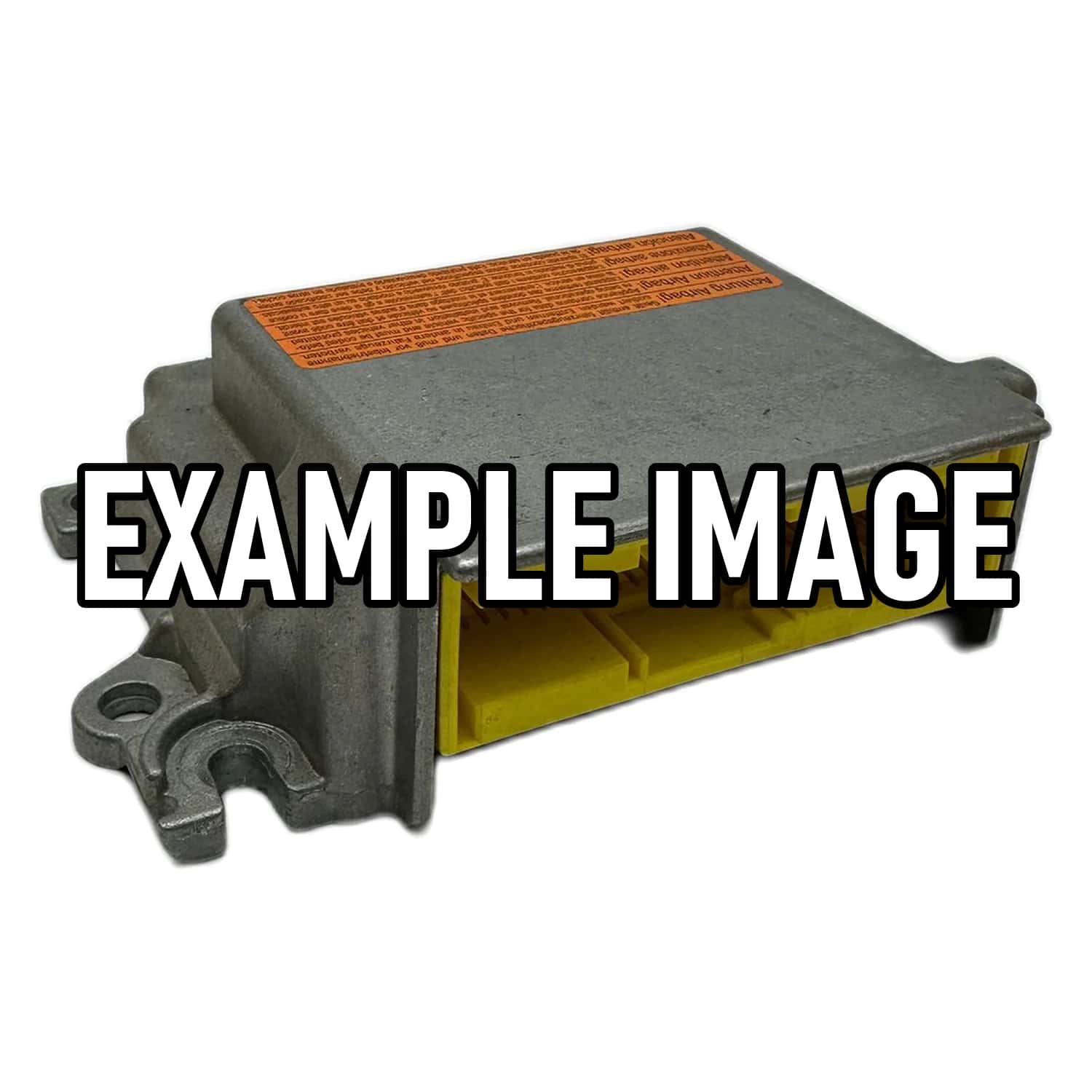
Clearly identifying your Pontiac airbag control module is the first and most important step for a successful repair. The control module, often referred to as the SRS SDM (Supplemental Restraint System Sensing Diagnostic Module), is typically located under the driver's seat, passenger seat, or in the center console of your vehicle. To identify it, you need the part number printed directly on the module's casing. This number is crucial because it identifies the specific hardware and software version of the control module.
In addition to the part number, the exact year of your Pontiac and the Vehicle Identification Number (VIN) are also crucial. This information helps verify compatibility and ensure that the repaired control unit is a perfect fit with the other components of your safety system. While many Pontiac models, such as the Pontiac Grand Prix, Pontiac Grand Am, or Pontiac Firebird, were widely used, even within a single model series, different revisions of the airbag control unit may have been installed, requiring specific knowledge for repair.
When Pontiac airbag control units are defective, it is crucial to determine the exact cause. Often, the defect occurs after an accident, where "crash data" is stored in the control unit, which requires a reset to restore the module's functionality. A professional service center can erase this data and restore the control unit to a plug-and-play configuration, eliminating the need for any reprogramming in the vehicle.
What airbag equipment does Pontiac have?
Pontiac's airbag equipment varies by model year and trim level. While early models use basic airbag systems, newer generations feature enhanced safety packages with additional airbag modules.
The safety features of Pontiac models have evolved significantly over the decades. Until the late 1980s, airbags, if available at all, were often a rare option. It wasn't until the 1990s that driver and passenger airbags became standard on most Pontiac models, representing a major step toward comprehensive occupant safety. Popular models such as the Pontiac Grand Prix, Pontiac Grand Am, and Pontiac Firebird were pioneers in this area.
In later generations and higher trim levels, the safety systems were expanded with additional modules. These often included optional side airbags, which increased protection in the event of a side impact, as well as more complex sensor systems. In particular, the Passenger Presence System (seat occupancy sensor) was integrated into many newer Pontiacs, such as the Pontiac G6 or Pontiac Vibe, to adjust the deployment of the passenger airbag based on the presence and weight of the passenger, thus avoiding unnecessary or dangerous deployments.
The central airbag control unit (SRS SDM) processes all this information and decides whether to correctly deploy the airbags and seatbelt pretensioners in the event of an impact. After an accident, it's common for crash data to be stored in the control unit, signaling a malfunction. Repairing such a defective Pontiac airbag control unit involves professionally erasing this crash data to restore the system to full functionality and safety. This represents a cost-effective alternative to purchasing an expensive replacement and restores the original functionality.
Common fault codes in this category
Shipping & repair from Germany
Airbag24 repairs your component in Berlin — usually within 3–4 working days.
Standard shipping within Germany is free; we normally return your part by UPS.
You pay for and insure the inbound shipment to us. On explicit request we ship by express — the extra cost is borne by the customer.
If you withdraw from the contract, you bear the cost of returning the item.