
Rover Range Rover Airbag Control Unit Repair(9)
What should I look out for with Rover Range Rover airbag control units?
The airbag technology used in the Range Rover varies considerably depending on the model year. Airbag24 professionally repairs control units of all Range Rover generations with original functionality and a 2-year warranty.
The Range Rover's production history spans several decades, beginning with the Range Rover Classic in 1970 and continuing through to today's luxury SUV models. With each generation, the passive safety systems, and thus also the airbag control units, have become more complex and powerful.
The development of the airbag systems in the Range Rover reflects technological advances. While early models like the Classic or the P38A often had only a few airbags, modern Range Rovers are equipped with comprehensive multi-point airbag systems that provide the highest level of occupant protection.
Which Rover Range Rover generations are there?
The Range Rover has been produced in several generations, each using different airbag control units. The evolution of the safety system reflects technological advances from the 1970s to the present day.
The original Range Rover Classic was produced from 1970 to 1996 and established the luxury SUV segment. It was followed by the second generation, the Range Rover P38A (1994–2002), which already featured more modern electronic systems, including airbags.
From 2002 onward, the third generation (L322) revolutionized design and technology, followed by the Range Rover Sport, which offered a sportier approach, in 2005. Current models such as the L405 and L460, as well as the luxurious Autobiography versions, represent the pinnacle of vehicle development.
Specific variants such as the Range Rover 2.5 TD and 4.0 were engine versions within the Classic and P38A generations, while trim options such as HSE, Westminster and Holland & Holland were luxury packages available across different model years.
How do I identify my Rover Range Rover airbag control unit?
Range Rover airbag control units can be uniquely identified by part number, year of manufacture, and vehicle identification number (VIN). Each generation uses specific control unit variants for optimal compatibility with the respective vehicle system.
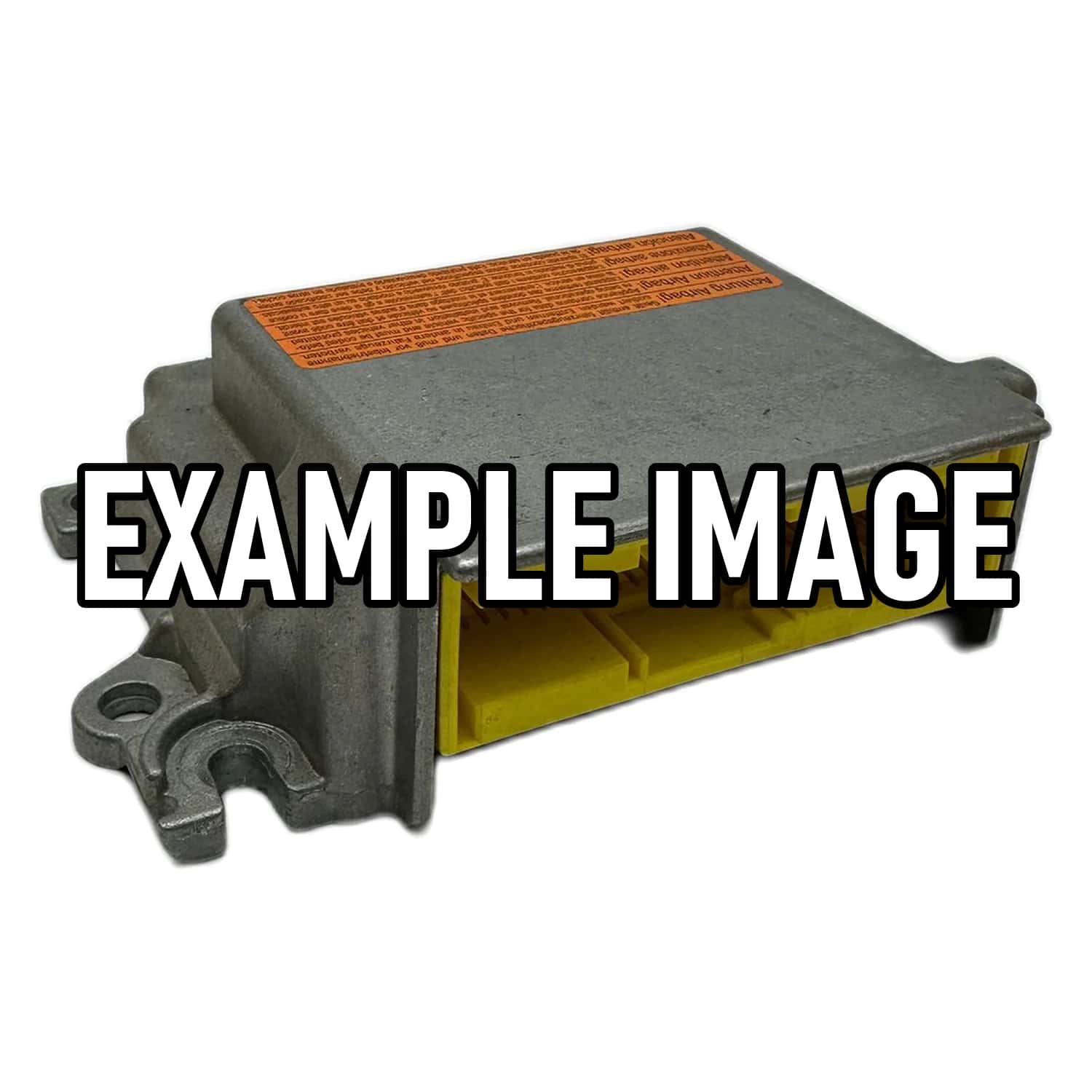
The part number of the airbag control unit is the most important identifier and is located directly on the module's housing. This number is crucial for ensuring the correct replacement or repair unit is available, as different versions were installed even within a single generation.
Additionally, the exact year of manufacture and the vehicle identification number (VIN) can be helpful to avoid compatibility issues. Especially when repairing a defective control unit, precise identification is crucial to ensure correct reset or troubleshooting.
What airbag equipment does the Rover Range Rover have?
The airbag configuration of the Range Rover varies considerably depending on the model year and trim level. While early models use basic airbag systems, newer generations feature enhanced safety packages with additional airbag modules and sensors.
In the Range Rover Classic, airbags were only available as an option on the driver's side, if at all, or as standard in later models. With the introduction of the Range Rover P38A, driver and passenger airbags became standard, and the first side airbags could be optional on higher trim levels.
Newer models from the third generation (L322) and the Range Rover Sport feature a comprehensive safety system. This includes front airbags for the driver and front passenger, side airbags, head airbags (curtain airbags), and often also knee airbags, ensuring all-round protection.
Luxury trim levels such as the Range Rover HSE, Westminster, Holland & Holland, and especially the Autobiography, offered across various generations, always incorporated the most advanced airbag technologies available. These include intelligent sensor systems that detect impact severity and deploy airbags as needed, as well as crash data storage for accident analysis.
Common fault codes in this category
Shipping & repair from Germany
Airbag24 repairs your component in Berlin — usually within 3–4 working days.
Standard shipping within Germany is free; we normally return your part by UPS.
You pay for and insure the inbound shipment to us. On explicit request we ship by express — the extra cost is borne by the customer.
If you withdraw from the contract, you bear the cost of returning the item.