

Seat Alhambra airbag control unit repair(2)
2 products
What should I pay attention to with Seat Alhambra airbag control units?
The airbag technology used in the Seat Alhambra varies depending on the model year and generation. When repairing a defective Seat Alhambra airbag control unit, it is crucial to understand the specific differences between the model series.
The Seat Alhambra, a popular MPV, was produced from 1996 to 2022 in two main generations, the Seat Alhambra Mk1 and Mk2. This long production run led to significant developments in passive safety systems.
Airbag systems have become increasingly complex and sophisticated over the years, resulting in different airbag control units. A professional repair ensures that the safety systems function reliably again after a defect.
Which Seat Alhambra generations are there?
The Seat Alhambra was produced in two main generations, each using different airbag control units. The development of the safety system reflects technological progress from 1996 to 2022.
The first generation (Type 7M), known as the Seat Alhambra Mk1, was manufactured from 1996 to 2010. It received a facelift around 2000, which also led to adjustments to the electronics and airbag components.
The second generation (Type 7N), the Seat Alhambra Mk2, replaced its predecessor in 2010 and was built until 2022. This generation also underwent a facelift between 2015 and 2016, as well as further technical adjustments in 2018.
Each of these generations and facelift versions can use specific airbag control units. Therefore, correctly identifying the model year is crucial for a successful repair in the event of a defect.
How do I identify my Seat Alhambra airbag control unit?
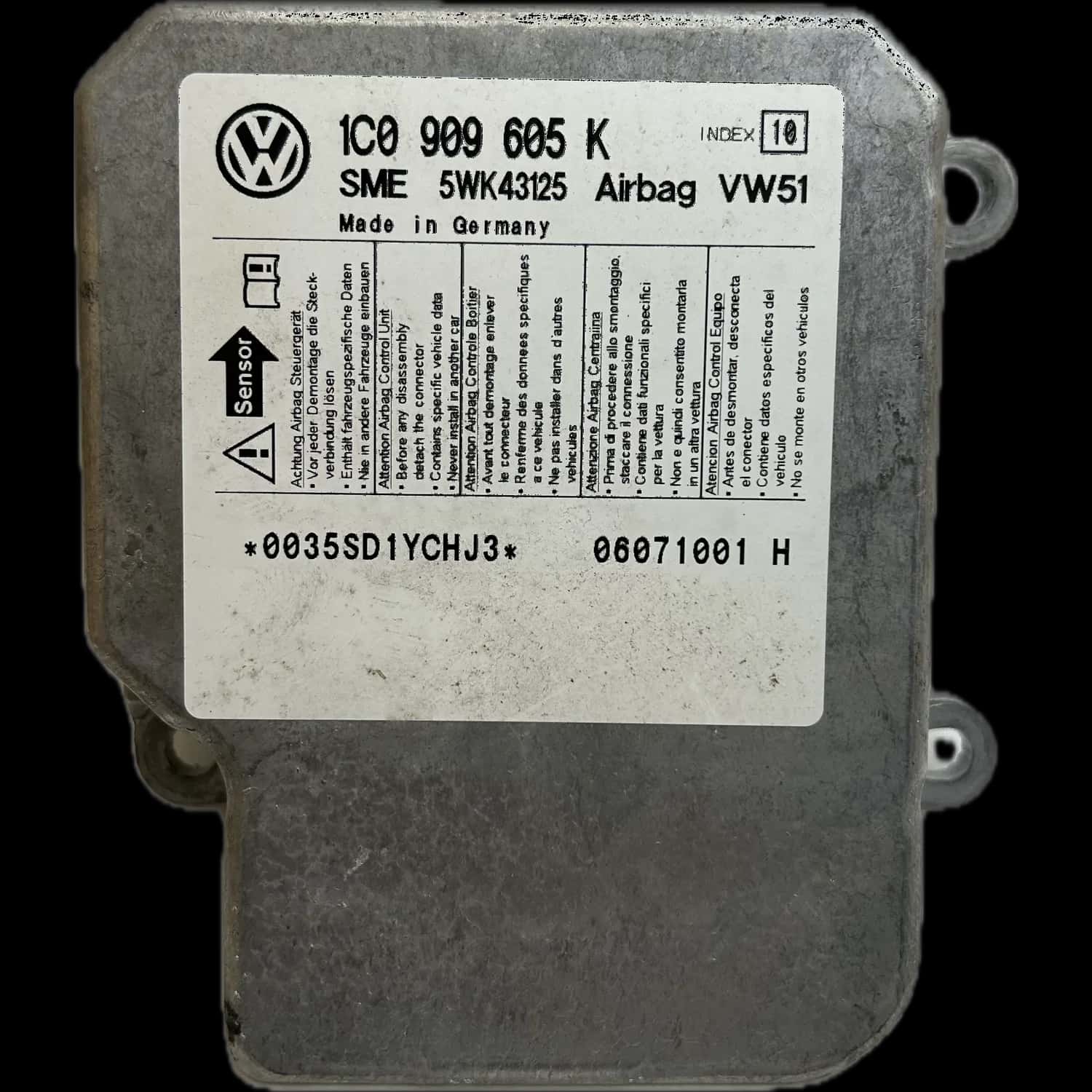
Seat Alhambra airbag control units can be clearly identified by the original part number, year of manufacture, and vehicle identification number (VIN). Each generation uses specific control unit variants for optimal compatibility with the installed airbag systems.
The part number of the airbag control unit is the most important indicator of the exact model variant. This number is usually located directly on the control unit housing.
Additionally, the model year and chassis number (VIN) of the Seat Alhambra provide information about the installed generation and the associated electronics. This is particularly relevant since the Alhambra is identical to the VW Sharan and Ford Galaxy and uses similar systems.
Accurate identification is essential to ensure compatibility and professional repair of your defective airbag control unit.
What airbag equipment does the Seat Alhambra have?
The Seat Alhambra's airbag configuration varies considerably depending on the model year and trim level. While early models used basic airbag systems, newer generations feature enhanced safety packages with additional airbag modules and sensors.
In the first generation (Mk1), standard equipment typically included driver and passenger airbags, often supplemented by side airbags. These systems laid the foundation for the van's passive safety.
With the introduction of the second generation (Mk2) in 2010, the airbag equipment became significantly more comprehensive and largely standard. These included:
- Driver and passenger airbags, with the passenger airbag being deactivatable.
- Front and side airbags for the front passengers.
- Curtain airbags that spanned the entire length of the vehicle and provided protection for the first to third row of seats.
- A knee airbag for the driver, which provided additional protection in the event of an impact.
This comprehensive airbag suite is an integral part of the Seat Alhambra's passive safety system (SRS). The airbags work hand in hand with seatbelts and serve to significantly reduce the risk of injury to the occupants in the event of an accident.
A defective airbag control unit can impair the functionality of these vital systems, which is why timely repair is essential.
Shipping & repair from Germany
Airbag24 repairs your component in Berlin — usually within 3–4 working days.
Standard shipping within Germany is free; we normally return your part by UPS.
You pay for and insure the inbound shipment to us. On explicit request we ship by express — the extra cost is borne by the customer.
If you withdraw from the contract, you bear the cost of returning the item.