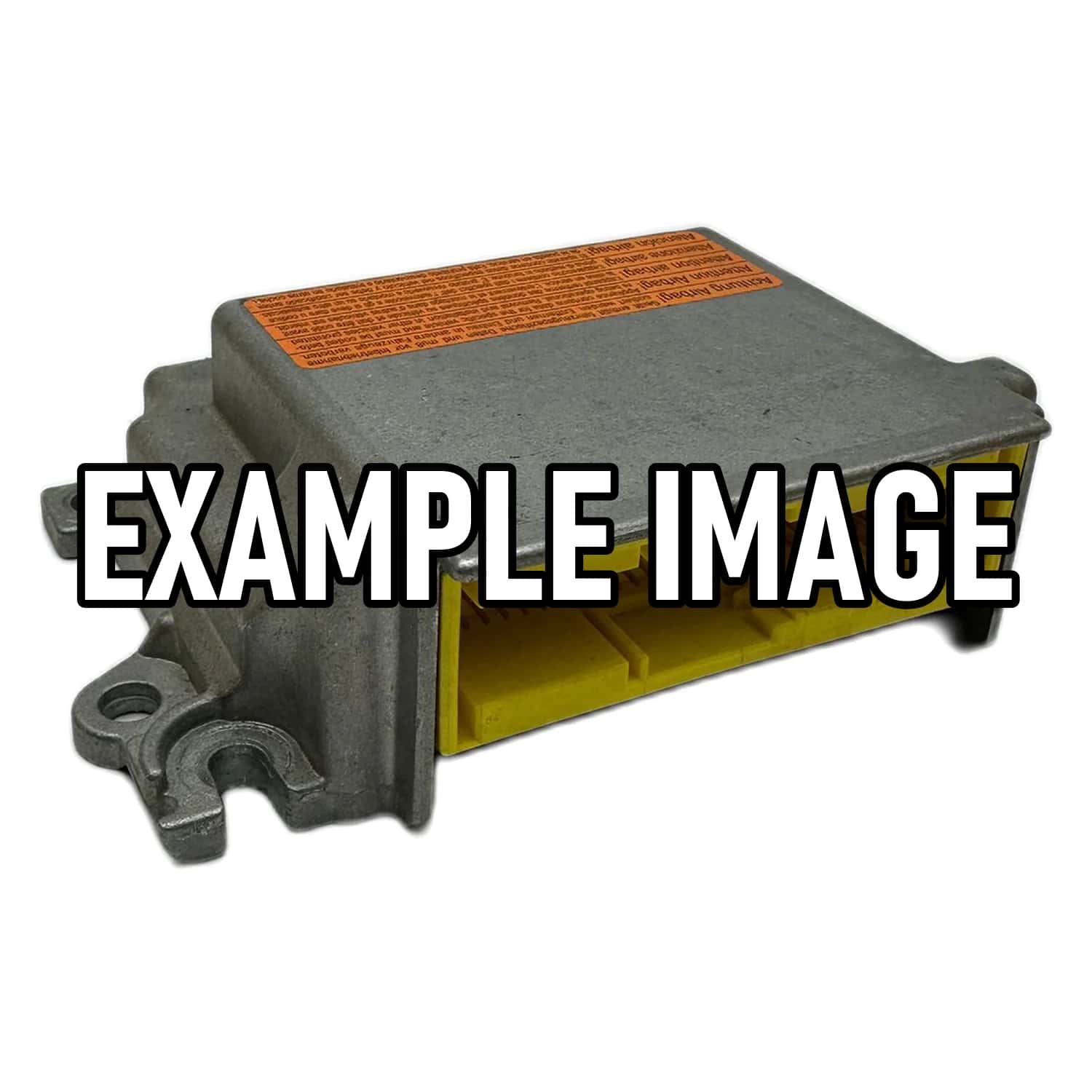
airbag control unit repair Subaru WRX VA
from€79.00
 Quality since 2002
The airbag technology used in Subaru vehicles varies depending on the model and year of manufacture. We professionally repair control units for all Subaru model generations with original functionality and a 2-year warranty.
Subaru has a long history of automotive engineering, characterized by robust engineering and a focus on safety. From its earliest compact models to today's high-tech vehicles, airbag technology has continually evolved to maximize occupant protection.
The evolution of Subaru's airbag system reflects general technological advances. While older models were often equipped with basic front airbags, newer generations integrate complex systems with a variety of airbag modules and intelligent sensors that respond precisely to crash events.
Subaru has produced over 36 different models, with each model and series generation using different airbag control units. The development of the safety system reflects technological advances.
Subaru's model range is extremely diverse, ranging from compact city cars to powerful SUVs and sports cars. The most well-known models include the rugged Impreza, the off-road Forester, Outback, and Crosstrek, the sporty WRX and BRZ, and the electric vehicle Solterra. However, models such as the XV, Legacy, Ascent, Levorg, Tribeca, Justy, Loyale, SVX, Alcyone, Baja, Exiga, Trezia, DEX, Stella, R1, R2, Pleo, Vivio, Sambar, Dias Wagon, Chiffon, Lucra, Wilderness, and STI also shaped the brand and featured specific airbag systems.
Every Subaru model generation, whether a 1990s Impreza or a modern Solterra, has incorporated the latest available airbag technology. This means that when repairing a faulty Subaru airbag control unit, the exact year and model are crucial to ensure compatibility and full functionality.
Subaru airbag control units can be uniquely identified by part number, year of manufacture, and vehicle identification number. Each generation uses specific control unit variants for optimal compatibility.
Precisely identifying your Subaru airbag control unit is the first and most important step for a successful repair. The part number, often found on the control unit itself or in the vehicle information, is the primary reference. The year of manufacture and the vehicle identification number (VIN) also play a crucial role, as Subaru has implemented various revisions and systems over the years, which are not always compatible with each other.
Correct assignment ensures that the repaired control unit works optimally with the specific sensors and airbag systems of your Subaru model. A defective airbag control unit can often be signaled by an illuminated airbag warning light, which requires immediate repair.
Subaru's airbag equipment varies depending on the model year and trim level. While early models use basic airbag systems, newer generations feature enhanced safety packages with additional airbag modules.
Subaru is known for its commitment to safety, which is reflected in the comprehensive airbag equipment in its vehicles. As early as the 1990s, many Subaru models began offering front airbags for the driver and front passenger as standard equipment. This equipment has been continuously expanded over the years.
Modern Subaru models, such as the Forester, Outback, Crosstrek, or Impreza, typically come standard with a comprehensive airbag system. This typically includes front airbags, side airbags for the upper body, head airbags (curtain airbags), and often also knee airbags for the driver. This variety of airbag modules is designed to optimally protect the occupants in a variety of impact scenarios.
In addition to passive safety provided by airbag systems, Subaru focuses on active safety features. Many newer models are equipped as standard or optionally with the award-winning EyeSight driver assistance system, which uses stereo cameras to offer a variety of features such as emergency braking and lane departure warning, thus helping to prevent accidents.
However, it's important to note that, as with all complex systems, Subaru vehicles can experience specific issues with airbag control units or sensors that require repair. A well-known example is the recall of certain 2020-2022 Subaru Legacy and Outback models, where faulty sensors could interfere with the proper deployment of the passenger airbags. Such cases demonstrate that professional repair of a defective Subaru airbag control unit is crucial for restoring full safety functionality.
Airbag24 repairs your component in Berlin — usually within 3–4 working days.
Standard shipping within Germany is free; we normally return your part by UPS.
You pay for and insure the inbound shipment to us. On explicit request we ship by express — the extra cost is borne by the customer.
If you withdraw from the contract, you bear the cost of returning the item.