
Subaru Forester airbag control unit repair(6)
What should I look out for with Subaru Forester airbag control units?
The airbag technology used in the Subaru Forester varies by model year and generation. Airbag control units for all Subaru Forester generations can be professionally repaired with original functionality to restore full safety.
Since its market launch in 1997, the Subaru Forester has established itself as a unique combination of the off-road capability of an SUV and the everyday practicality of a station wagon. This robust and versatile vehicle is particularly popular with outdoor enthusiasts and families who value all-wheel drive, reliability, and, above all, safety.
Over the course of its model history, the airbag equipment has been continuously developed and improved. The airbag control unit is the heart of the passive safety system and is responsible for the correct deployment of the airbags in the event of an accident.
A defective airbag control unit can impair the functionality of the entire system, making professional repair essential. Professional repairs ensure that the specific parameters and software of each Subaru Forester airbag control unit variant are retained exactly.
Which Subaru Forester generations are there?
The Subaru Forester has been produced in six generations to date, with each generation using specific airbag control units and different safety features. The development of the safety system reflects technological advances from 1997 to the current, sixth generation, available starting in model year 2025.
The Subaru Forester's model history began with the first generation (SF, 1997-2002), which entered the scene as a compact SUV with robust all-wheel drive. This was followed by the second generation (SG, 2002-2008), which appeared as a sportier crossover with enhanced safety features.
The third generation (SH, 2008-2012) grew in size and offered more interior space and comfort, while further raising safety standards. The fourth generation (SJ, 2013-2018) cemented the Forester's reputation as a family and outdoor vehicle with a strong focus on occupant protection and optional assistance systems.
With the 5th generation (SK, 2019-present, with facelift 2022-2024), Subaru introduced state-of-the-art airbag control units and enhanced safety packages. In addition to these main series, there were also special variants such as the high-performance Subaru Forester XT (often within the SG, SH, and SJ generations), the limited-edition Subaru Forester STI, and the market-specific Subaru Forester TS and Sport models. The newer Subaru Forester Wilderness variant, geared toward extreme outdoor use, also features the advanced standard airbag systems of its base generation.
How do I identify my Subaru Forester airbag control unit?
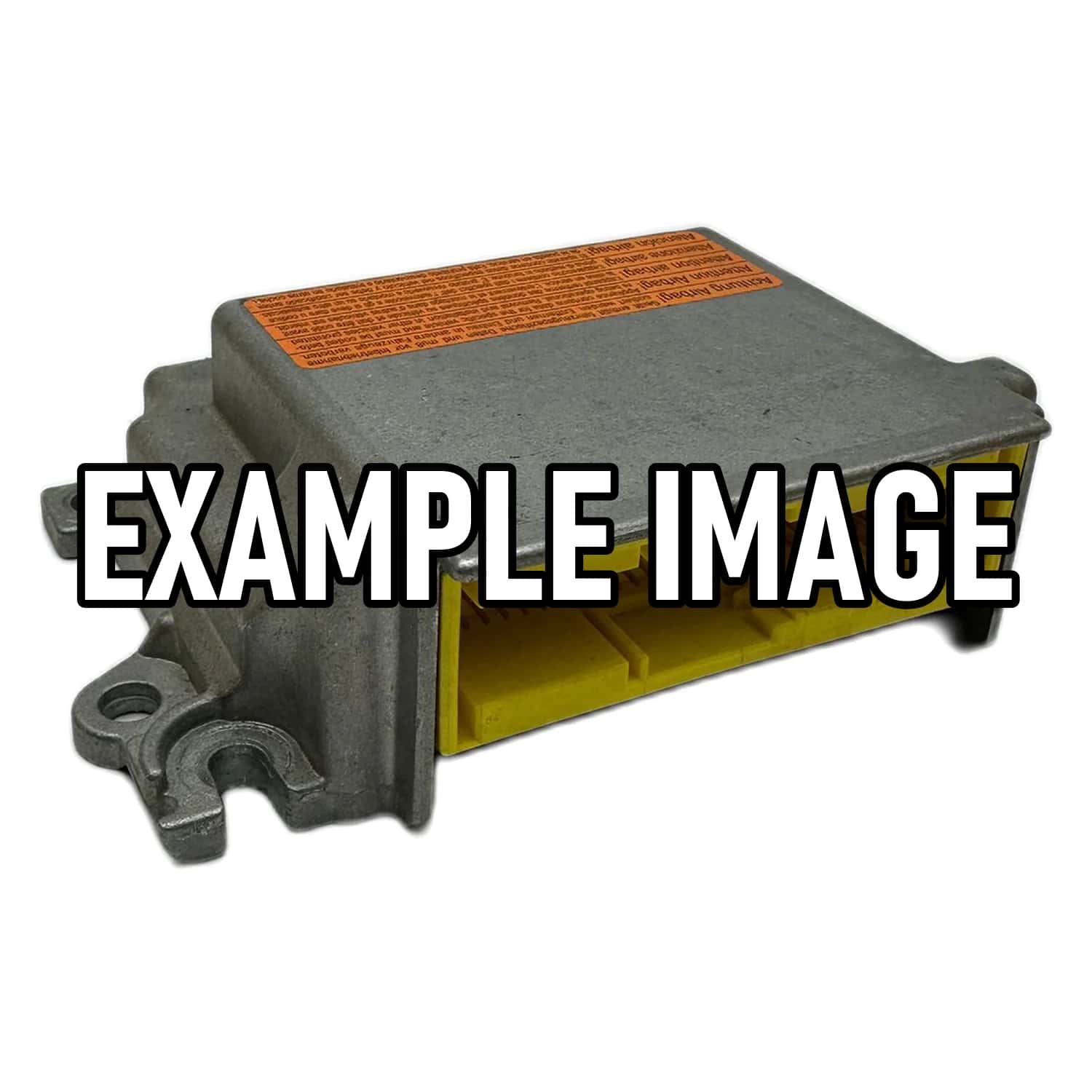
Subaru Forester airbag control units can be uniquely identified by the printed part number, the exact year of manufacture, and the vehicle identification number (VIN). Each generation, and sometimes even different trim levels, use specific control unit variants for optimal compatibility and system integration.
The airbag control unit is usually located under the center console or under the driver's seat and bears a label with the specific Subaru part number and the control unit manufacturer's part number. This number is crucial for ensuring the exact replacement or repair unit, as even minor differences in features can require a different control unit version.
Querying the vehicle identification number (VIN) using special databases can provide additional clarity about the factory equipment and thus the correct airbag control unit. This precise identification is essential for a precise Subaru Forester airbag control unit repair to ensure full functionality and safety after the repair.
What airbag equipment does the Subaru Forester have?
The Subaru Forester's airbag configuration varies significantly depending on the model year, generation, and country-specific trim level. While early models use basic airbag systems, newer generations feature comprehensive safety packages with additional airbag modules and intelligent sensors.
The first generation of the Subaru Forester (SF, 1997-2002) was typically equipped with front airbags for the driver and front passenger, which corresponded to the safety standards of the time. With the model change to the second generation (SG, 2002-2008), passive safety was significantly enhanced: Side airbags were often introduced as standard, significantly improving protection in the event of a side impact.
In the 3rd generation (SH, 2008-2012) and 4th generation (SJ, 2013-2018), the airbag systems were further refined and expanded. In addition to front and side airbags, head airbags (often referred to as curtain airbags) were offered as standard or optional, ensuring comprehensive protection for all occupants.
The control units of these generations became more complex to manage the increased number of airbags and sensors. The current 5th generation of the Subaru Forester (SK, from 2019) features a state-of-the-art airbag control unit that enables a variety of airbags—often including knee airbags for the driver—and integration with driver assistance systems such as EyeSight.
Regardless of the specific equipment, the functionality of the airbag control unit remains crucial for restoring the passive safety of your Subaru Forester after an accident or a defect. A professional repair ensures that all systems function properly again.
Shipping & repair from Germany
Airbag24 repairs your component in Berlin — usually within 3–4 working days.
Standard shipping within Germany is free; we normally return your part by UPS.
You pay for and insure the inbound shipment to us. On explicit request we ship by express — the extra cost is borne by the customer.
If you withdraw from the contract, you bear the cost of returning the item.