
Subaru Tribeca Airbag Control Unit Repair(1)
1 product
What should I consider with Subaru Tribeca airbag control units?
The airbag technology used in the Subaru Tribeca varies depending on the model year. A professional repair of Subaru Tribeca airbag control units ensures true-to-original functionality.
The Subaru Tribeca was produced from 2005 to 2014 and was also known as the Subaru B9 Tribeca in some markets. Safety features, including airbag systems, were extensive from the start and largely standard.
Over the course of production, there were technological advancements that also affected the airbag system and its control units. It's crucial to understand that airbag control units (SRS modules) are coded specifically for each vehicle and must be reprogrammed to the specific vehicle identification number (VIN) after a replacement.
Which Subaru Tribeca generations are there?
The Subaru Tribeca was produced in two generations, each of which could use different airbag control units. The development of the safety system reflects technological advances from 2005 to 2014.
The first generation of the Subaru Tribeca was produced from 2005 to 2007 and featured a distinctive design. This model already placed a strong emphasis on passive passenger safety.
Starting in 2007, a comprehensive facelift, considered the second generation, took place and lasted until the end of production of the vehicle in 2014. In this update, the design, especially the front end, was made significantly more conservative and customer-friendly in order to gain broader market acceptance.
Although the core platform and engine (initially a 3.0-liter, later a 3.6-liter gasoline boxer engine) remained the same, adjustments to the electronic components, including the airbag control units, have been made over the years. This reflects ongoing improvements in safety technology and diagnostic functions.
How do I identify my Subaru Tribeca airbag control unit?
Subaru Tribeca airbag control units can be uniquely identified by part number, year of manufacture, and vehicle identification number (VIN). Each generation uses specific control unit variants for optimal compatibility.
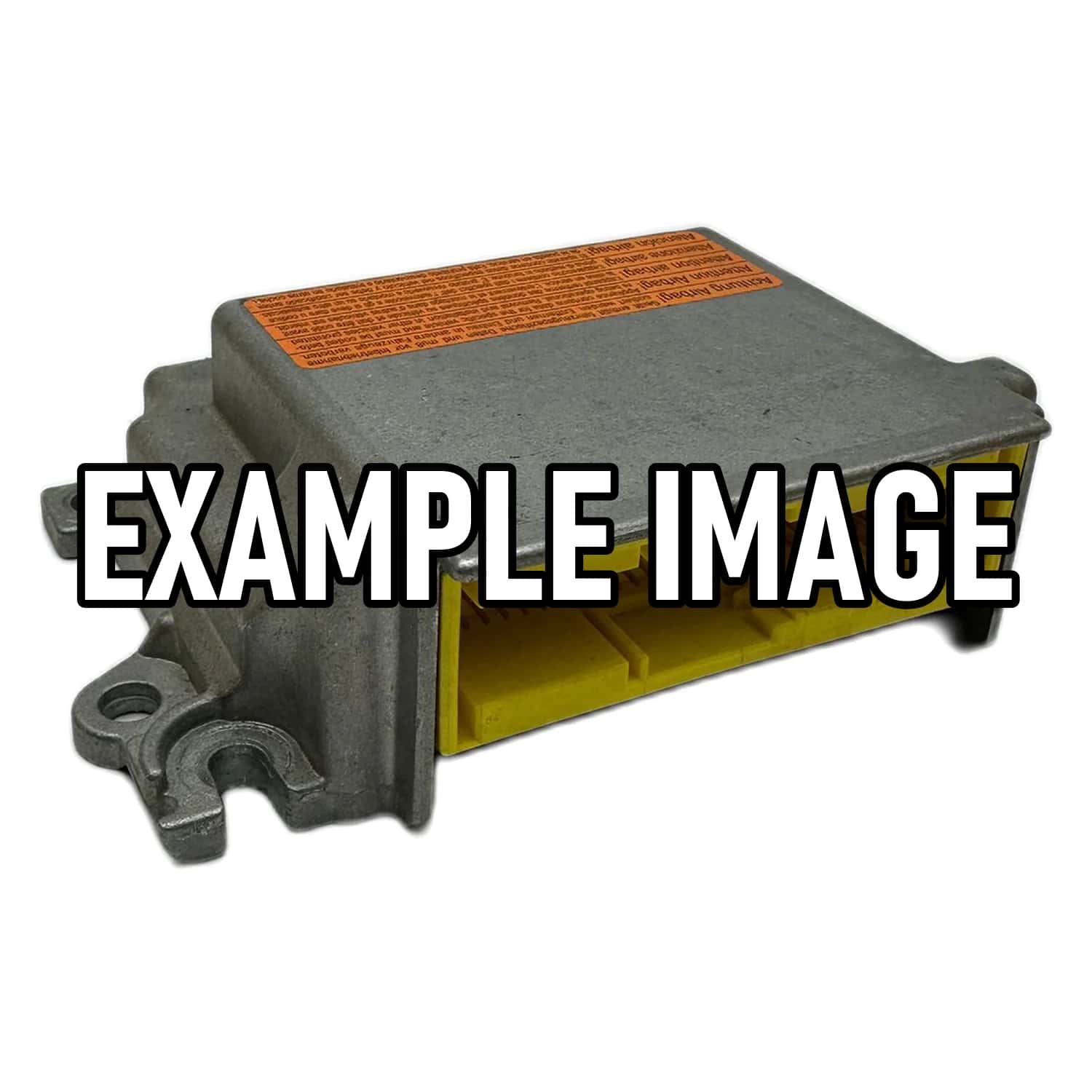
To accurately repair or replace a defective Subaru Tribeca airbag control unit, correct identification is essential. The specific part number of the control unit, usually found on a sticker on the module itself, is the most important clue.
The model year of the Subaru Tribeca also plays a crucial role, as it directly influences the installed system versions and thus the compatibility of the airbag control unit. The vehicle identification number (VIN) is also important, as airbag modules are often coded specifically for each vehicle and require correct programming.
What airbag equipment does the Subaru Tribeca have?
The Subaru Tribeca's comprehensive airbag system has been standard throughout its production years. It includes a range of protection systems typical for a mid-size SUV.
As a mid-size SUV and crossover often designed for 5- or 7-seater families, the Subaru Tribeca was equipped with a very high level of safety features. This included standard front airbags for the driver and front passenger, which deploy in a collision to prevent serious head and chest injuries.
Additionally, front-side airbags were installed to provide additional protection in side collisions. A special feature were the side curtain airbags, which extended across both rows of seats and were equipped with rollover sensors to ensure optimal protection even in the event of a rollover.
The seat belts were three-point, with pretensioners and load limiters to optimally secure the occupants in their seats and distribute impact energy. The front belts were also height-adjustable.
Active front head restraints were also part of the equipment and served to minimize whiplash injuries in a rear-end collision. This comprehensive safety feature, which was already standard equipment around 2010, underscores the high priority placed on passive safety in the Subaru Tribeca.
Shipping & repair from Germany
Airbag24 repairs your component in Berlin — usually within 3–4 working days.
Standard shipping within Germany is free; we normally return your part by UPS.
You pay for and insure the inbound shipment to us. On explicit request we ship by express — the extra cost is borne by the customer.
If you withdraw from the contract, you bear the cost of returning the item.