
Suzuki Alto airbag control unit repair(9)
What should I pay attention to with Suzuki Alto airbag control units?
The airbag technology used in the Suzuki Alto varies considerably depending on the model year and market region. Airbag control units are key safety components whose proper functioning is essential for occupant protection. A professional repair ensures true-to-original functionality and the restoration of original safety specifications.
The Suzuki Alto is a small car, or kei car, produced since 1979 and characterized by its durability and economy. Its long production history and worldwide distribution across numerous generations have led to a diverse development of the airbag systems installed.
Over the decades, safety standards, and thus airbag systems, have continuously evolved. Early models often had rudimentary or no airbags at all, while newer generations integrate complex systems with multiple airbags and sophisticated control technology. Regardless of the model year, a defective Suzuki Alto airbag control unit is a serious safety risk and requires professional repair.
Repairing an airbag control unit is often a more cost-effective and environmentally friendly alternative to purchasing a new one. Specialized service providers can fix typical defects such as crash data errors or internal system malfunctions, restoring the control unit to full functionality and ensuring safety in your Suzuki Alto.
Which Suzuki Alto generations are there?
The Suzuki Alto has been produced in a variety of generations and variants, with each model series using specific airbag control units. The evolution of the safety system reflects the technological advances from its launch in 1979 to the present day, from simple systems to modern, networked airbag solutions.
The Suzuki Alto has been offered worldwide over the years in at least five or more main generations, as well as numerous facelifts and special variants. Internal model codes such as HA11, HA12, HA22, HA23, HA24, HA25, HA35, HA36, and HA97 identify specific model years and development stages of the vehicle. Each of these series may have different specifications for the airbag control unit, tailored to the respective vehicle architecture and safety requirements of the production period.
Special variants such as the sportier Suzuki Alto Works, the compact and often female-oriented Suzuki Alto Lapin, or the environmentally friendly Suzuki Alto Eco complement the broad portfolio. Although these models are based on the Alto platform, they may be equipped with customized airbag control units due to their specific features and market positioning. This is particularly important for identification and repair to ensure proper functionality.
A prominent example of global diversity is the Maruti Suzuki Alto in India, which has been based on its own platform since 2000 and is increasingly different from the Japanese models. These regional differences illustrate the complexity of determining the appropriate airbag control unit and underscore the need for detailed knowledge of the various Suzuki Alto generations.
How do I identify my Suzuki Alto airbag control unit?
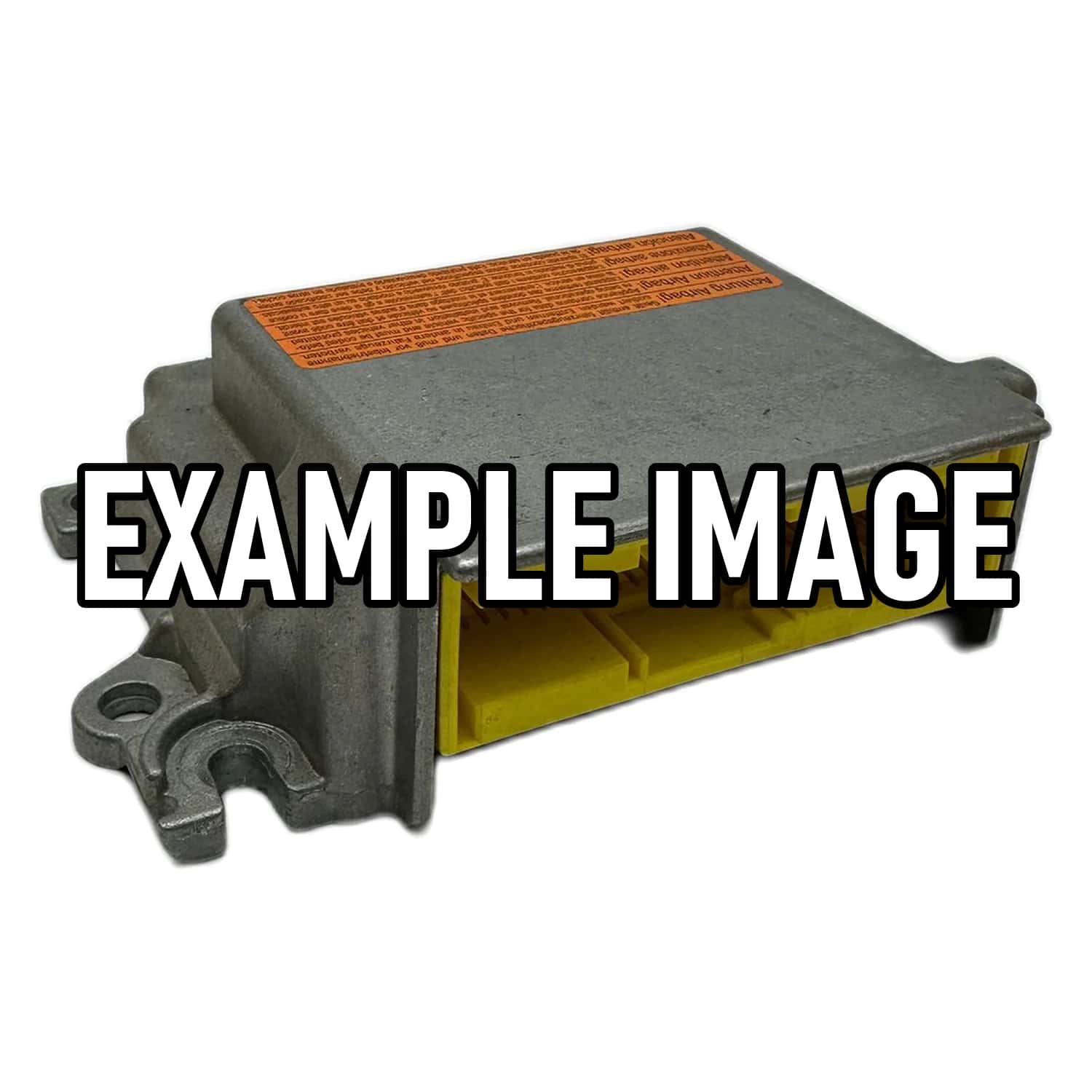
Suzuki Alto airbag control units can be precisely identified by their unique part number, the vehicle's year of manufacture, and often also the vehicle identification number (VIN). Each generation and model variant of the Suzuki Alto uses specific control unit types, which are essential for optimal compatibility and functional reliability.
The part number is the most important indicator for correctly identifying your airbag control unit. It is usually located on a label directly on the unit, which is often located under the center console, under the driver's seat, or near the dashboard. The year of manufacture of your Suzuki Alto provides additional clues, as the installed systems have changed over the long production period.
The vehicle identification number (VIN), which can be found in the vehicle documents and on the vehicle itself, can also be used for further clarification. It allows us to determine the exact equipment and thus the specific airbag system of your Suzuki Alto. This information is crucial to ensure that the repaired or replaced control unit is a perfect fit for your vehicle model and year, whether it's an Alto HA11, an Alto Lapin, or an Alto Eco.
During disassembly and identification, pay attention to all existing numbers and labels to avoid confusion. Accurately recording this information is essential for a successful repair and restoring the full functionality of the security system in your Suzuki Alto.
What airbag equipment does the Suzuki Alto have?
The Suzuki Alto's airbag equipment varies greatly depending on the model year, trim level, and the specific market for which the vehicle was produced. While early models offered basic airbag systems as an option or not at all, newer generations feature enhanced safety packages with multiple airbag modules and advanced sensor technology to meet increased safety requirements.
For older Suzuki Alto models, especially those produced before the 2000s (e.g., HA11, HA12), airbags were often optional or only available in higher trim levels. These typically only included driver and possibly passenger airbags, if at all. This is typical for subcompact cars of this era, where the focus was on low production costs and easy maintenance.
As the 2000s progressed and safety standards became more stringent, particularly in Europe and Japan, airbags were expanded as standard in the Suzuki Alto. Newer models, such as the HA24, HA25, HA35, or HA36 series, generally offer driver and front passenger airbags as standard. Depending on the trim level and model year, additional side airbags or curtain airbags could be added to further improve occupant protection, although the Alto remained a budget-friendly city car.
The Suzuki Alto's target audience, which primarily includes women, young adults, and city dwellers, increasingly values safety. Therefore, later generations of the Alto reflect this development by offering increasingly comprehensive passive safety features despite the compact class. The precise configuration of the airbag system, including the number of airbags and the sensors installed, is crucial for the correct repair of the airbag control unit.
Shipping & repair from Germany
Airbag24 repairs your component in Berlin — usually within 3–4 working days.
Standard shipping within Germany is free; we normally return your part by UPS.
You pay for and insure the inbound shipment to us. On explicit request we ship by express — the extra cost is borne by the customer.
If you withdraw from the contract, you bear the cost of returning the item.