
Suzuki Equator airbag control unit repair(2)
2 products
What should I consider with Suzuki Equator airbag control units?
The airbag technology used in the Suzuki Equator varied slightly over its short production run, particularly due to the integration of new standard features. A professional Suzuki Equator airbag control unit repair is essential to fully restore your vehicle's safety after an accident or malfunction.
The Suzuki Equator, a mid-size pickup truck, was produced in the United States from 2009 to 2012 and in Canada from 2009 to 2010. Based on the rugged Nissan Frontier platform, it offered a reliable option for buyers seeking a functional work or recreational pickup.
Although the Equator only existed in one generation, its safety systems continued to evolve during its production run. The airbag control units, in particular, had to accommodate these advances to ensure optimal functioning of the passive safety systems.
In the event of an accident, a reset of the airbag control unit is often necessary, even if the airbags haven't deployed. A defective module can also generate various error codes and activate the airbag warning light, requiring immediate repair.
Which Suzuki Equator generations are there?
The Suzuki Equator was produced in only one generation, which, however, underwent minor model updates over the years. This development of the safety system reflects the technological advances from 2009 to 2012 and also affects the airbag control units.
The sole generation of the Suzuki Equator was offered as an Extended Cab (single cab) and a Crew Cab (double cab). Despite the lack of major facelifts, improvements were continually incorporated into the vehicle, which could also affect the electronic components.
One example of this is the introduction of stability control: From 2010, it was standard on V6 models, and from 2012, it became standard for all Equator variants. These enhancements to active safety systems often require adjustments to the interaction with the central airbag control unit.
The engines, such as the 2.5-liter four-cylinder or the more powerful 4.0-liter V6, also had no direct influence on the basic function of the airbag control unit, but the equipment variant can be relevant for the correct module selection.
How do I identify my Suzuki Equator airbag control unit?
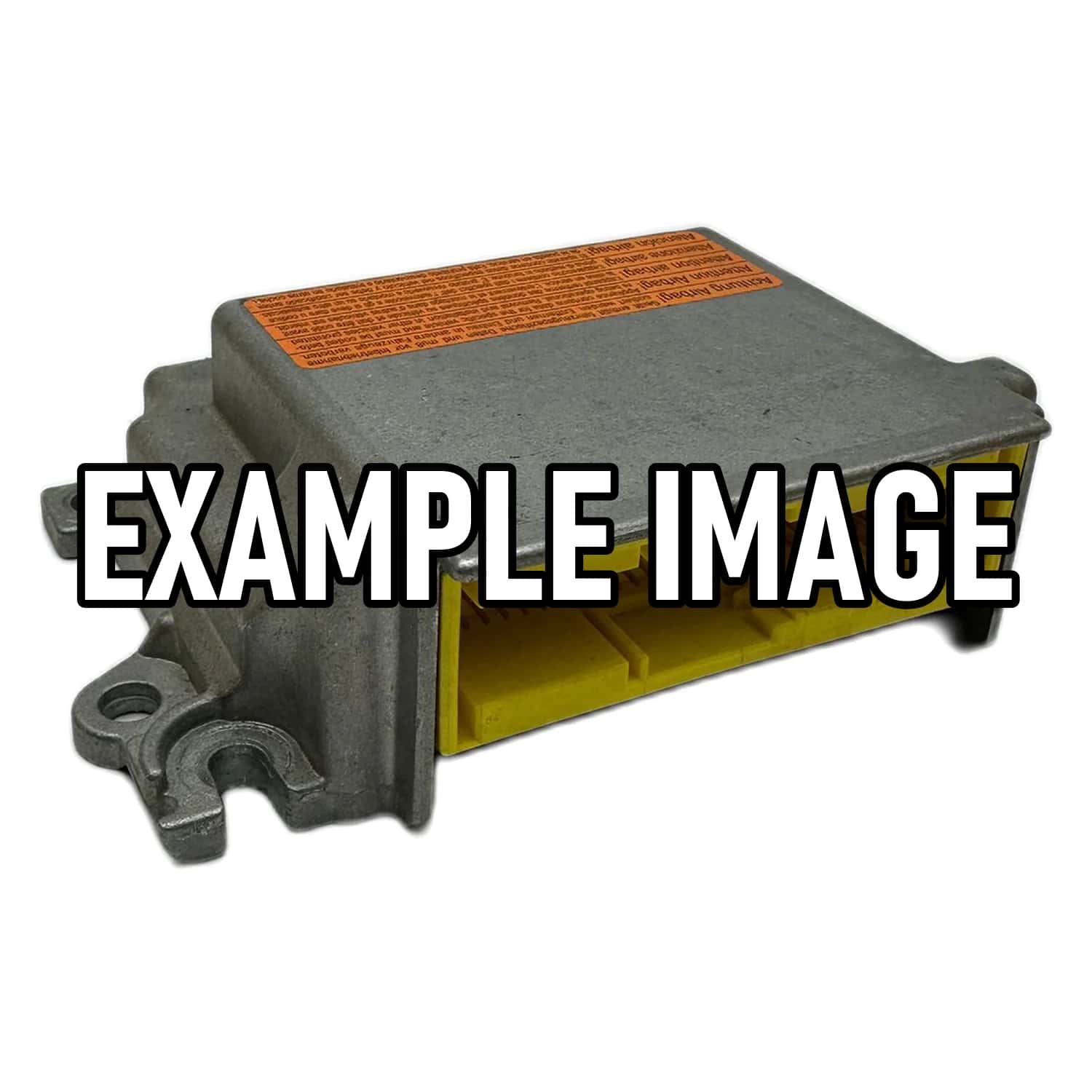
Suzuki Equator airbag control units can be uniquely identified by their specific part number, vehicle year, and vehicle identification number (VIN). Each version of the control unit has been developed for optimal compatibility with the respective model year and the installed safety systems.
The part number can be found directly on the housing of the airbag control unit, which is usually located under the carpet in the center tunnel or on the center console. It's crucial to check this number precisely, as even small deviations can lead to incompatibilities.
In addition to the part number, the year of manufacture of your Suzuki Equator provides important information about the possible software version and hardware of the control unit. The vehicle identification number (VIN) on your registration certificate allows for precise tracing of your pickup's original equipment.
Since the Equator was available in body styles such as Extended Cab and Crew Cab, it's advisable to consider this information during identification. A correctly identified airbag control unit is the foundation for a successful and safe repair.
What airbag equipment does the Suzuki Equator have?
The Suzuki Equator's airbag equipment varied depending on the model year and the chosen trim level, with a focus on basic and robust safety systems. While all models came standard with driver and passenger airbags, advanced safety features were introduced over the course of production.
From the beginning of production, driver and passenger airbags were standard equipment in all Suzuki Equator models, including the Extended Cab and Crew Cab variants. This provided a solid foundation for occupant protection in the event of a collision.
As already mentioned, active safety was further improved starting in 2010 with the standard stability control on the V6 models. Starting in the 2012 model year, this was then standardized on all Suzuki Equator models, significantly increasing driving safety and optimizing the interaction with the airbag system.
Additional features such as heated seats or leather seats, which were primarily available as options on the Crew Cab, had no direct impact on the number or type of airbags. Nevertheless, the airbag control unit was always the central unit responsible for the correct deployment of the available airbags and seatbelt pretensioners to provide optimal occupant protection.
Common fault codes in this category
Shipping & repair from Germany
Airbag24 repairs your component in Berlin — usually within 3–4 working days.
Standard shipping within Germany is free; we normally return your part by UPS.
You pay for and insure the inbound shipment to us. On explicit request we ship by express — the extra cost is borne by the customer.
If you withdraw from the contract, you bear the cost of returning the item.