
Alfa Romeo 156 airbag control unit repair(1)
1 product
What should I pay attention to with Alfa Romeo 156 airbag control units?
The airbag technology used in the Alfa Romeo 156 varies considerably depending on the model year and model upgrade. Professional repair is crucial to ensuring the safety of your vehicle, especially in such an award-winning model as the Alfa Romeo 156.
The Alfa Romeo 156 (Type 932) was produced between 1997 and 2005 and was known for its sporty design and agile handling. As "European Car of the Year 1998," it set standards in the mid-size segment.
Over the course of its production run, the airbag technology in the Alfa Romeo 156 has been continuously developed. This means that the installed airbag control units and their functions may vary depending on the model year and equipment.
When repairing an airbag control unit for an Alfa Romeo 156, special attention must be paid to compatibility with the specific vehicle model and its safety systems. A defective airbag control unit can compromise your vehicle's overall passive safety.
Which Alfa Romeo 156 generations are there?
The Alfa Romeo 156 was produced in one main generation, which used different airbag control units and safety systems over the course of its production run. The development of the safety system reflects the technological advances from 1997 to 2007.
Although it represents a single model generation, the Alfa Romeo 156 (Type 932) underwent two significant facelifts during its production run, in 2002 and 2003. These revisions affected not only the design and engine, but also the installed electronic components, including the airbag control units.
The sedan was manufactured until 2005, while the popular Sportwagon (station wagon, from 2000) and the more robust Crosswagon Q4 (all-wheel drive version, from 2004) were available until the end of 2007. Each of these variants and the facelifts could involve specific adjustments to the airbag control system, which must be taken into account during a repair.
The different model years and body variants of the Alfa Romeo 156 mean that the airbag control units can also vary in their specifications. This development reflects the continuous progress in vehicle safety, from the basic systems at the start of production in 1997 to the advanced features of later models.
How do I identify my Alfa Romeo 156 airbag control unit?
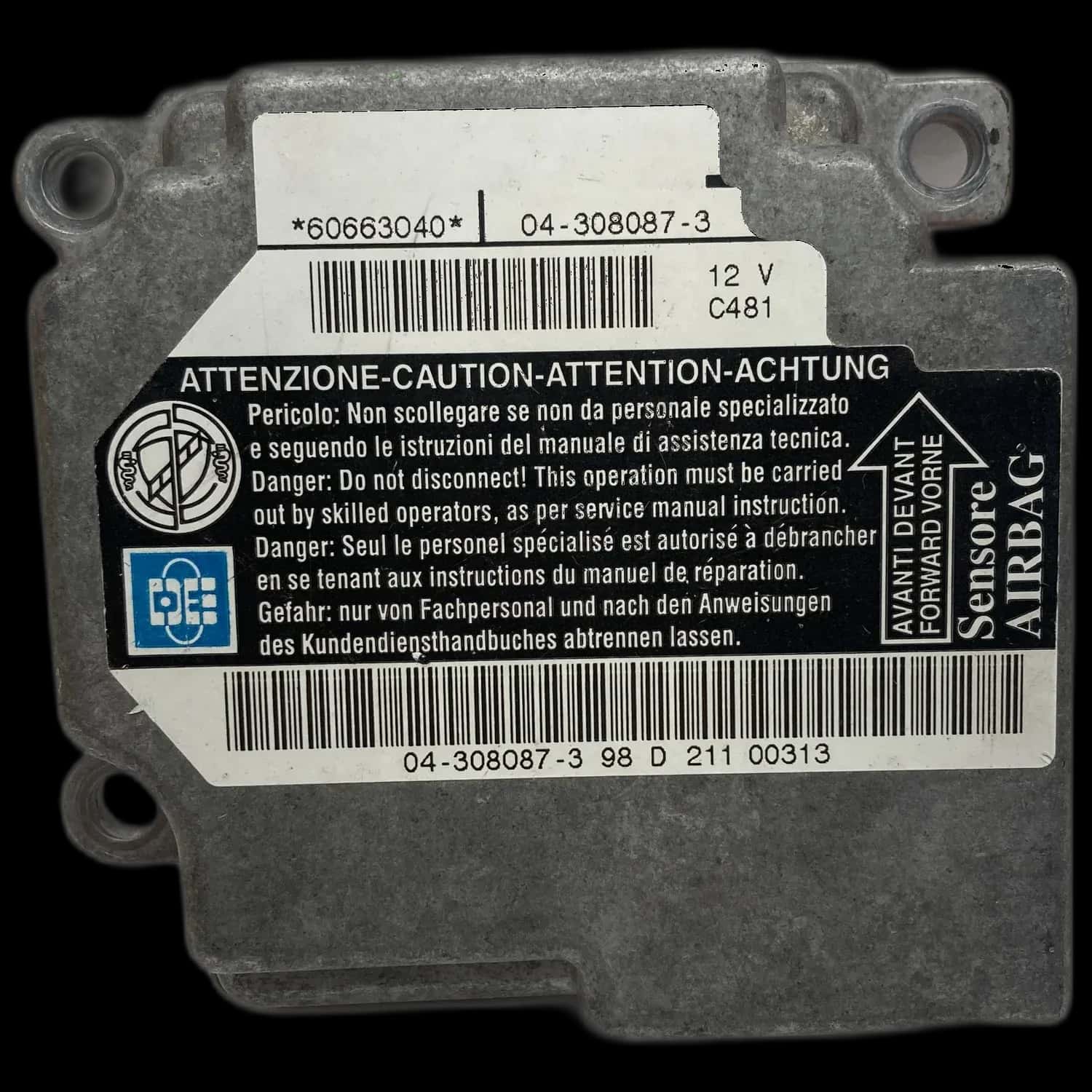
Alfa Romeo 156 airbag control units can be uniquely identified by part number, year of manufacture, and vehicle identification number (VIN). Each model update and trim level used specific control unit variants for optimal compatibility and functionality.
To ensure a correct repair of the airbag control unit in your Alfa Romeo 156, accurate identification is essential. The control unit's part number is the most important reference and is usually located directly on the component's housing.
In addition, the exact year of manufacture of your Alfa Romeo 156 and the vehicle identification number (VIN) are important. This information helps determine the specific revision of the airbag system and thus the appropriate control unit, especially since facelifts have brought changes.
Even if the control unit is defective, this information can be used to determine the correct specification for the repair. This ensures that all airbag components in the vehicle function optimally again after the repair, ensuring the original safety of the Alfa Romeo 156.
What airbag equipment does the Alfa Romeo 156 have?
The airbag configuration of the Alfa Romeo 156 varies considerably depending on the model year and trim level. While early models used basic airbag systems, newer versions feature enhanced safety packages with additional airbag modules for more comprehensive occupant protection.
From the start of production in 1997, front and side airbags were standard equipment in the Alfa Romeo 156. This corresponded to the safety standards of the time and contributed significantly to the vehicle's success and awards.
With the facelifts from 2002/2003 onward, passive safety was further improved. Starting with these model years, window airbags, often referred to as "curtain airbags," were introduced as standard in many trim levels. These provide additional head protection for the occupants in a side impact.
In addition to airbags, the Alfa Romeo 156 featured other important safety features such as ISOFIX child seat anchors, which were also standard. Optional systems such as hydraulic brake assistance (HBA) expanded the safety package and contributed to the Alfa Romeo 156's high rating as a compact executive car.
Shipping & repair from Germany
Airbag24 repairs your component in Berlin — usually within 3–4 working days.
Standard shipping within Germany is free; we normally return your part by UPS.
You pay for and insure the inbound shipment to us. On explicit request we ship by express — the extra cost is borne by the customer.
If you withdraw from the contract, you bear the cost of returning the item.