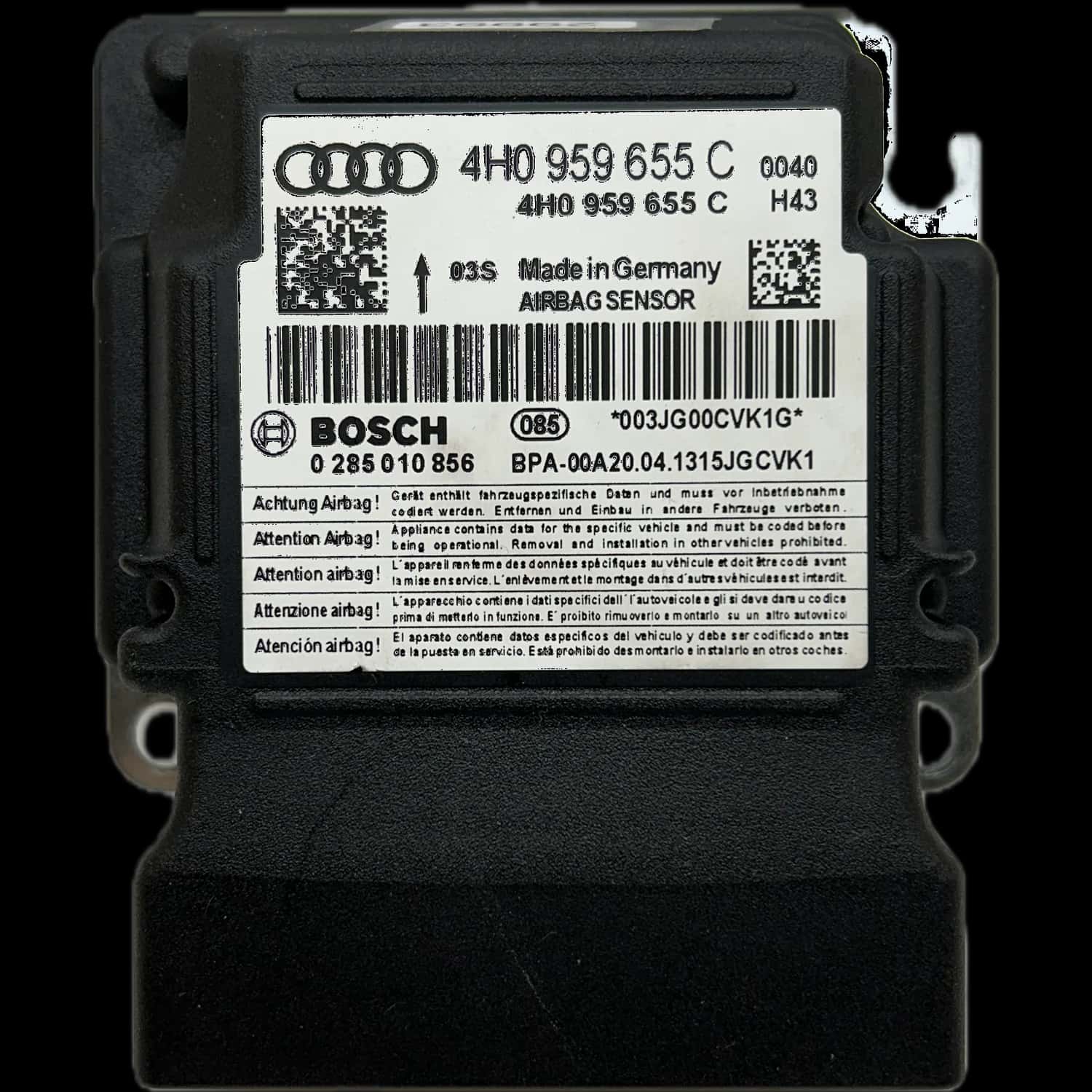
airbag control unit repair Audi S6 C7
from€79.00
 Quality since 2002
The airbag technology used in the Audi S6 varies depending on the model year. Specialized workshops professionally repair control units for all Audi S6 generations with true-to-original functionality, thus ensuring the complete safety of your vehicle.
The Audi S6, established as a sporty luxury sedan since 1994, has undergone continuous development through the C4 to C8 series. This evolution affects not only the engine and comfort, but also significantly the safety systems, especially the airbag control unit.
Early airbag systems in models like the C4 were relatively simple and primarily comprised driver and passenger airbags. With each new generation, the systems became more complex, from additional side and curtain airbags to sophisticated integrated assistance systems in the latest S6 models. This development means that the demands on the repair and maintenance of airbag control units are constantly increasing to maintain full functionality.
The Audi S6 has been produced in five main generations, each with different airbag control units. The development of the safety system reflects technological advances from 1994 to the present.
The first generation, the Audi S6 C4 (Type 4A), was produced from 1994 to 1997 and laid the foundation for the sporty luxury class. This was followed by the S6 C5 (Type 4B) from 1999 to 2003, which already brought significant improvements to standard safety features. The S6 C6 (Type 4F) from 2006 to 2011 introduced advanced SRS systems, while the S6 C7 (Type 4G) from 2012 to 2018 featured sophisticated airbag systems and the first semi-autonomous driving assistance systems.
The current generation, the Audi S6 C8, which will be produced from around 2019/2020, represents the latest state-of-the-art technology with a full range of airbags and state-of-the-art driver assistance systems. Each of these model series features specific airbag control units tailored to the respective vehicle architecture and installed sensors.
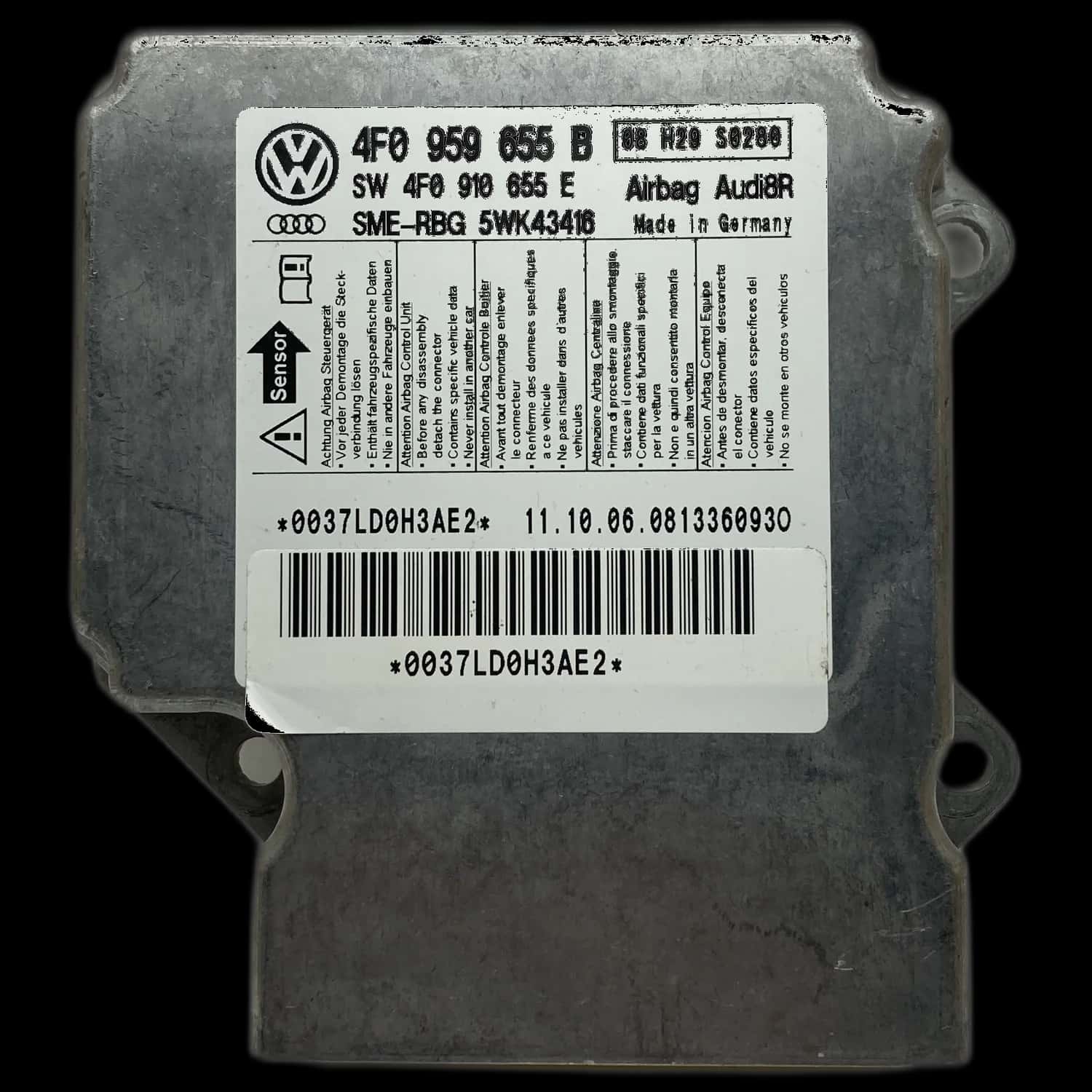
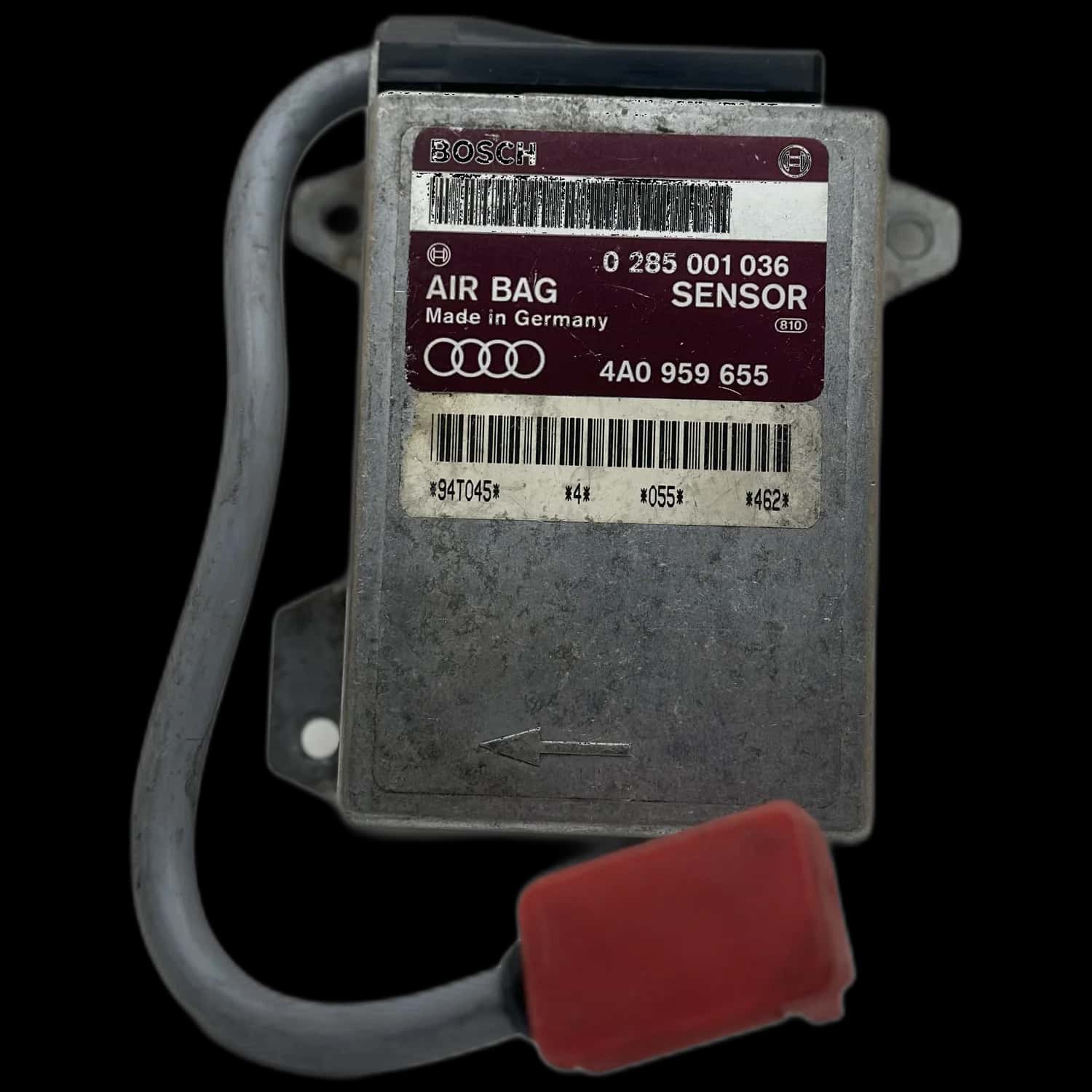
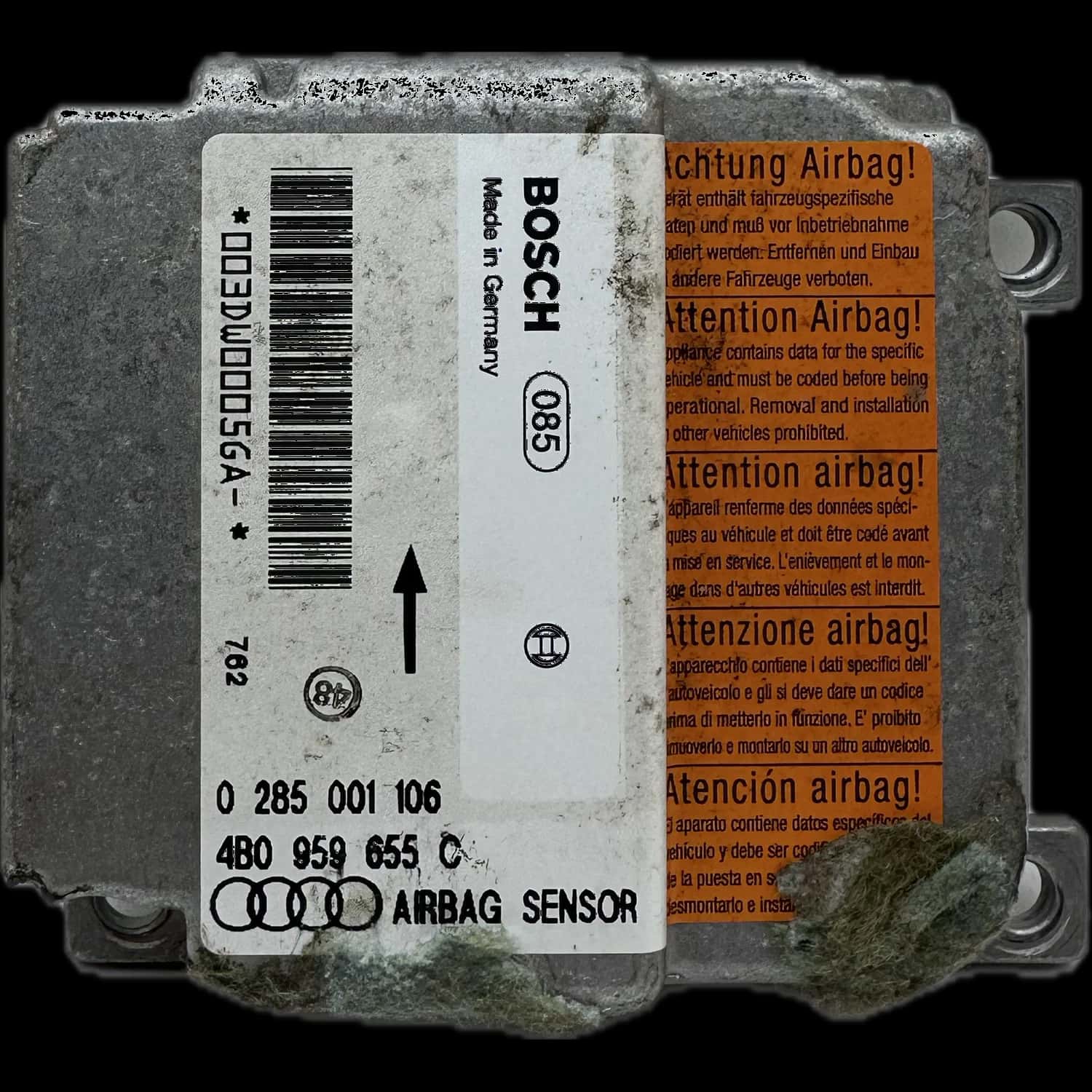
Audi S6 airbag control units can be clearly identified by part number, year of manufacture, and, if applicable, the vehicle identification number. Each generation uses specific control unit variants for optimal compatibility and safety features.
Identifying the correct airbag control unit is crucial for a successful repair or replacement. The part number is usually printed directly on the control unit's housing and often begins with an Audi-specific combination of numbers. The vehicle's model year also plays an important role, as the installed components can change within a generation due to facelifts or model updates.
To accurately identify and determine the compatibility of the airbag control unit in the event of a defective system, it is also helpful to know the exact features of your Audi S6. Correct identification ensures that repairing or replacing the airbag control unit restores the full functionality of your vehicle's complex safety system.
The airbag configuration of the Audi S6 varies considerably depending on the model year and trim level. While early models use basic airbag systems, newer generations feature enhanced safety packages with additional airbag modules and integrated assistance systems.
In the Audi S6 C4, driver and passenger airbags were usually fitted as standard, with additional airbags often available as options. With the S6 C5, standards improved, so that in addition to front airbags, side airbags and optional curtain airbags increasingly became standard equipment. The S6 C6 continued this trend, offering front, side, and curtain airbags as standard as part of an enhanced SRS system.
The Audi S6 C7 and C8 models feature sophisticated airbag systems that include front, side, curtain, and knee airbags as standard. The S6 C8, in particular, integrates state-of-the-art driver assistance systems such as automatic emergency braking and lane departure warning, which are closely linked to the airbag control unit. This development underscores the need for professional repair to ensure the full functionality and safety of your Audi S6 if the airbag control unit is defective.
Airbag24 repairs your component in Berlin — usually within 3–4 working days.
Standard shipping within Germany is free; we normally return your part by UPS.
You pay for and insure the inbound shipment to us. On explicit request we ship by express — the extra cost is borne by the customer.
If you withdraw from the contract, you bear the cost of returning the item.