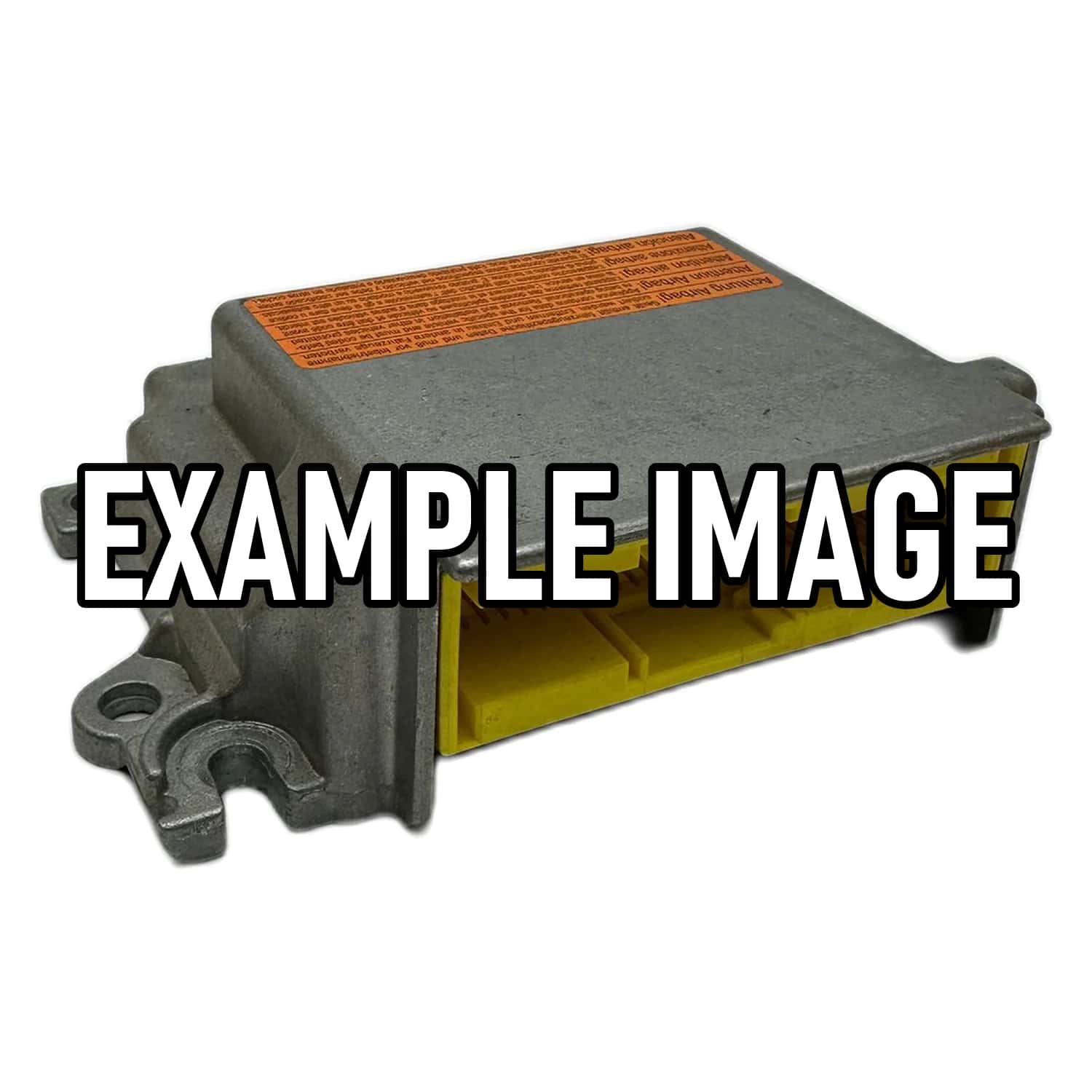
airbag control unit repair BMW i4 G26
from€66.39
 Quality since 2002
The airbag technology used in the BMW i4 is state-of-the-art from the outset and designed for maximum safety. Specialists professionally repair these airbag control units with true-to-original functionality and a comprehensive warranty.
The BMW i4 (model code G26) has been a prime example of advanced electric mobility and integrated safety since its launch in 2021. As an all-electric compact executive sedan, built on the same assembly line as combustion-engine models, it benefits from BMW's comprehensive safety expertise.
The BMW i4's airbag system was developed to meet the highest standards of occupant protection. It incorporates a multitude of sensors and actuators that react precisely and instantly in the event of a collision. A defective airbag control unit can impair the function of this critical system and must be repaired immediately to ensure full driving safety.
The i4's specific architecture and software require a specialized approach to repair. It is crucial that only qualified experts with the necessary diagnostic tools and expertise repair the BMW i4's complex airbag control units.
The BMW i4 (G26) has so far been produced in one main generation, with series production beginning in 2021. A facelift is planned for 2024, which will further refine the technological features but retain the basic architecture of the airbag systems.
The first and current generation of the BMW i4 is the G26, which has been rolling off the production line since 2021. This model quickly established itself as a sporty, luxurious, and emission-free alternative in the premium mid-size segment.
Variants such as the i4 eDrive40 and the more powerful i4 M50 both belong to the G26 series and share the basic safety architecture. Although technical developments and software updates are continuously being implemented, they are structurally the same generation.
The potential introduction of a facelift starting in 2024 signals BMW's commitment to continuous improvement. Such updates can bring subtle changes to the hardware or software of the airbag control units, which can affect compatibility and repair methods. A professional repair takes these subtle differences into account to ensure the full functionality of the safety system.
BMW i4 airbag control units can be reliably identified by the printed part number, the exact year of manufacture, and often also the vehicle identification number (VIN). Each i4 model uses specific control unit variants that are tightly integrated with modern vehicle systems.
The part number is the most important identifier for each control unit, as it uniquely identifies the hardware model and often also the software version of the airbag control unit. This number can be found directly on the control unit's housing.
The model year of your BMW i4 is also crucial, as minor revisions or updates to the control units can occur even within the same generation. The VIN provides an additional layer of security, allowing for precise identification of the specific vehicle and its equipment.
For a proper repair, it is essential to ensure the precise identification of the defective airbag control unit. This ensures that the repair is carried out according to the manufacturer's specific specifications and that the repaired control unit works optimally with the other safety systems of your BMW i4.
The BMW i4's airbag equipment is extremely comprehensive as standard and features the latest safety technology. It offers comprehensive protection for driver and passengers through a variety of strategically placed airbag modules and intelligent sensors.
The BMW i4 is equipped with an impressive array of airbags designed to provide maximum occupant protection in the event of a collision. These include standard driver and front passenger airbags, which deploy in a frontal impact to protect the head and upper body.
Additionally, side airbags are installed in the front to protect occupants in the event of a side impact. Curtain airbags extend the entire length of the first and second rows of seats and protect the occupants' heads in both side collisions and rollovers.
Another important feature is the standard driver and front passenger knee airbags, which help minimize leg injuries in a frontal collision. An airbag occupancy detection sensor is also standard to adjust airbag deployment based on the presence and weight of the front passenger.
This comprehensive equipment underscores the BMW i4's premium credentials in terms of safety and passenger protection. A defective airbag control unit can impair the function of these complex systems, which is why professional repair is essential to restore full protection.
Airbag24 repairs your component in Berlin — usually within 3–4 working days.
Standard shipping within Germany is free; we normally return your part by UPS.
You pay for and insure the inbound shipment to us. On explicit request we ship by express — the extra cost is borne by the customer.
If you withdraw from the contract, you bear the cost of returning the item.