
BMW M6 airbag control unit repair(6)
What should be considered with BMW M6 airbag control units?
The airbag technology used in the BMW M6 varies depending on the model year. Airbag24 professionally repairs control units of all BMW M6 generations with original functionality and a 2-year warranty.
The production history of the BMW M6 spans several decades, beginning with the legendary E24 in the 1980s and continuing through to the modern F-Series. Each of these eras brought significant advances in vehicle safety and, consequently, in airbag control unit technology.
The evolution of the airbag system in the BMW M6 reflects technological change: from basic systems in early models to comprehensive safety packages with advanced control units that manage a multitude of airbag modules. A professional repair ensures the correct function of this central safety component.
Which BMW M6 generations are there?
The BMW M6 was produced in three generations, each using different airbag control units. The development of the safety system reflects technological advances from 1983 to 2018.
The first generation of the BMW M6, the E24, was produced from 1983 to 1989 and was initially equipped with basic airbag systems, which were added in later models. This model established the M6's reputation as a high-performance luxury coupe.
The second generation, the E63 (Coupé) and E64 (Cabriolet), was marketed from 2005 to 2010 and set the standard with its V10 engine and a more comprehensive airbag system. Front and side airbags were already integrated as standard.
The third generation of the M6 (F06 Gran Coupé, F12 Cabriolet, F13 Coupé), produced from 2012 to 2018, represents the pinnacle of M6 development in terms of safety and comfort. These models feature state-of-the-art airbag control units (SRS ACSM) and an expanded range of airbags to further optimize occupant protection.
How do I identify my BMW M6 airbag control unit?
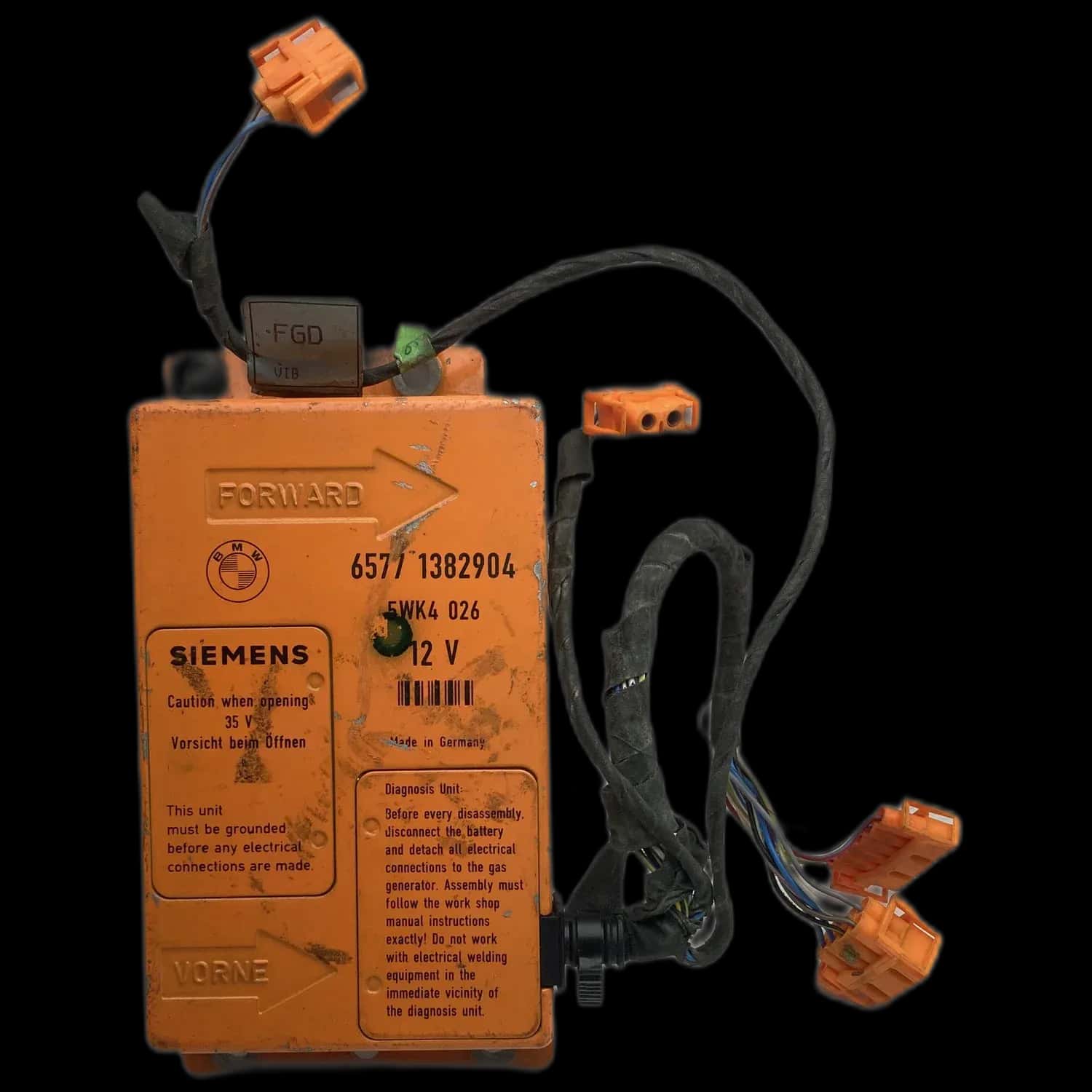
BMW M6 airbag control units can be uniquely identified by part number, model year, and vehicle identification number. Each generation uses specific control unit variants for optimal compatibility.
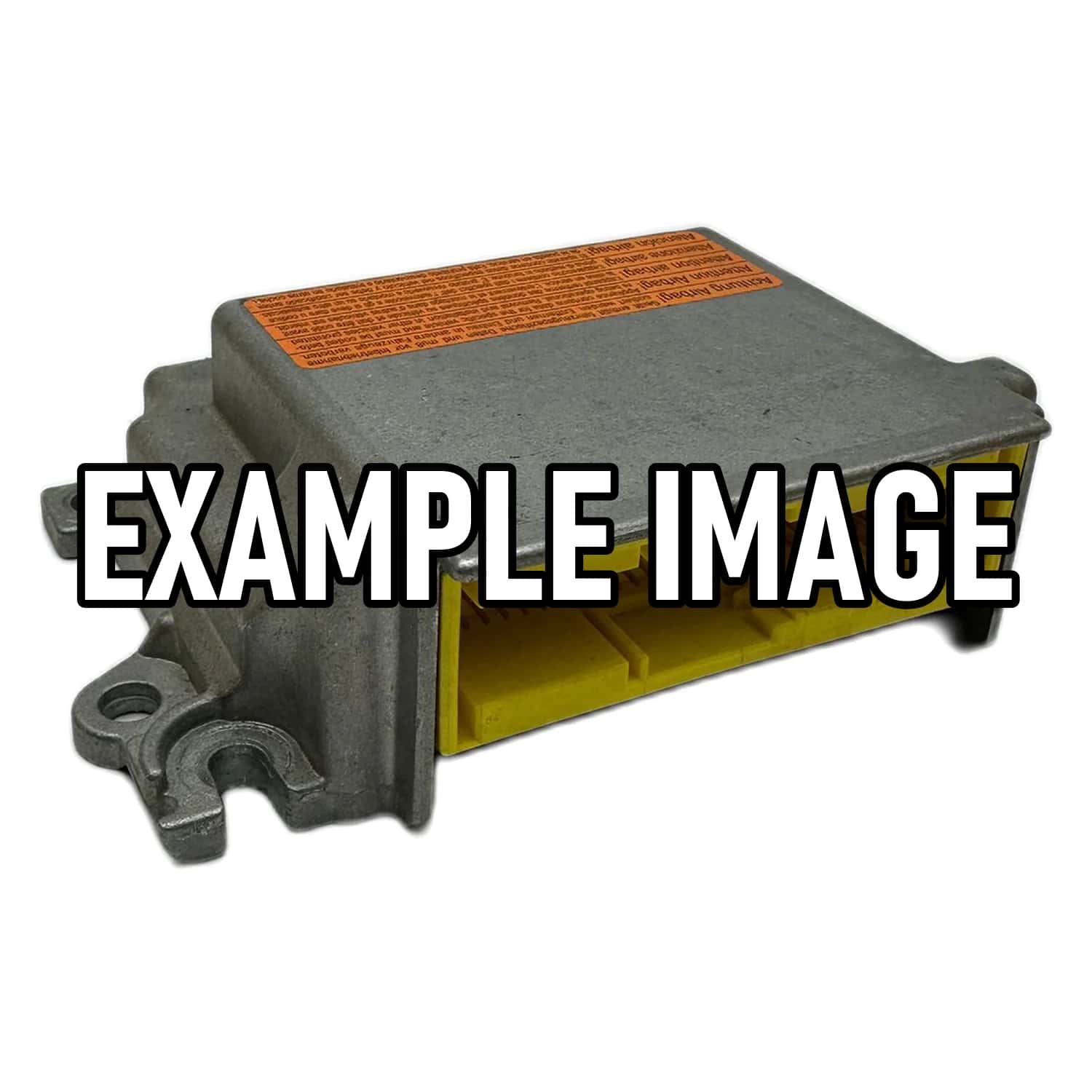
The part number is the primary indicator for correctly identifying your airbag control unit. It is usually located directly on the module's housing. It is crucial to verify this number during service, as different revisions can exist even within a single generation.
Additionally, the exact year and vehicle identification number (VIN) of your BMW M6 are essential to ensure airbag control unit compatibility. This information helps us take your vehicle's specific equipment and system configuration into account and perform a precise repair or reset.
What airbag equipment does the BMW M6 have?
The airbag configuration of the BMW M6 varies depending on the model year and trim level. While early models use basic airbag systems, newer generations feature enhanced safety packages with additional airbag modules.
Airbags were not initially standard in the BMW M6 E24 (1983-1989), but were introduced in later models with driver and passenger airbags to increase occupant protection. This marked the beginning of the integration of passive safety systems in these high-performance coupes.
The second-generation BMW M6 E63 and E64 (2005-2010) were equipped with front airbags as standard. Depending on the trim level and model, additional side airbags and, if applicable, knee airbags could be added as options, increasing comfort and safety for driving enthusiasts.
The third-generation BMW M6, the F06, F12, and F13 (2012-2018), features the most comprehensive airbag configuration. Front and side airbags, as well as knee airbags, are standard. Many models also offer side curtains, which further enhance protection in the event of a side impact and are controlled by the advanced SRS ACSM control unit.
Shipping & repair from Germany
Airbag24 repairs your component in Berlin — usually within 3–4 working days.
Standard shipping within Germany is free; we normally return your part by UPS.
You pay for and insure the inbound shipment to us. On explicit request we ship by express — the extra cost is borne by the customer.
If you withdraw from the contract, you bear the cost of returning the item.