
Hyundai Casper airbag control unit repair(1)
1 product
What should I consider with Hyundai Casper airbag control units?
The airbag technology used in the Hyundai Casper meets the latest standards, as the model has only been in production since 2021. Airbag control units are designed for modern vehicles that ensure a high level of safety.
The Hyundai Casper, launched in September 2021, represents Hyundai's vision of a modern mini SUV. As a current model, the Casper benefits from the latest developments in passive and active safety. This also applies to the airbag control units, which play a central role in the vehicle's safety concept.
The airbag system development in the Hyundai Casper reflects the focus on comfort and safety, even for small urban vehicles. The control units are designed to process a wide range of sensor data to deploy the airbags precisely and reliably in the event of an impact. Modern lightweight construction and high-strength steel technology in the body underscore the need for robust airbag systems.
Which Hyundai Casper generations are there?
The Hyundai Casper was produced in a first generation, which has been on the market since 2021 and received a facelift in October 2024. This one generation thus uses the continuously developed airbag technology from 2021 to the present day.
The Hyundai Casper was unveiled in September 2021 as Hyundai's first mini SUV. It is still in production today (as of mid-2025) and has established itself in Asian markets such as South Korea and India. Although it is a single generation, the vehicle is subject to continuous improvements, particularly with the facelift in October 2024, which may also affect the airbag control unit.
The development of the safety system in the Hyundai Casper reflects the technological advances in the mini-SUV class. Despite its compact dimensions (just under 3.6 meters long), the Casper is equipped with modern driver assistance and safety systems. These advancements within a single generation may result in different revisions or specifications of the airbag control units to ensure the highest level of safety at all times.
How do I identify my Hyundai Casper airbag control unit?
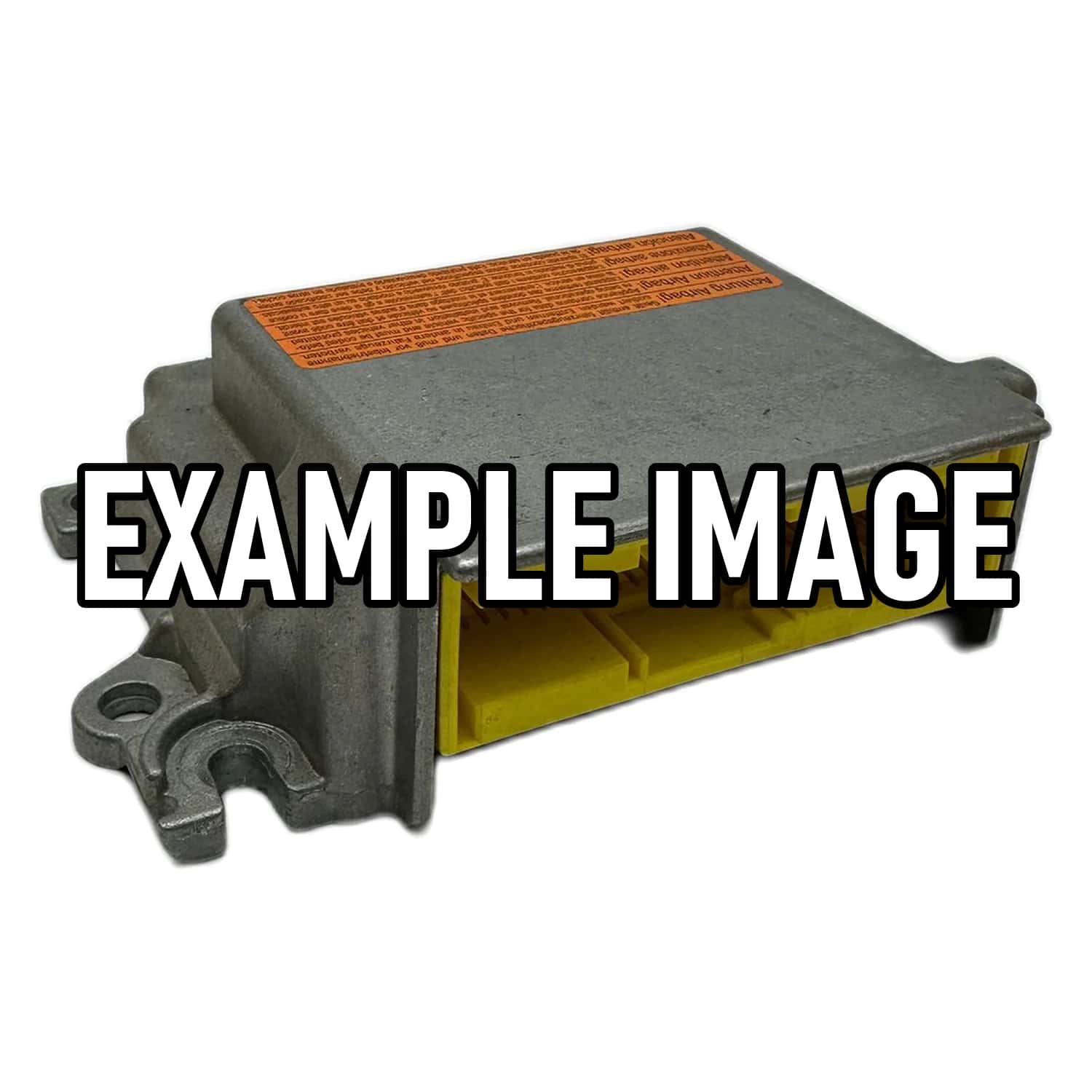
Hyundai Casper airbag control units can be clearly identified by the original part number affixed directly to the unit. The model year of your Hyundai Casper and the vehicle identification number (VIN) are also crucial factors for correct identification.
The part number of the airbag control unit is the most important clue for identifying the exact component. You can find this number by removing the control unit. The airbag control unit is often located under the center tunnel or under one of the front seats.
In addition to the part number, the exact year of manufacture and trim level of your Hyundai Casper are important. Even if there is only one generation, the 2024 facelift or certain engine variants (gasoline, electric) may require specific control unit variants. The VIN offers another means of precise identification, as it encodes all relevant vehicle data.
What airbag equipment does the Hyundai Casper have?
The Hyundai Casper's airbag equipment is comprehensive and designed to meet modern safety standards. Although specific airbag numbers aren't always listed in detail, the Casper typically comes with a solid base airbag setup, which can be supplemented with additional modules.
As a modern vehicle that prioritizes comfort and safety, the Hyundai Casper is typically equipped with basic airbags, such as front airbags for the driver and front passenger. Given its production run since 2021 and the marketing focus on safety, side and curtain airbags are also to be expected in most trim levels (Smart, Modern, Inspiration).
The Casper's reinforced safety structure, based on modern lightweight and high-strength steel technology, is designed to maximize body integrity in the event of a crash. This is complemented by an intelligent airbag system that optimally protects the occupants. Modern driver assistance systems work hand in hand with the passive safety system, which includes the airbags, to minimize the risk of a crash and provide maximum safety in an emergency.
Common fault codes in this category
Shipping & repair from Germany
Airbag24 repairs your component in Berlin — usually within 3–4 working days.
Standard shipping within Germany is free; we normally return your part by UPS.
You pay for and insure the inbound shipment to us. On explicit request we ship by express — the extra cost is borne by the customer.
If you withdraw from the contract, you bear the cost of returning the item.