
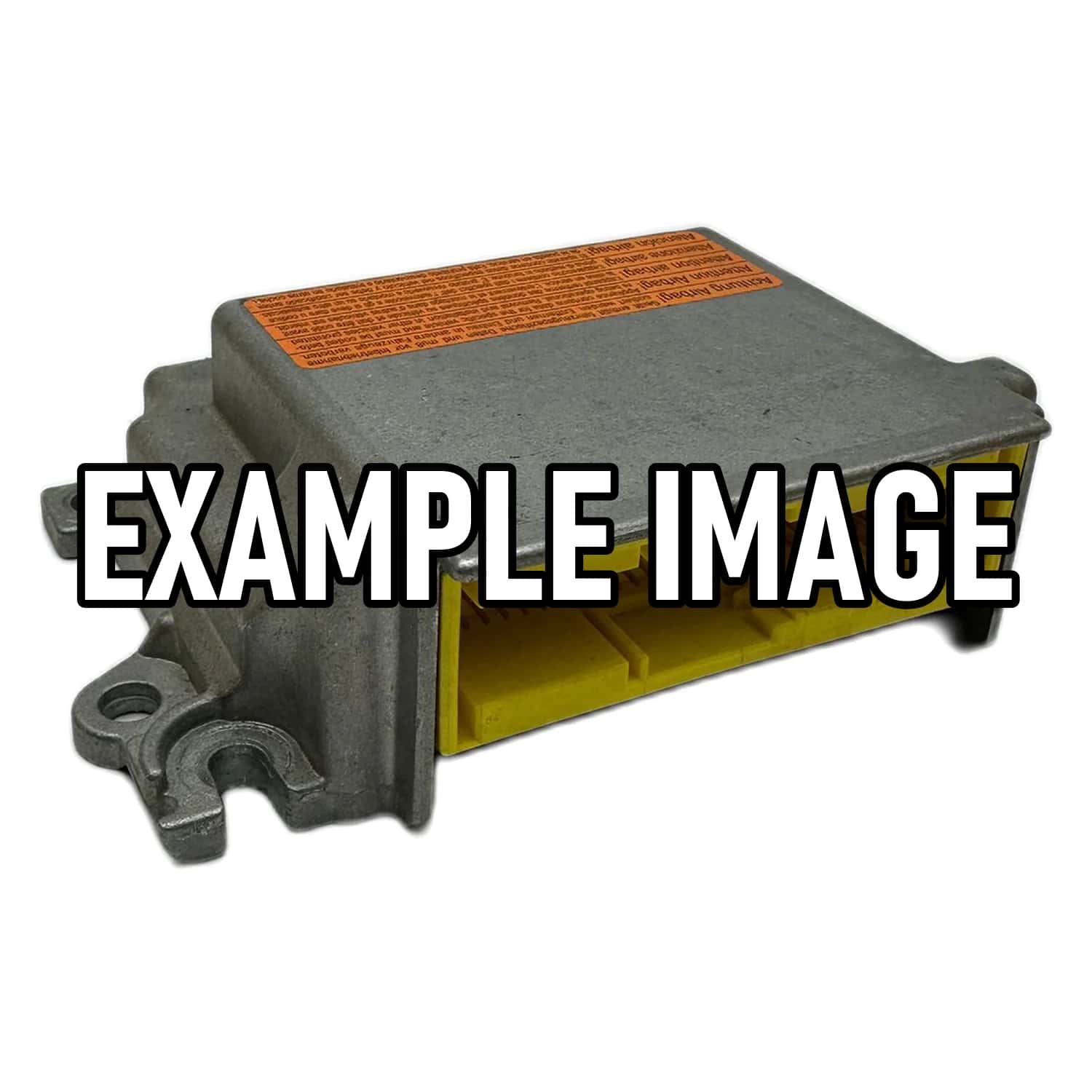

Lexus ES airbag control unit repair(7)
What should I consider with Lexus ES airbag control units?
The airbag technology used in the Lexus ES varies depending on the year and model generation. Professional repairs of Lexus ES airbag control units ensure that original functionality is maintained, which is crucial for vehicle safety.
The Lexus ES has been produced as a luxury mid-size sedan since 1989 and has undergone continuous development over seven generations. Each of these generations brought technological advancements, which are also reflected in the installed airbag control units.
The development of the airbag system in the Lexus ES has undergone an impressive transformation over the years. From the basic systems of the early models to the state-of-the-art, integrated safety packages of today's Lexus Safety System+, a constant improvement in passive safety is evident. This means that the specific requirements for repairing an airbag control unit depend heavily on the year and exact model variant of the Lexus ES.
Which Lexus ES generations are there?
The Lexus ES has been produced in seven main generations, each with its own specific airbag control units. The evolution of the safety system reflects technological advances from 1989 to the present, always designed for maximum occupant safety.
The first generation of the Lexus ES (ES 250) was manufactured from 1989 to 1991. This was followed by the second (ES 300, 1991–1996) and third generation (ES 300, 1996–2001), which already offered the first developments in occupant protection.
The fourth generation (ES 300/330, 2001–2006) and the fifth generation (ES 330, 2006–2012) introduced further improvements in airbag technology. With the sixth generation (ES 350/ES 300h, 2012–2018), hybrid powertrains became popular and the integration of active safety systems began to emerge.
The current seventh generation of the Lexus ES (ES 350/ES 300h), in production since 2018, is based on the modern Toyota GA-K platform. These models feature the most advanced airbag systems and are closely integrated with the Lexus Safety System+, which offers comprehensive preventive and passive safety. The corresponding model series available in the shop include the Lexus ES250, ES300, ES330, ES350, ES300h, as well as the internal codes such as VCV10, MCV20, MCV30, GSV40, ASV60, and AXZH60.
How do I identify my Lexus ES airbag control unit?
Lexus ES airbag control units can be reliably identified by the part number printed on the unit, the vehicle's year of manufacture, and the vehicle identification number (VIN). Each generation, and often specific trim levels, use specific control unit variants to ensure optimal compatibility and system functionality.
The part number is the primary indicator of the exact specification of your Lexus ES airbag control unit. It is located directly on the control unit's housing and is crucial for selecting the correct replacement or repair part.
The year of your Lexus ES is also an important factor, as airbag systems have continuously evolved over the various generations. The vehicle identification number (VIN) provides additional detailed information about the original equipment and configuration of your specific vehicle, which can be very helpful in correctly identifying the airbag control unit.
What airbag equipment does the Lexus ES have?
The airbag configuration of the Lexus ES varies considerably depending on the model year and the respective trim level. While early models offered solid basic airbag systems, newer generations feature enhanced safety packages with a significantly higher number of airbag modules and integrated protection features.
For many years, the Lexus ES has been equipped with a comprehensive airbag suite as standard, with at least 10 airbags in most models. These include front airbags for the driver and front passenger, side airbags, curtain airbags that extend across the entire front window, and knee airbags for both front seats to maximize protection in the event of a collision.
Newer Lexus ES models are also equipped with the advanced Lexus Safety System+. This system integrates a range of active safety technologies, such as the Pre-Collision System, Lane Keeping Assist, and Adaptive Cruise Control, which work closely with the airbag control system to prevent or mitigate the impact of accidents.
Depending on the trim level and the options selected, additional airbags and enhanced safety features may be available, especially in the higher trim levels of the current generations. The Lexus ES is thus a prime example of a sedan that has placed the highest priority on occupant protection since its launch and has continually adapted to the latest safety standards.
This comprehensive safety equipment underlines the positioning of the Lexus ES as an executive sedan that combines comfort, luxury and reliability with an uncompromising commitment to safety, thus appealing to a target group that values a safe and relaxed driving experience.
Common fault codes in this category
Shipping & repair from Germany
Airbag24 repairs your component in Berlin — usually within 3–4 working days.
Standard shipping within Germany is free; we normally return your part by UPS.
You pay for and insure the inbound shipment to us. On explicit request we ship by express — the extra cost is borne by the customer.
If you withdraw from the contract, you bear the cost of returning the item.