
Nissan Terrano airbag control unit repair(2)
2 products
What should I pay attention to with Nissan Terrano airbag control units?
The airbag technology used in the Nissan Terrano varies considerably depending on the model year and model series. Professional repair of Nissan Terrano airbag control units is possible for all generations to restore the safety system's original functionality.
The Nissan Terrano underwent remarkable development throughout its production run from early 1986 to the late 2010s, which is also reflected in its safety technology. Originally designed as a rugged off-road vehicle, the models evolved from basic safety systems to modern, comprehensive airbag equipment.
Airbag system development followed the general trend in the automotive industry: from optional single-airbag systems in the early WD21 and R20 models to standard dual front airbags in the newer D10 generation. This led to increasing complexity of airbag control units, requiring specific expertise for repair.
Which Nissan Terrano generations are there?
The Nissan Terrano was produced in three distinct generations, each with its own airbag control units and different safety features. The evolution of the safety system reflects technological advances from early 1986 to the late 2010s.
The first generation, the Nissan Terrano WD21, was built from early 1986 until roughly the mid-1990s. This series was mostly available as a 2- and 4-door model and generally offered no airbags or only as an option.
This was followed by the Nissan Terrano R20, often known as the Terrano II, which was produced from 1993 to 2005/2006. This generation underwent several facelifts and established itself as a compact to mid-size SUV, often equipped with a single driver-side airbag system.
The latest generation, developed specifically for the Indian market, is the Nissan Terrano D10, which was on the market from around 2013 until the late 2010s. Based on the Renault Duster, this model already offered modern safety features as standard, including dual front airbags.
How do I identify my Nissan Terrano airbag control unit?
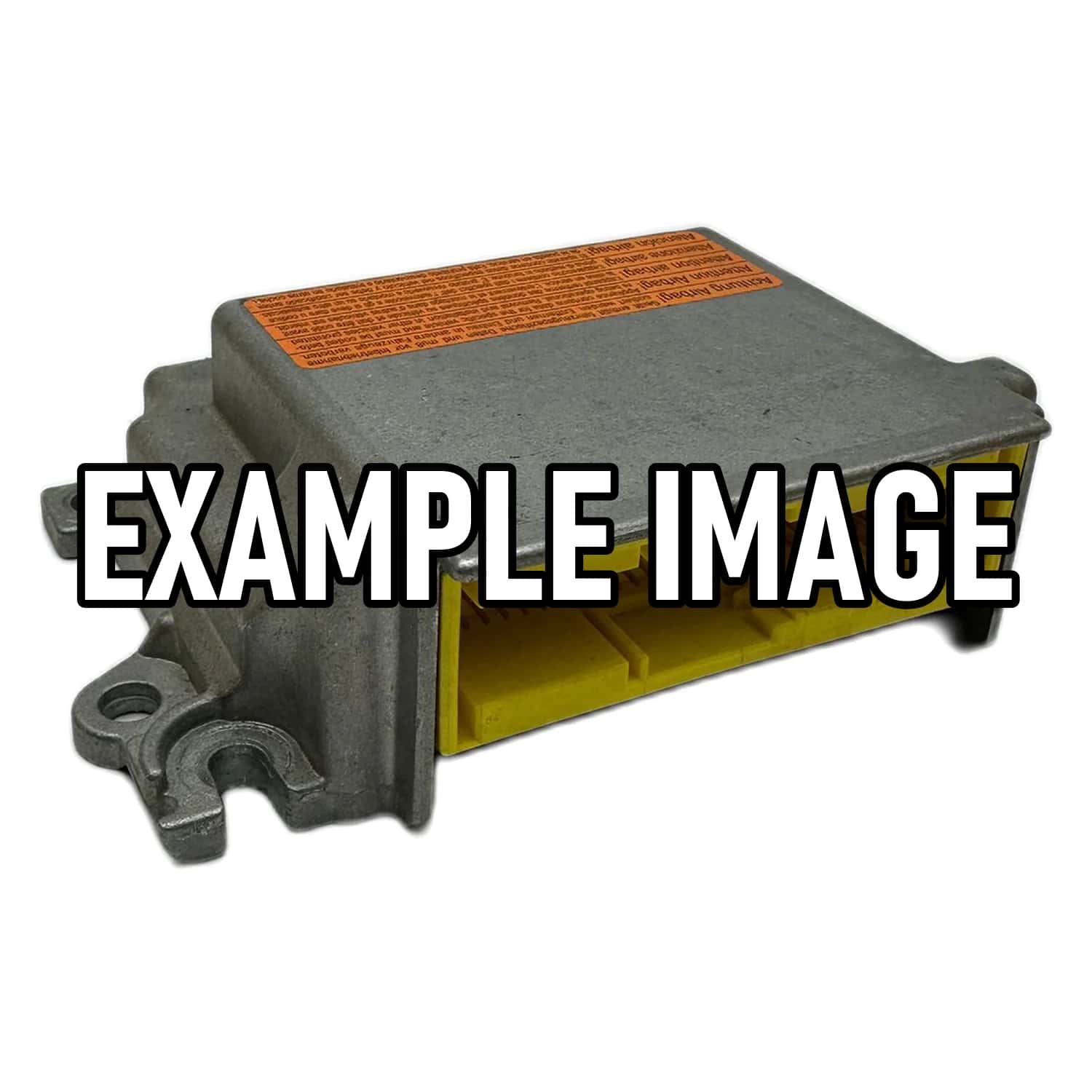
Nissan Terrano airbag control units can be uniquely identified by part number, exact year of manufacture, and vehicle identification number (VIN). Each generation of the Terrano uses specific control unit variants for optimal compatibility and safety, especially if the unit is defective and requires repair.
The airbag control unit's part number is the most important identification clue. It's printed directly on the control unit's housing. In older models like the Terrano R20, the control unit is often easier to access, while in newer models, the location may vary.
In addition to the part number, the exact year of manufacture of your Nissan Terrano is crucial, as different control units can be installed even within a single generation. The vehicle identification number (VIN) provides further specific information about the exact features of your vehicle.
For a precise diagnosis and successful repair, it is essential to determine the exact part number of the faulty control unit. This ensures that the repair is tailored to the specific needs of your Nissan Terrano and that the system functions properly again.
What airbag equipment does the Nissan Terrano have?
The airbag configuration of the Nissan Terrano varies considerably depending on the model year and trim level. While early models like the WD21 and R20 used basic airbag systems, newer generations like the D10 feature enhanced safety packages with additional airbag modules.
The Nissan Terrano WD21 and Terrano R20 (Terrano II) models date back to a time when airbags were not yet standard across the board. On the WD21, an airbag system was usually only available as an option, if at all. The R20 generally had a single airbag system on the driver's side; the passenger airbag was often either not included or only available in higher trim levels.
These early systems were often simple in design, which could complicate diagnosis in the event of a defective airbag control unit or a flashing airbag warning light. A comprehensive reading of the error codes was often only possible with special diagnostic equipment, as the internal diagnostic capabilities were limited.
In contrast, the Nissan Terrano D10 (India model) is equipped with more modern safety features. Dual front airbags for the driver and front passenger are standard. These are complemented by additional safety systems such as ABS, EBD, and ESP, significantly increasing the complexity and capabilities of this generation's airbag control unit.
This development demonstrates the transformation from a rugged off-road vehicle with basic safety features to a modern, urban-oriented SUV with comprehensive passive safety features. This also has a direct impact on the repair requirements of the corresponding airbag control units, which require specific knowledge for each Terrano generation.
Shipping & repair from Germany
Airbag24 repairs your component in Berlin — usually within 3–4 working days.
Standard shipping within Germany is free; we normally return your part by UPS.
You pay for and insure the inbound shipment to us. On explicit request we ship by express — the extra cost is borne by the customer.
If you withdraw from the contract, you bear the cost of returning the item.