airbag control unit repair Peugeot 307 I
from€79.00
 Quality since 2002
The airbag technology used in the Peugeot 307 varies primarily depending on the model year and the 2005 facelift. Airbag24 professionally repairs control units for all Peugeot 307 models with original functionality and a 2-year warranty.
The Peugeot 307 was produced in Europe from 2001 to 2008, and in some markets such as China and South America until 2014. Although it represents a single generation, the comprehensive facelift in 2005 marked an important technical breakthrough, which may also affect electronic components.
The development of the airbag system in the Peugeot 307 was always focused on providing high levels of passive safety for occupants. The control units are designed to deploy the vehicle's airbags precisely and reliably, which can significantly compromise safety if they fail.
The Peugeot 307 was produced as a single generation, but received a comprehensive facelift in 2005. This facelift divides the model's production history into two visually and partially technically distinct phases, which is relevant for identifying airbag control units.
The first production phase ran from 2001 until the facelift in 2005. Vehicles from this period are recognizable by the original front end with the Peugeot-typical grille between the headlights.
Starting with the 2005 facelift, the Peugeot 307 featured a revised front end, new headlights, and a larger air intake in place of the original grille. Although the models are the same generation, internal system adjustments were often also made, which could be crucial for control unit compatibility.
Production ended in Europe in 2008, but continued in other regions until 2014, which may further expand the variety of components used throughout the entire production period.
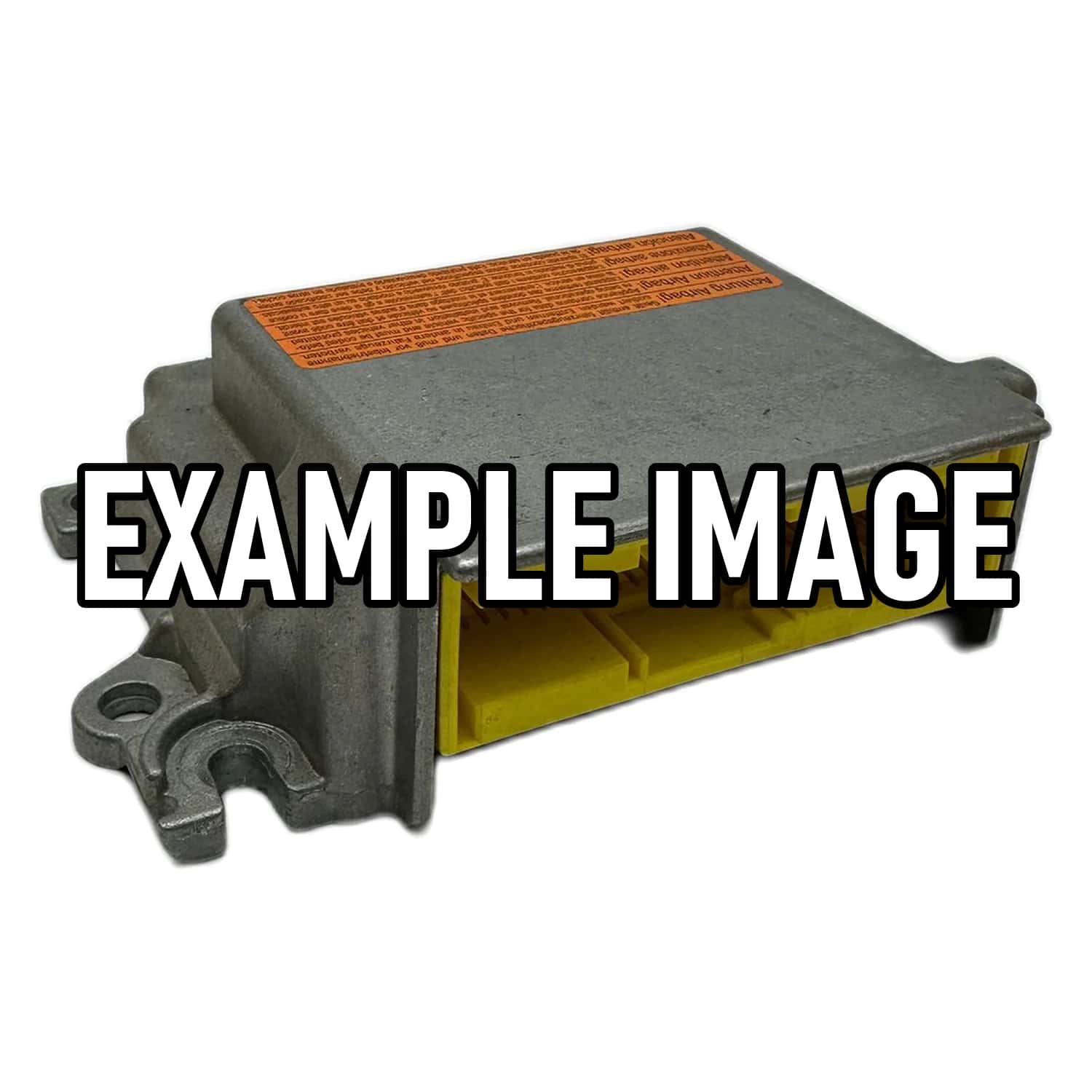
Peugeot 307 airbag control units can be most reliably identified by the part number printed on the unit. In addition, the vehicle's year of manufacture and the vehicle identification number (VIN) are crucial parameters for clear identification and compatibility.
Each airbag control unit has a specific part number assigned by Peugeot or its supplier. This number indicates the model, revision, and compatibility with the vehicle. It is usually found on a sticker directly on the control unit.
The Peugeot 307's control unit is typically installed under the center console or under one of the front seats to provide central access to the crash sensors. The vehicle's battery should always be disconnected before removing it to ensure safe handling.
Exact knowledge of the part number and year of manufacture is crucial, as even within the Peugeot 307 series, different control unit variants were used that are not compatible with each other, especially between pre- and post-facelift models or different equipment lines.
The Peugeot 307's airbag equipment was comprehensive for a compact car of its time and contributed significantly to its high level of passive safety. The 307 already featured a variety of airbag systems as standard, designed to minimize the risk of injury in the event of a collision.
The Peugeot 307 was equipped as standard with two adaptive front airbags, with the passenger airbag deactivatable if necessary, for example, to transport child seats. This offered flexible safety solutions for families and commuters, who were the vehicle's primary target group.
In addition to the front airbags, side airbags were integrated into the front seats. These effectively protected both the head and chest of the front-seat occupants in a side impact. This was an important feature for the vehicle's safety rating.
Another key element of passive safety were the head airbags, also known as curtain airbags. These extended across the side windows and protected both front and rear seat occupants from head injuries in side collisions or rollovers. In total, the Peugeot 307 was equipped with at least six airbags as standard.
The airbag system was complemented by seatbelts with pretensioners and height-adjustable front seatbelts, which further stabilized the occupants and optimally prepared them for airbag deployment. This comprehensive equipment underscored the Peugeot 307's claim to be a safe family car in the compact class.
Airbag24 repairs your component in Berlin — usually within 3–4 working days.
Standard shipping within Germany is free; we normally return your part by UPS.
You pay for and insure the inbound shipment to us. On explicit request we ship by express — the extra cost is borne by the customer.
If you withdraw from the contract, you bear the cost of returning the item.