
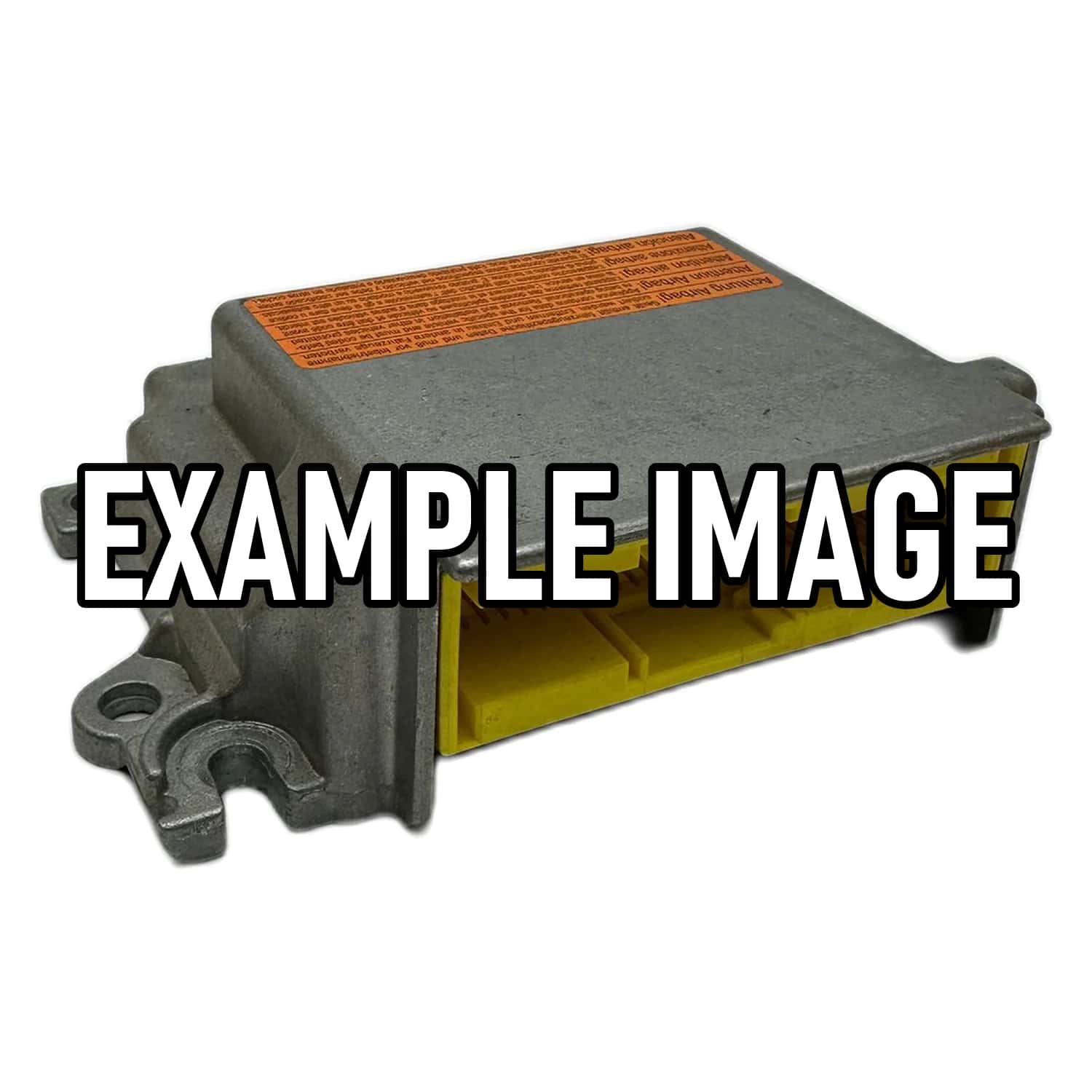

Pontiac LeMans Airbag Control Unit Repair(4)
4 products
What should I look out for with Pontiac LeMans airbag control units?
The airbag technology used in Pontiac LeMans varies considerably depending on the year and model. It's important to note that classic Pontiac LeMans models (1961-1981) generally didn't have airbags. Therefore, repairs to airbag control units primarily affect later generations or aftermarket solutions.
The Pontiac LeMans, an iconic mid-size car, was produced in two main periods: first from 1961 to 1981 and then again from 1987 to 1993. Each of these eras brought with it different vehicle concepts and, consequently, different safety features.
The development of airbag systems as a standard safety feature only began long after the production of most classic Le Mans models. From the 1960s to the early 1980s, airbags were neither standard nor optional in mid-size cars. However, the rare Le Mans models from 1987 to 1993, which were subcompact vehicles based on a Daewoo platform, may have featured the first basic airbag systems (often only for the driver).
Which Pontiac LeMans generations are there?
The Pontiac LeMans was produced in a total of six generations, each with different technical bases and thus potentially different airbag control unit concepts. The development of the safety system reflects the technological progress from 1961 to 1993, even though airbags were introduced late.
The first five generations of the Pontiac LeMans ran from 1961 to 1981. These include the 1st generation (1961–1963, as the Tempest LeMans), 2nd generation (1964–1967), 3rd generation (1968–1972), 4th generation (1973–1977), and 5th generation (1978–1981). These vehicles were primarily designed as rear-wheel drive vehicles and embodied the American mid-size sports car style.
Starting in 1987, a complete redesign followed with the 6th generation, which was built until 1993. These front-wheel-drive models were based on the Daewoo LeMans and were significantly smaller. It was mainly in this final generation that one might expect airbag technology in a LeMans, albeit in a very early and simple form.
How do I identify my Pontiac LeMans airbag control unit?
A Pontiac LeMans airbag control unit is primarily identified by the printed part number, the exact year of manufacture of the vehicle, and the vehicle identification number (VIN). However, for classic models up to 1981, the search for a factory-installed airbag control unit is futile, as these vehicles did not have airbags.
For later 6th-generation models (1987–1993), the most reliable way to identify the specific part number is on the control unit itself. This number is crucial for compatibility and correct repair or replacement of the component.
If you own a previous-generation Pontiac LeMans and suspect an airbag control unit, it's most likely a retrofit or a misunderstanding regarding the equipment. In such cases, a thorough review of the vehicle's history and any modifications is advisable.
What airbag equipment does Pontiac LeMans have?
The Pontiac LeMans' airbag equipment is highly dependent on the model year and is mostly nonexistent. While the vast majority of models produced (1961-1981) did not have airbags, a few vehicles from the later series (1987-1993) may have had a driver's airbag, although its standard or optional availability is not clearly documented.
In the 1960s and 1970s, the prime production era of the classic Le Mans series, airbag systems were not yet common technology in passenger cars and were not offered by manufacturers. Safety features at that time focused on passive protection measures such as the introduction of seat belt regulations, the development of energy-absorbing body structures, and padded interiors to protect occupants in a collision.
The reintroduction of the LeMans as a compact model in 1987 marked the beginning of an era in which airbags slowly began to make their way into vehicle production. It's conceivable that some export or certain trim levels of Pontiac LeMans models from this period, including the T-Body, Value Leader, LE, or GSE series, were equipped with a basic airbag (usually for the driver only) to meet emerging safety standards. However, these airbags were a far cry from the complex multiple-airbag systems found in modern vehicles.
A comparison with the airbag development of other contemporary vehicles shows that full, multi-component airbag systems only became standard from the mid-1990s onward. For the Le Mans series, this means that even the potentially airbag-equipped models only had very simple systems. This is a crucial point for repair or maintenance, as the technology and diagnostic solutions of early airbag systems require specific knowledge.
Common fault codes in this category
Shipping & repair from Germany
Airbag24 repairs your component in Berlin — usually within 3–4 working days.
Standard shipping within Germany is free; we normally return your part by UPS.
You pay for and insure the inbound shipment to us. On explicit request we ship by express — the extra cost is borne by the customer.
If you withdraw from the contract, you bear the cost of returning the item.