
Saab 9-2X airbag control unit repair(2)
2 products
What should I pay attention to with Saab 9-2X airbag control units?
The Saab 9-2X airbag control unit is a key component for vehicle safety, and the technology used in the 2004 to 2006 model was advanced and consistent for its time. Professional repair of these control units ensures the restoration of original functionality and comes with a 2-year warranty on the repair.
The Saab 9-2X, often affectionately referred to as the "Saabaru," was produced exclusively for the North American market for a short but distinctive period from 2004 to 2006. A rebadge of the second-generation Subaru Impreza, but with significant Saab design and chassis modifications, it positioned itself as a unique premium compact car with permanent all-wheel drive. During this short production run, there was only one model generation, resulting in a largely uniform airbag control unit technology.
Airbag control units can fail over time due to various factors, such as error logs after a collision, internal electronic faults, or moisture damage. A defective airbag control unit is often indicated by an illuminated airbag warning light in the dashboard and can impair the vehicle's entire safety function. In such cases, repairing the airbag control unit is not only a more cost-effective but also a sustainable alternative to purchasing a new one, especially for a niche model like the Saab 9-2X.
For the Saab 9-2X, it's important to understand that while the basic airbag architecture is similar across the Linear and Aero model variants, the details of the electronic modules and sensors may have been adapted to the respective engines and equipment features. Therefore, a professional repair requires specialized knowledge of these specific adaptations to ensure full compatibility and functionality.
Which Saab 9-2X generations are there?
The Saab 9-2X was produced in a single model generation from 2004 to 2006. Within this generation, there were two main series, the Saab 9-2X Linear and the Saab 9-2X Aero, which, despite sharing a common base, may have different airbag control unit specifications, reflecting technological advances and performance differences.
The entire production history of the Saab 9-2X spans only three model years (2004, 2005, and 2006), during which no major facelifts or model updates were carried out that would define a new "generation" in the traditional sense. This makes identifying the correct airbag control unit largely dependent on distinguishing between the two main series, as the vehicle represented a premium option in its class for young, sporty-oriented buyers in North America.
The Saab 9-2X Linear, equipped with a 2.5-liter naturally aspirated engine producing approximately 165 hp, was the base model with basic equipment. In contrast, the Saab 9-2X Aero was the top model, featuring a more powerful 2.0-liter turbocharged boxer engine (up to 227 hp) and a sportier chassis and rear-axle limited-slip differential. These performance differences and the associated differing equipment features led to the electronic modules and sensors of the airbag system being adapted to the respective requirements.
For example, the triggering algorithms or sensor sensitivity could vary slightly for a sportier model like the Aero to ensure optimal safety in different driving situations. Although both variants were based on the same Subaru Impreza platform, the Saab-specific adaptations and the different engines resulted in a subtle diversification of the installed components, including the airbag control units, making precise identification essential during repairs.
How do I identify my Saab 9-2X airbag control unit?
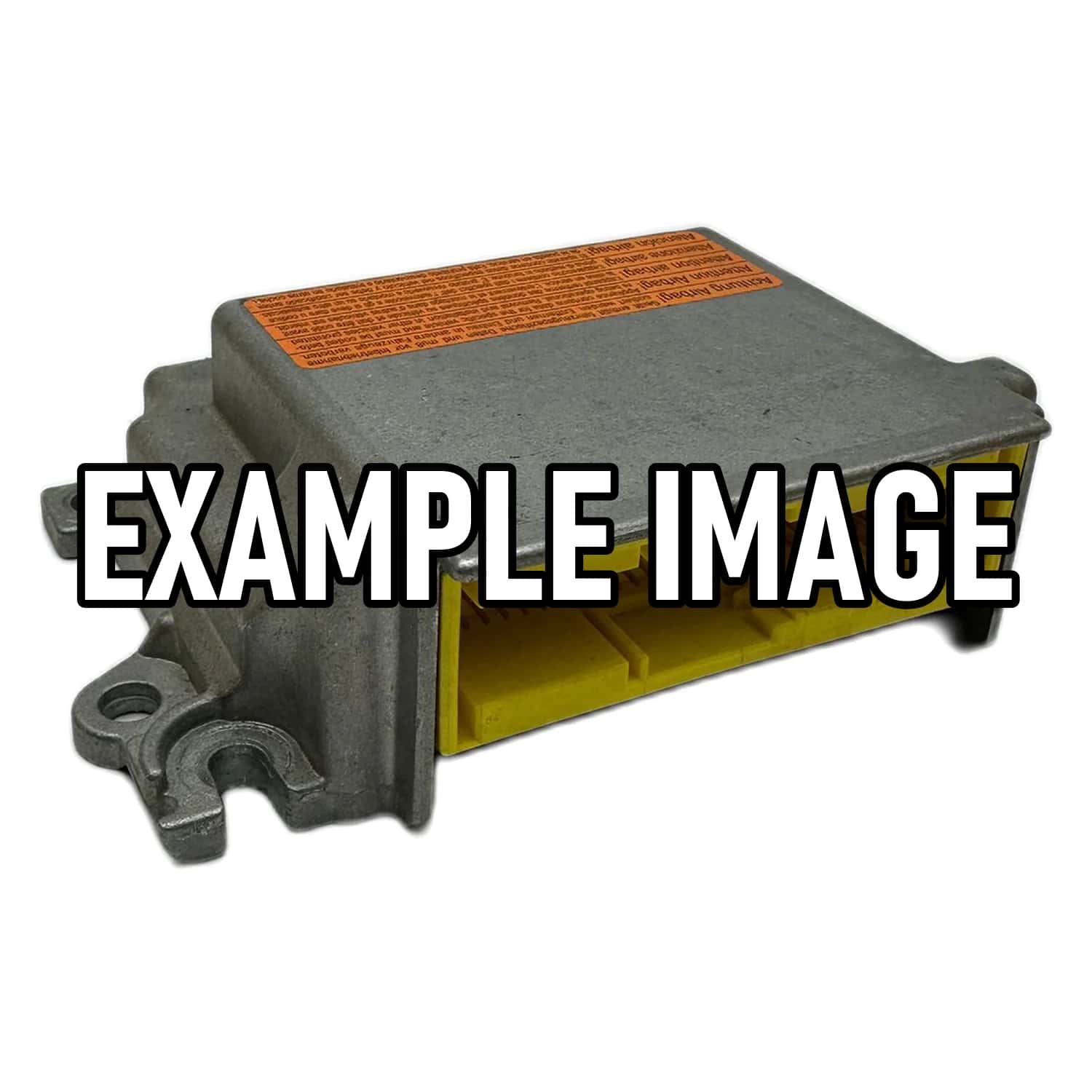
Your Saab 9-2X airbag control unit is primarily identified by the part number located directly on the unit, as well as the exact year of manufacture and the vehicle identification number (VIN). This information is crucial, as even within a single model generation, specific control unit variants may exist for the Linear and Aero models.
The airbag control unit's part number is the most important indicator of its exact specification. This number is usually found on a sticker directly on the control unit's housing, which, depending on the vehicle type, may be located under the driver's seat, in the center console, or behind the dashboard. It's advisable to take photos of all the numbers on the control unit before sending it in for repair to ensure a smooth process.
In addition to the part number, the exact year of your Saab 9-2X (2004, 2005, or 2006) and the full vehicle identification number (VIN) are also important. The VIN, which is usually found on the vehicle registration document or on the lower edge of the windshield, allows you to verify the exact configuration of your specific vehicle. This is especially important to ensure that replacement parts or repaired units are fully compatible with the electronic architecture of your Saab 9-2X, especially considering the potential differences between Linear and Aero models.
Correct identification is essential to avoid compatibility issues and ensure the proper function of the entire airbag system after repair. Miscalculations can lead to malfunctions or improper deployment in an emergency, which is why precisely identifying the airbag control unit is a crucial step in troubleshooting.
What airbag equipment does the Saab 9-2X have?
The Saab 9-2X, a premium compact car, came standard with a basic but comprehensive airbag suite, including front and side airbags. Although the Linear and Aero trim levels differed in engine and performance, the core airbag safety suite was based on the same high standard typical for the 2004 to 2006 production years.
As part of Saab's commitment to safety and in response to expectations for a premium car in the early 2000s, the 9-2X was well-equipped as standard. This included front airbags for the driver and front passenger, designed to provide protection in a frontal collision. This was complemented by side airbags, usually integrated into the seats or the vehicle pillar, to provide additional protection for occupants in side collisions, thus increasing the car's passive safety.
The information provided confirms that there was no explicit mention of optional or special airbag equipment beyond this standard configuration. This suggests that the basic safety features were implemented consistently across all Saab 9-2X models, regardless of whether they were the Linear or the more powerful Aero variant. This simplifies repair, as the core functionality of the airbag systems is consistent across the entire model range.
Despite the lack of "generations" in the traditional sense, the fine-tuning and integration into the respective electronic architecture of the Linear and Aero models ensured optimal function of the standard airbag systems. The sensors and control unit were designed to precisely detect the severity of an impact and deploy the airbags in a fraction of a second, minimizing the risk of injury to the vehicle occupants and meeting Saab's high safety standards.
Common fault codes in this category
Shipping & repair from Germany
Airbag24 repairs your component in Berlin — usually within 3–4 working days.
Standard shipping within Germany is free; we normally return your part by UPS.
You pay for and insure the inbound shipment to us. On explicit request we ship by express — the extra cost is borne by the customer.
If you withdraw from the contract, you bear the cost of returning the item.