
Saab airbag control unit repair(15)
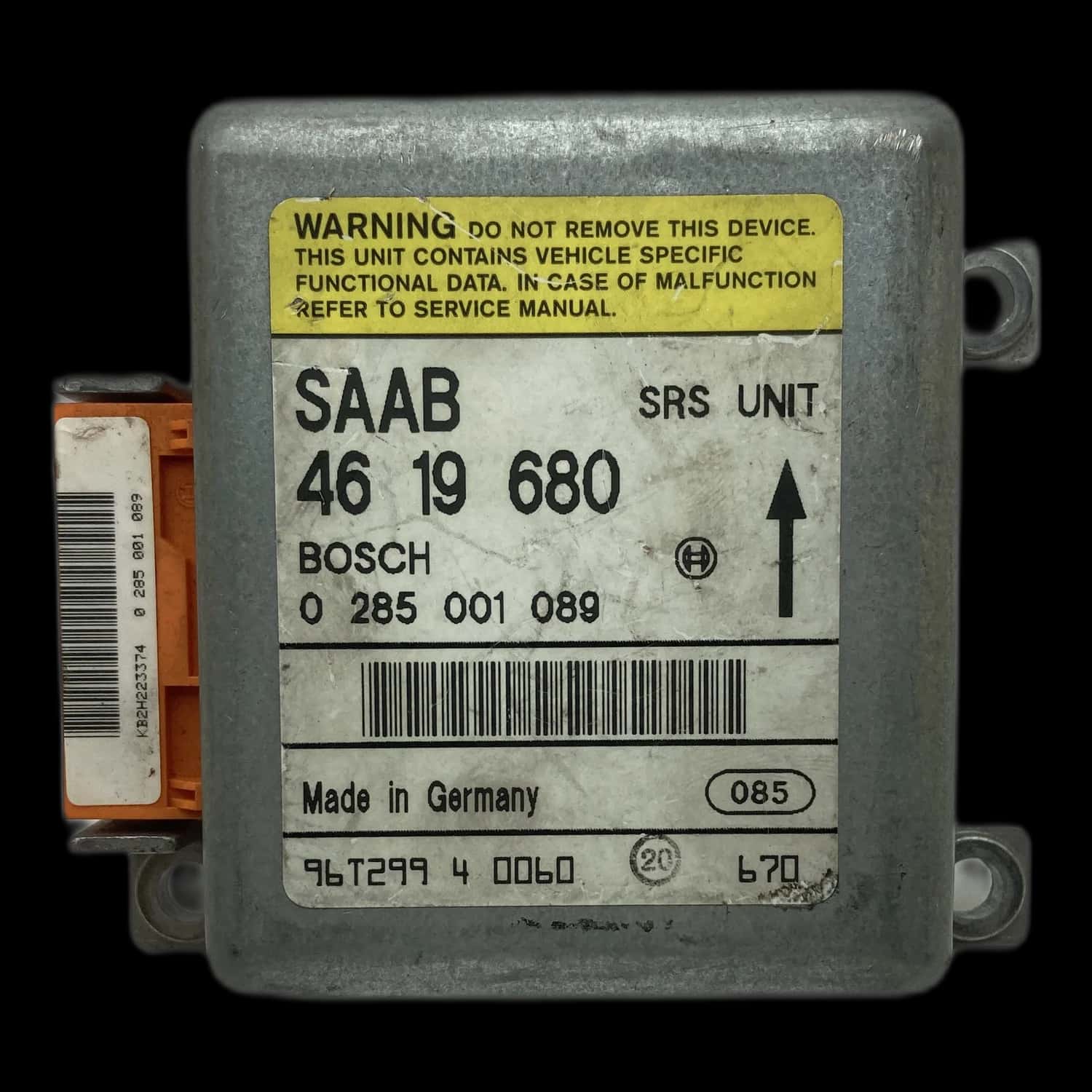
Saab is no longer built and parts are scarce. Identify your airbag control unit here and send it in for testing or repair.
15 products
airbag control unit repair Saab 9-5 YS3E
from€79.00
airbag control unit repair Saab 9000 CS
from€79.00
airbag control unit repair Saab 9-7X Arc
from€79.00
airbag control unit repair Saab 9-5 YS3G
from€79.00
What should I consider when using Saab airbag control units?
The airbag technology used in Saabs varies depending on the model and year. A professional repair of the Saab airbag control unit ensures the restoration of your vehicle's original functionality and safety.
Saab has consistently positioned itself as a pioneer in vehicle safety. As early as the 1990s, many models were equipped with airbags as standard, with the systems continually evolving over time. This evolution from a simple driver airbag to complex multiple airbag systems required correspondingly adapted and increasingly powerful airbag control units.
Saab's airbag system development reflects technological advances. While earlier generations relied on basic impact detection, newer Saab airbag control units feature sophisticated sensor networks that can analyze impact severity, occupant position, and even rollover situations. This enables more precise and situational airbag deployment for optimal occupant protection.
Which Saab models are there?
Saab has produced an impressive range of 20 models and concept vehicles, with each model and production generation using different airbag control units. The development of the safety system reflects technological advances and the respective vehicle class.
Saab's model range extends from compact sedans like the classic Saab 900 and the larger Saab 9000 to sports station wagons and modern crossover and SUV models like the Saab 9-2X, 9-7X, and 9-4X. Newer models like the electric Saab 9-3 ePower and design studies like the Saab PhoeniX also demonstrate the brand's breadth. Even models with specific designations like Saab 45725, 45786, 45666, 900 EV, 92X, 93X, 94X, 95X, 96X, 97X, 98X, and 99X illustrate the extensive model history and the associated diversity of the installed safety electronics. Each of these vehicles required specific airbag systems to meet Saab's high safety standards.
This broad coverage of vehicle classes, from the upper mid-size to the premium segment, means that the airbag control units have been adapted over the years to the specific requirements of each model. Regardless of the year or generation, a professional repair of the defective airbag control unit is crucial to restoring the full functionality of the safety system.
How do I identify my Saab airbag control unit?
Saab airbag control units can be uniquely identified by part number, year of manufacture, and vehicle identification number (VIN). Each generation and trim level uses specific control unit variants for optimal compatibility with the respective airbag system.
The part number of the airbag control unit is the most important identifier and is located directly on the component's housing, usually as a sticker or stamped marking. This number is crucial for determining the exact replacement or repair part. Furthermore, the year of manufacture of your Saab can provide information about the generation of the installed airbag system, as Saab has introduced various control unit generations over time.
The vehicle identification number (VIN) is also an important tool. It provides detailed information about the original equipment and specific components of your Saab, which is essential for correctly identifying the airbag control unit and for a targeted Saab airbag control unit repair. Ensure that all relevant data is recorded correctly to avoid compatibility issues and ensure vehicle safety.
What airbag equipment does Saab have?
Saab's airbag equipment varies depending on the model year and trim level, although the brand has always placed a strong emphasis on occupant safety. While early models used basic airbag systems, newer generations feature enhanced safety packages with additional airbag modules.
Traditionally, Saab vehicles, especially from the 1990s onward, were equipped with driver and passenger airbags as standard. This standard equipment was a clear sign of the brand's commitment to safety. As models evolved, especially in the premium segment, safety systems were continually expanded.
In newer and higher-end Saab models, such as the Saab 9-3 ePower or the 9-4X, the airbag equipment often included additional side airbags and curtain airbags, which significantly improved protection in side collisions and rollovers. These enhanced airbag systems demonstrate how Saab consistently fulfilled its role as a safety-focused brand in the upper mid-size and premium segments, offering its customers comprehensive protection concepts. A necessary repair of the defective airbag control unit ensures that these complex systems function optimally in an emergency.
Common fault codes in this category
Shipping & repair from Germany
Airbag24 repairs your component in Berlin — usually within 3–4 working days.
Standard shipping within Germany is free; we normally return your part by UPS.
You pay for and insure the inbound shipment to us. On explicit request we ship by express — the extra cost is borne by the customer.
If you withdraw from the contract, you bear the cost of returning the item.