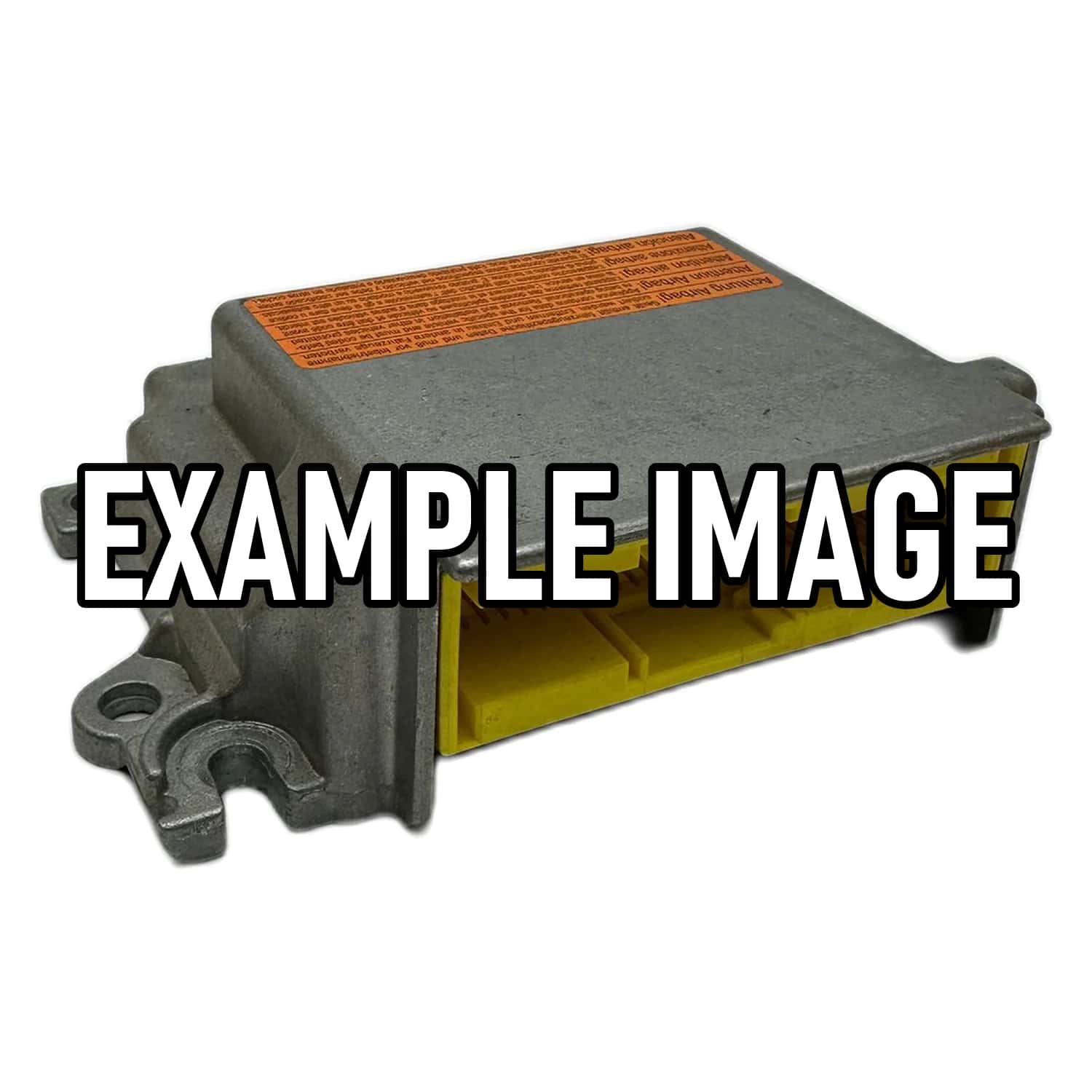
airbag control unit repair Saab 9-7X Arc
from€79.00
 Quality since 2002
The airbag technology used in the Saab 9-7X is characterized by comprehensive standard equipment throughout its production run. Airbag control units are key components of this safety system, requiring professional repair in the event of a malfunction to ensure vehicle safety.
The Saab 9-7X, a compact luxury SUV, was manufactured by General Motors specifically for the North American market between the 2005 and 2009 model years (produced 2005-2008). It is based on the robust GM GMT360 platform, which was also used in other successful SUVs such as the Chevrolet TrailBlazer.
The Saab 9-7X's airbag systems were designed to a high standard from the outset, with standard safety features that were common in the segment and critical for the target audience. This means that the airbag control units are designed for a consistent and comprehensive safety package, ranging from dual-stage front airbags to rollover protection sensors.
The Saab 9-7X was essentially produced in a single generation from 2005 to 2008, with the 2009 model year still being sold. This continuous model line used a consistent airbag system that underwent minimal adjustments over the years.
Although the Saab 9-7X didn't undergo any major model changes or facelifts, there were various trim and engine variants within this single generation, reflected in the names Linear, Arc, and Aero. For example, a more powerful Aero version with a 6.0-liter V8 engine was added in 2008, emphasizing the vehicle's sporty potential.
The core technology of the airbag control units remained comparable across all variants, as the 9-7X's fundamental safety concept was comprehensive from the start. The development of the safety system reflected the state of the art at the time and offered modern protection to vehicle occupants.
The series listed in the shop, such as saab-9-7x-linear, saab-9-7x-arc, saab-9-7x-aero as well as the engine-specific variants saab-9-7x-4-2i, saab-9-7x-5-3i and saab-9-7x-6-0i, all belong to the same model generation of the Saab 9-7X.
Saab 9-7X airbag control units can be reliably identified by their unique part number, which is located directly on the unit. In addition, the vehicle's year of manufacture and the vehicle identification number (VIN) are important features for correct identification and compatibility testing.
Since the Saab 9-7X didn't undergo any fundamental system changes to its airbag equipment during its production run, the control units are largely compatible within the model series. Nevertheless, it's essential to check the exact part number, as even minor revisions or country-specific adjustments can lead to different part numbers.
The airbag control unit in the Saab 9-7X is typically located centrally in the vehicle, often under the center console or driver's seat. Accurate identification is the first step toward successfully repairing a faulty airbag control unit.
From the beginning of production, the Saab 9-7X was equipped as standard with an extensive range of airbags, ensuring a high level of occupant protection. This standardized safety equipment was an essential feature for a luxury SUV in its class.
Standard safety features on the Saab 9-7X included dual-stage front airbags for the driver and front passenger, which adjusted their deployment based on the severity of the impact. A passenger detection system in the front seats ensured that airbags only deployed when the seat was occupied, further enhancing safety.
For side protection, the Saab 9-7X featured side curtain airbags that deployed along the front window. Front seatbelt pretensioners with force limiters complemented the passive safety system by firmly pressing the occupants into their seats in the event of a collision while simultaneously reducing the force acting on the chest.
Additionally, the Saab 9-7X was equipped with rollover protection sensors that could trigger early deployment of the side and curtain airbags in the event of an imminent rollover. A seatbelt warning reminded occupants to fasten their seatbelts to ensure full airbag effectiveness. This comprehensive feature was consistent across all engine and trim levels, from the Linear to the Aero variant.
Airbag24 repairs your component in Berlin — usually within 3–4 working days.
Standard shipping within Germany is free; we normally return your part by UPS.
You pay for and insure the inbound shipment to us. On explicit request we ship by express — the extra cost is borne by the customer.
If you withdraw from the contract, you bear the cost of returning the item.