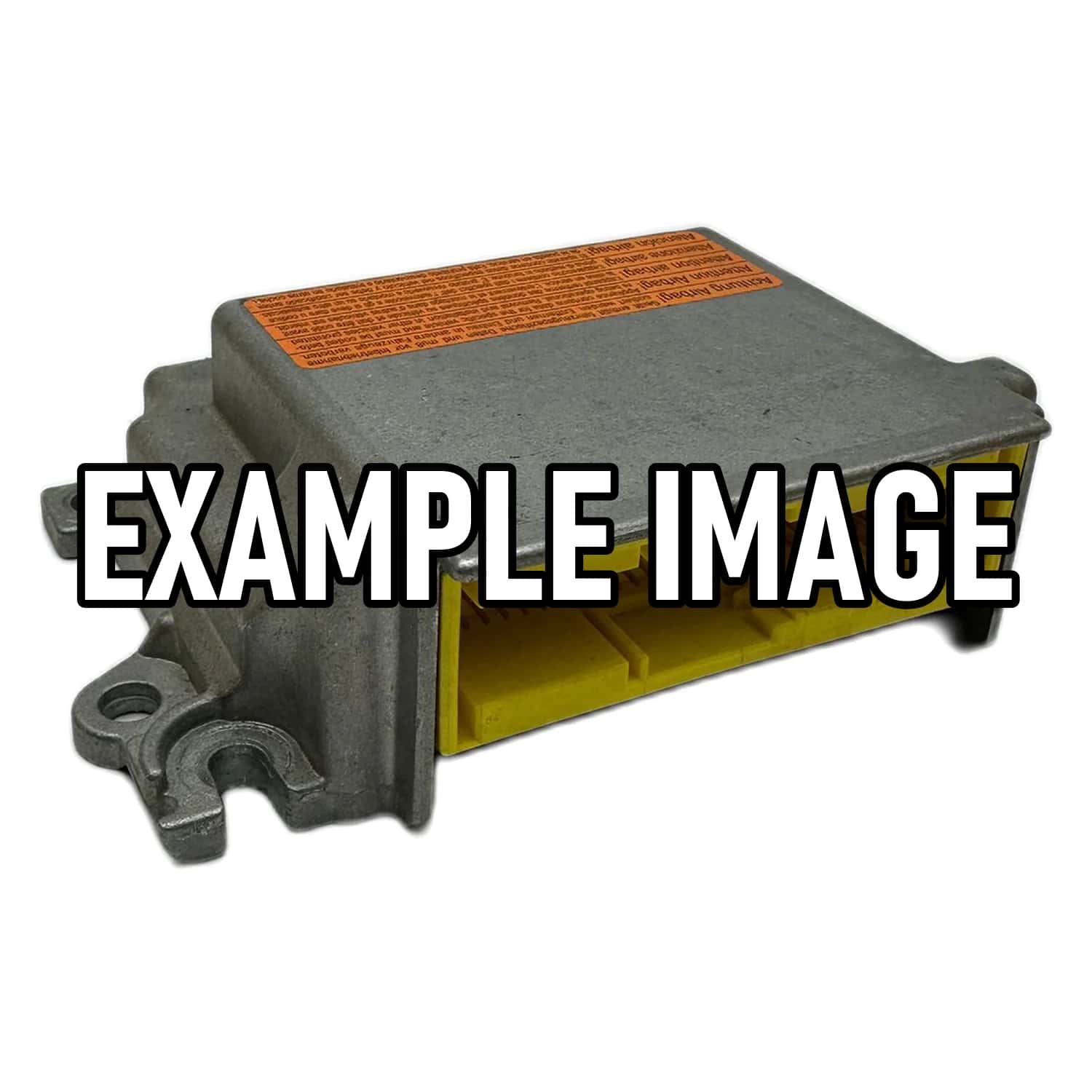
airbag control unit repair Saab 9000 CS
from€79.00
 Quality since 2002
The airbag technology used in the Saab 9000 varies depending on the model year. Qualified specialist shops can professionally repair control units for all Saab 9000 variants with original functionality and often offer a two-year warranty on their work.
The Saab 9000, produced from 1985 to 1998, established itself as a technologically advanced upper-mid-range vehicle. Over this long production period, passive safety systems and thus the requirements for the airbag control unit also continued to evolve.
Initially, airbags were rare in the Saab 9000, but by the early 1990s, the driver's airbag was increasingly integrated as standard. Further development led to later models such as the Saab 9000 CS, CD, and Aero often also featuring a passenger airbag to further optimize occupant protection. The airbag control unit is the central element of these safety systems.
The Saab 9000 was produced in one main generation, which underwent extensive facelifts and model updates throughout its production run. These developments resulted in different safety system configurations and specific airbag control units, reflecting the technological advances from 1985 to 1998.
The Saab 9000 was initially introduced in 1985 as a five-door hatchback, known as the Combi Coupé (CC). Shortly thereafter, the four-door sedan (CD) followed, appealing to a broader target audience. These model variants formed the basis for further development.
A significant step was the 1993 facelift, which introduced the sporty Saab 9000 CS, with the Aero as the top model. The most extensive facelift took place in 1995, which included a new front end, improved interiors, and the introduction of a 3.0-liter V6 engine in the top-of-the-line model. Continuous model updates ensured that the Saab 9000 always remained technically at the cutting edge.
Special variants such as the Saab 9000 CDE, CSE, Turbo, Griffin, and the limited Anniversary Edition demonstrate the diversity within this single generation. Each of these versions could place specific demands on the airbag control unit, depending on the installed airbag equipment and country-specific regulations.
Saab 9000 airbag control units can be uniquely identified by part number, year of manufacture, and vehicle identification number (VIN). Knowing the exact variant is crucial, as each version of the 9000 series uses specific control units for optimal compatibility.
The most important reference for identifying your airbag control unit is the part number, which is usually located on a label directly on the module's housing. This number is often a key to compatibility and functionality across different Saab 9000 years and models.
In addition to the part number, the exact year of your Saab 9000 and the specific model variant—be it a Saab 9000 CC, CD, CS, Aero, or another series—are essential. This information helps ensure the control unit's compatibility with the specific vehicle, as electrical interfaces and software versions may have changed over the course of production.
The Vehicle Identification Number (VIN) also provides precise information about the original equipment and can help with the exact assignment of the required airbag control unit or its repair. Correct identification is essential for the system's safety.
The airbag configuration of the Saab 9000 varies considerably depending on the model year and trim level. While early models included basic airbag systems, newer versions featured enhanced safety packages that significantly improved occupant protection.
In the early years of Saab 9000 production, the driver airbag was mostly available as an option, if at all. Starting in the early 1990s, particularly with models like the Saab 9000 CC and CD, the driver airbag was largely introduced as standard equipment, representing an important step toward more active occupant safety.
The passenger airbag also became available during the 1990s, initially as an option in the 1994 model year, and later increasingly as standard in higher-end trim levels. Models such as the Saab 9000 CS, CDE, and CSE benefited from this expanded equipment, which offered more comprehensive protection.
However, it's important to note that, unlike many competitors from later models, side airbags were generally not installed in the Saab 9000. The airbag control unit (often referred to as the SRS-SDM) is the heart of these systems and monitors the sensors to reliably deploy the airbags in the event of a collision. A professional repair of the defective airbag control unit is therefore essential to ensure the vehicle's full functionality and safety.
Airbag24 repairs your component in Berlin — usually within 3–4 working days.
Standard shipping within Germany is free; we normally return your part by UPS.
You pay for and insure the inbound shipment to us. On explicit request we ship by express — the extra cost is borne by the customer.
If you withdraw from the contract, you bear the cost of returning the item.