
Daihatsu airbag control unit repair(49)
Compact Daihatsu vehicles, compact electronics: find the matching airbag control unit and send it to us for testing or repair.
What should be considered with Daihatsu airbag control units?
The airbag technology used in Daihatsu vehicles varies depending on the model and year of manufacture. We professionally repair control units for all Daihatsu model generations with original functionality and a 2-year warranty.
Daihatsu, known for its compact and economical vehicles, has launched a wide variety of models throughout its long production history. From the early subcompacts to practical vans and SUVs, it has always placed emphasis on basic yet effective safety features. The development of airbag systems reflects the advances in automotive technology, with each generation placing specific demands on the airbag control unit.
Airbag system development at Daihatsu, like many manufacturers, began with basic SRS front airbags for the driver and front passenger. Over the years, these systems have been enhanced with additional sensors and, in some models, side airbags. The airbag control unit, the heart of this safety system, has become correspondingly more complex to ensure precise deployment and reliable function in critical situations. The ability to repair a defective Daihatsu airbag control unit is therefore often a cost-effective alternative to a complete replacement.
Which Daihatsu models are there?
Daihatsu has produced a total of 42 different models, with each model and series generation using different airbag control units. The development of the safety system reflects technological advances.
Daihatsu's model range is impressively diverse, encompassing vehicles for a wide range of needs and target groups. Among the most well-known small cars are the agile Daihatsu Copen, the reliable Daihatsu Cuore, the versatile Daihatsu Sirion, and the classic Daihatsu Charade. Models such as the Daihatsu YRV, Daihatsu Move, and the stylish Daihatsu Materia were also popular for everyday urban use. Among the compact SUVs and off-road vehicles, the robust Daihatsu Terios, the Feroza, and the Rocky are noteworthy.
In addition, Daihatsu produced numerous commercial vehicles and "kei cars," such as the Daihatsu Hijet, Daihatsu Atrai, Daihatsu Granmax, and the Daihatsu Tanto, which were primarily designed for commercial use or the Japanese market. Each of these models, whether small cars, SUVs, or vans, features a specially tuned airbag control unit tailored to the vehicle architecture and safety requirements of the respective model year. Professional repair of a Daihatsu airbag control unit is essential for this wide range of models.
How do I identify my Daihatsu airbag control unit?
Daihatsu airbag control units can be uniquely identified by part number, year of manufacture, and vehicle identification number. Each generation uses specific control unit variants for optimal compatibility.
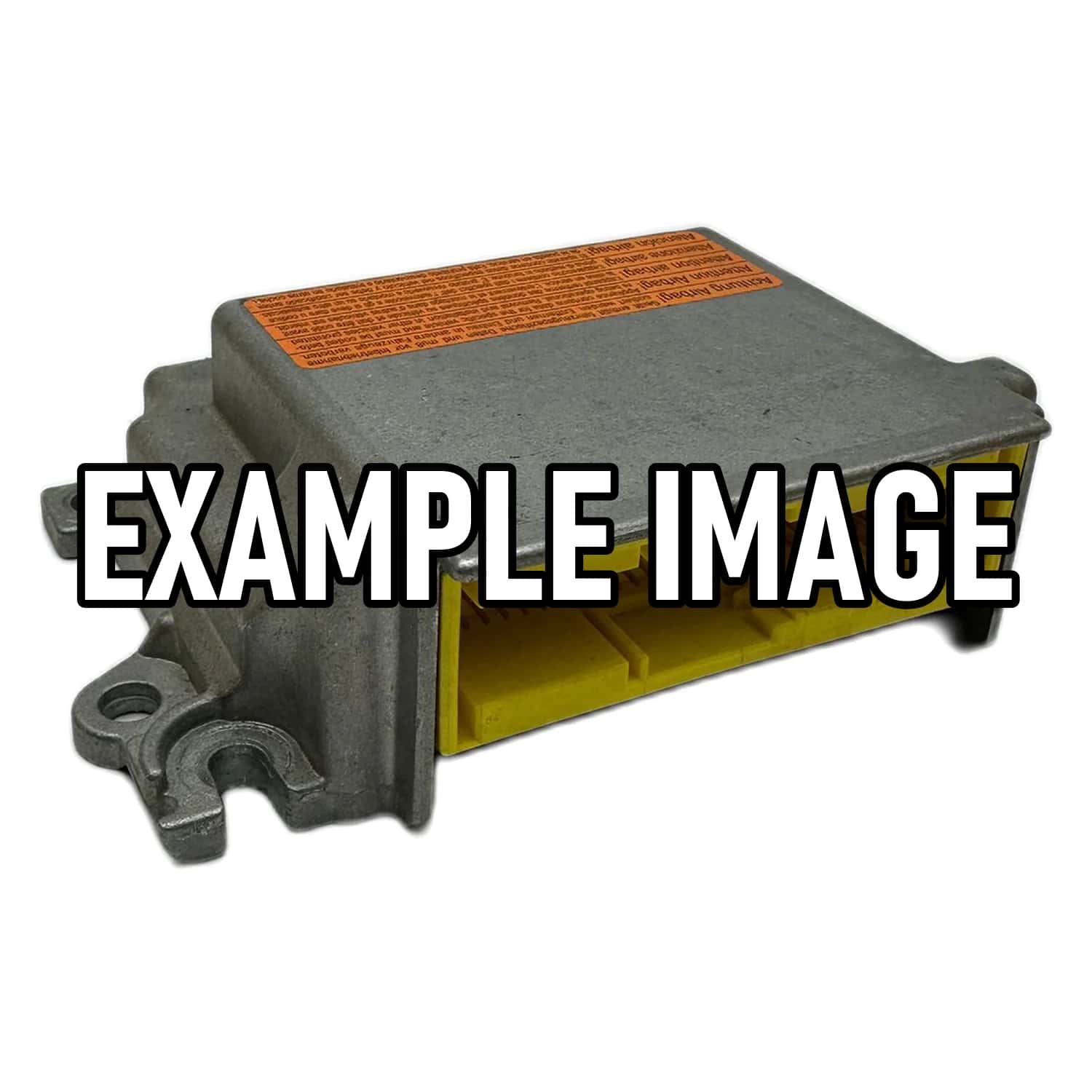
Correctly identifying your Daihatsu airbag control unit is crucial for a successful repair or replacement. The most important identifier is the part number affixed to the control unit, often found on a white label. This number is specific to the model, year, and sometimes even specific trim levels of your Daihatsu.
In addition to the part number, you should have the exact year of manufacture and the vehicle identification number (VIN) of your Daihatsu ready. This information helps verify the control unit's compatibility with your vehicle, as different revisions of the airbag system have been installed over the years, even within the same model series. Precise identification ensures that the "Daihatsu airbag control unit repair" is carried out correctly and functionally.
What airbag equipment does Daihatsu have?
Daihatsu's airbag equipment varies depending on the model year and trim level. While early models use basic airbag systems, newer generations feature enhanced safety packages with additional airbag modules.
Typically, many Daihatsu models are equipped with an SRS (Supplemental Restraint System) airbag system, which serves as an additional safety feature in addition to the mandatory seat belts. Most models come standard with front SRS airbags for the driver and front passenger. Some newer or higher-end trim levels, such as the Daihatsu Sirion, may also include side airbags for occupant protection.
Some Daihatsu models also offer practical features such as an airbag deactivation switch, usually located in the glove compartment, for safely deactivating the passenger airbag when using child seats. The airbag control unit coordinates the deployment of these airbags within milliseconds of a significant impact, working closely with other safety systems such as the seatbelt pretensioners to provide optimal occupant protection. A defective control unit must therefore be repaired immediately to restore the full functionality of this vital system.
Shipping & repair from Germany
Airbag24 repairs your component in Berlin — usually within 3–4 working days.
Standard shipping within Germany is free; we normally return your part by UPS.
You pay for and insure the inbound shipment to us. On explicit request we ship by express — the extra cost is borne by the customer.
If you withdraw from the contract, you bear the cost of returning the item.