
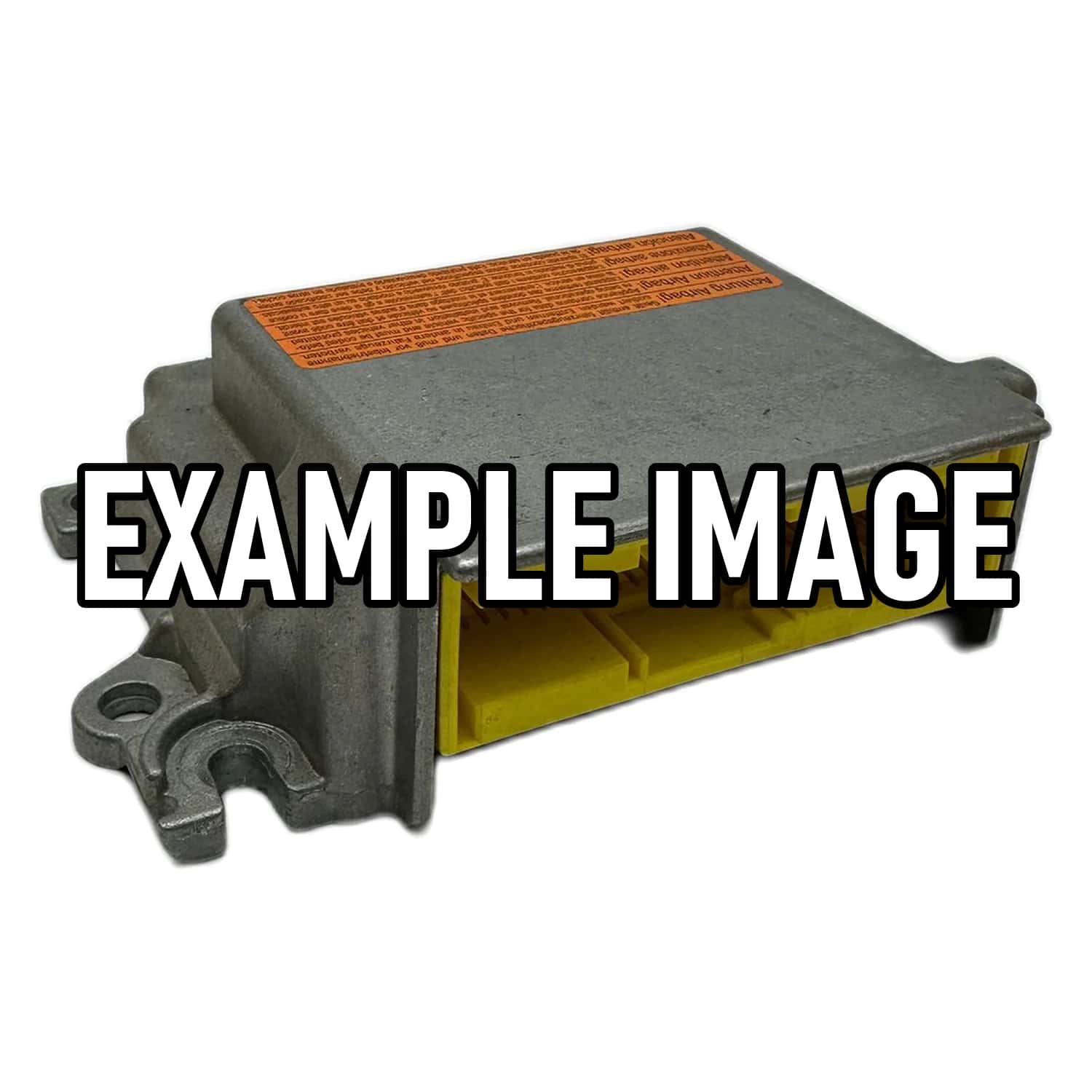
Peugeot 408 airbag control unit repair(2)
2 products
airbag control unit repair Peugeot 408 I
from€79.00
What should I pay attention to with Peugeot 408 airbag control units?
The airbag technology used in the Peugeot 408 varies depending on the model year and market region. To ensure safe operation, it is crucial to have a defective airbag control unit professionally repaired to ensure the vehicle's original functionality and high level of safety.
The Peugeot 408, originally conceived as a compact sedan for the Chinese market (Peugeot 408 I before 2022), has evolved into a globally available crossover fastback with the second generation (Peugeot 408 II) launched in 2022. These different production phases are also reflected in the installed safety systems and the associated airbag control units.
With each new generation of the Peugeot 408, the airbag systems have been further developed and adapted to the latest safety standards. While the first series already offered basic airbag equipment, newer models integrate advanced safety features and more complex control units for coordinating the passive safety systems.
This development includes not only a higher number of airbags, but also intelligent deployment algorithms and improved connectivity with other vehicle systems such as sensors and seatbelt pretensioners. A professional repair of the airbag control unit is therefore essential to maintaining the integrity of this complex system.
Which Peugeot 408 generations are there?
The Peugeot 408 has been produced in several generations, each with its own airbag control units. The evolution of the safety system reflects technological advances from the first series to the latest models, which increasingly offer electrification options.
The original generation of the Peugeot 408 (often referred to as the Peugeot 408 I) was primarily intended for the Chinese market before 2022 and was based on a classic sedan platform. This model laid the foundation for airbag technology in the 408 series.
Starting in 2022, the Peugeot 408 II was re-positioned for the global market. This model was positioned as a coupé-like crossover fastback and sits between the Peugeot 308 and 508, appealing to a broader target audience.
The latest iteration, which will be launched in 2024/2025, continues this approach, increasingly integrating mild hybrid, plug-in hybrid, and fully electric powertrains (such as the E-408). These advanced drive concepts also place greater demands on safety electronics.
Each generational change brought not only design and performance improvements, but also an evolution of the passive and active safety systems, including the specific design and programming of the airbag control units for the Peugeot 408.
How do I identify my Peugeot 408 airbag control unit?
Peugeot 408 airbag control units can be identified without a doubt by their unique part number, model year, and, in many cases, the vehicle identification number (VIN). Each vehicle generation, and sometimes even different trim levels, use specific control unit variants, which are crucial for optimal compatibility.
The part number is the primary identification on the airbag control unit itself and is crucial for selecting the correct replacement part or for a professional repair. These numbers can vary significantly even between seemingly similar models or different years of manufacture, even if they are the same Peugeot 408 generation.
The exact vehicle model year provides information about the technology generation used and helps avoid compatibility issues, as wiring, software versions, and even the number of connected sensors and airbags change over the years. These adjustments are crucial for the correct functioning of the entire safety system.
If you're unsure, the full vehicle identification number (VIN) or the engine and exact trim level can provide further clarification. This information allows specialists to identify the exact airbag control unit for your Peugeot 408 and ensure a successful repair, even if your unit is defective.
What airbag equipment does the Peugeot 408 have?
The airbag equipment of the Peugeot 408 varies depending on the model year and trim level, with the newer generations offering particularly extensive standard equipment from 2022 onwards. While earlier models already used solid basic systems, current models feature enhanced safety packages with a variety of airbag modules and intelligent deployment systems.
Current Peugeot 408 models (especially the Peugeot 408 II from 2022) come standard with a comprehensive airbag suite, ensuring high levels of occupant protection. This includes front airbags for the driver and front passenger, with the passenger airbag being deactivated if necessary.
Additionally, side airbags for the front seats and full-length curtain airbags for the front and rear are installed, providing additional protection in the event of a side impact or rollover. These modules are an integral part of the passive safety system and are coordinated by the central airbag control unit.
The passive safety system is complemented by pyrotechnic belt tensioners and belt force limiters on all relevant seats, as well as Isofix anchor points for child seats in the rear. These components work closely with the airbag control unit to provide optimal protection in the event of an accident.
In addition to these passive elements, modern Peugeot 408 vehicles are also equipped with numerous active safety systems such as ABS, ESP, emergency braking, and lane departure warning. This extensive standard equipment underscores the high priority Peugeot places on occupant safety in its 408 models and makes the proper functioning of the airbag control unit a key element of vehicle safety and confidence in a successful repair.
Common fault codes in this category
Shipping & repair from Germany
Airbag24 repairs your component in Berlin — usually within 3–4 working days.
Standard shipping within Germany is free; we normally return your part by UPS.
You pay for and insure the inbound shipment to us. On explicit request we ship by express — the extra cost is borne by the customer.
If you withdraw from the contract, you bear the cost of returning the item.